Moonglow Anemone
Scientific Name: Anthopleura artemisia
Category: other
Brief Description
A species of sea anemone found in the intertidal zones of the Pacific coast, often red or green with distinctive white or gray radiating lines on the oral disc.
Characteristics
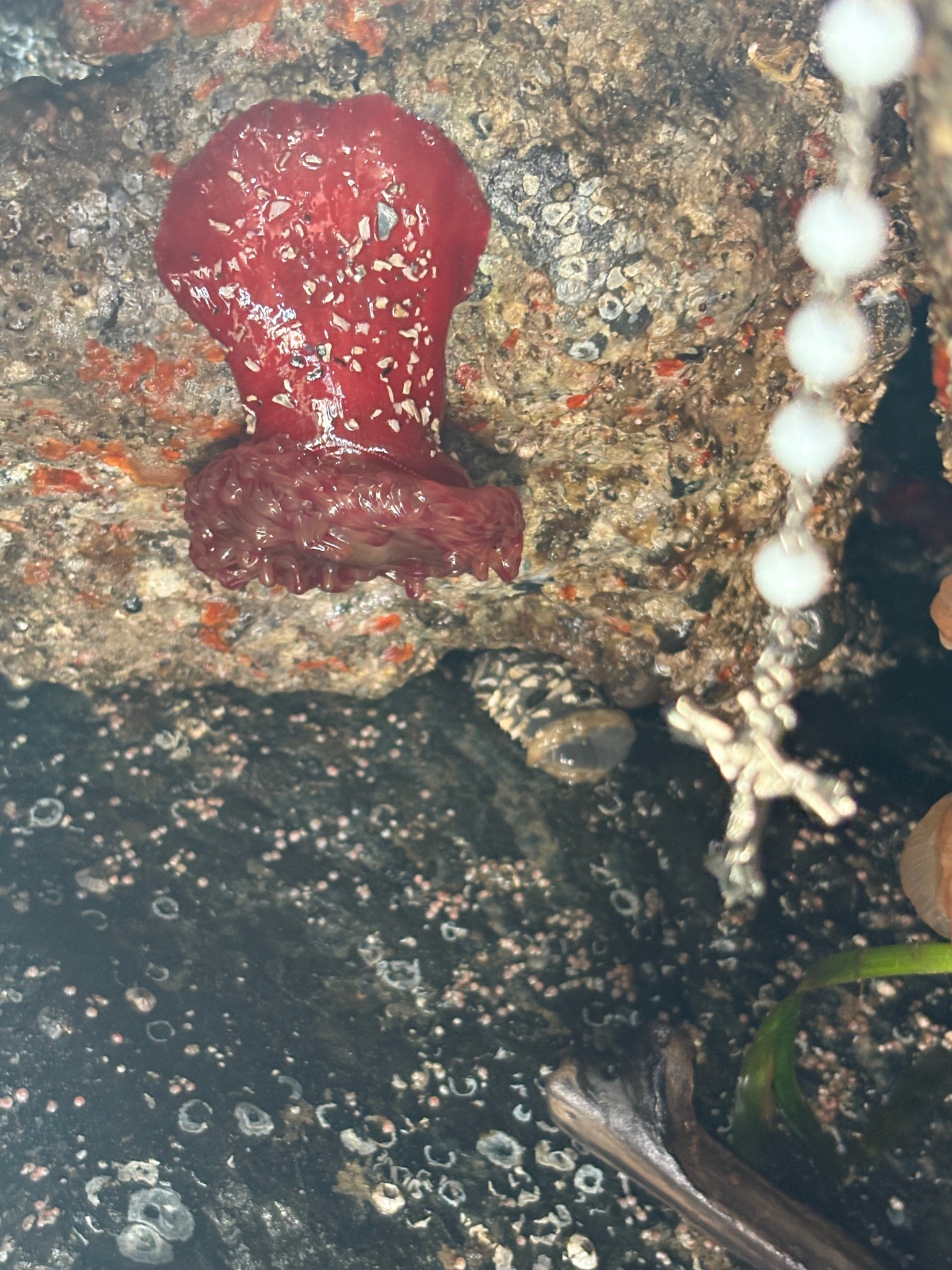
Commonly deep red, green, or brown. When submerged, it displays long, slender tentacles. When exposed at low tide, it contracts into a blob-like shape often covered in bits of shell and sand. The column typically has sticky bumps (verrucae) that help it hold onto debris for protection from the sun and predators.
Habitat
Found in rocky intertidal zones, typically buried in sand or attached to rocks in tide pools or crevices.
When to Find It
Can be observed year-round, primarily during low tides.
Conservation Status
Not Evaluated
Ecological Role
Acts as both a predator of small invertebrates and a host for symbiotic algae (zooxanthellae), contributing to the nutrient cycle of tide pool ecosystems.
Easily Confused With
Sanded Anemone (Anthopleura nigrescens) or Aggregating Anemone (Anthopleura elegantissima). The Moonglow anemone is distinguished by its tendency to live somewhat buried in sand and its specific pattern of radiating lines when open.
Observation Tips
Look in tide pools at low tide on Washington beaches. Avoid touching anemones as they have stinging cells called nematocysts that can irritate sensitive skin, and touching them causes the animal to waste energy by contracting.
Interesting Facts
This anemone can live for decades. The bits of shell and gravel it attaches to its body aren't just for camouflage; they also help reflect sunlight and keep the animal cool and moist when the tide is out.
User Notes
Washington state beach