Hollyhock
Scientific Name: Alcea rosea
Category: plant
Brief Description
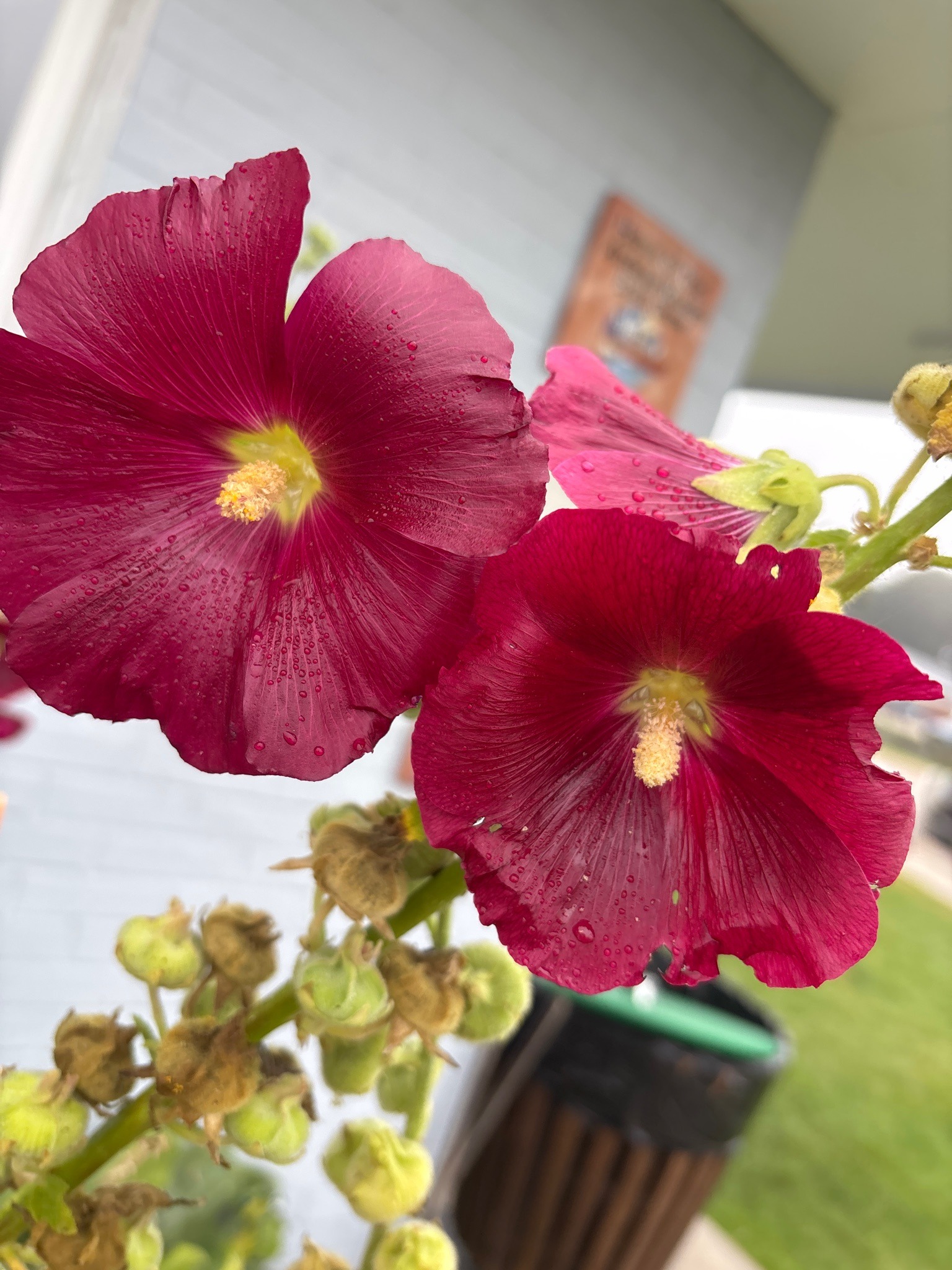
A tall, stately biennial or short-lived perennial plant featuring large, showy, cup-shaped flowers blooming in clusters along a central vertical stalk.
Characteristics
Large, deeply lobed or heart-shaped rough leaves at the base, with tall unbranched flowering stems. Flowers come in various colors including deep red, pink, yellow, white, and purple, featuring prominent central staminal columns.
Habitat
Cultivated in gardens, along walls, and in cottage gardens; thrives best in well-drained soils with full sun.
When to Find It
Blooms during mid to late summer, typically from July to September.
Conservation Status
N/A
Ecological Role
Attracts pollinators such as bees, butterflies, and hummingbirds, serving as an important nectar source.
Easily Confused With
Hardy hibiscus, which also features large showy flowers but typically grows on woody shrubs rather than a tall unbranched spike.
Observation Tips
Best observed in sunny garden settings during peak summer months when blooms are fully open and attracting pollinators.
Interesting Facts
Hollyhocks have been cultivated for centuries and are traditionally associated with old-fashioned cottage gardens. Their fibers can be used to make paper, and historically, various parts of the plant have been used in herbal remedies.