White-faced saki
Scientific Name: Pithecia pithecia
Category: mammal
Brief Description
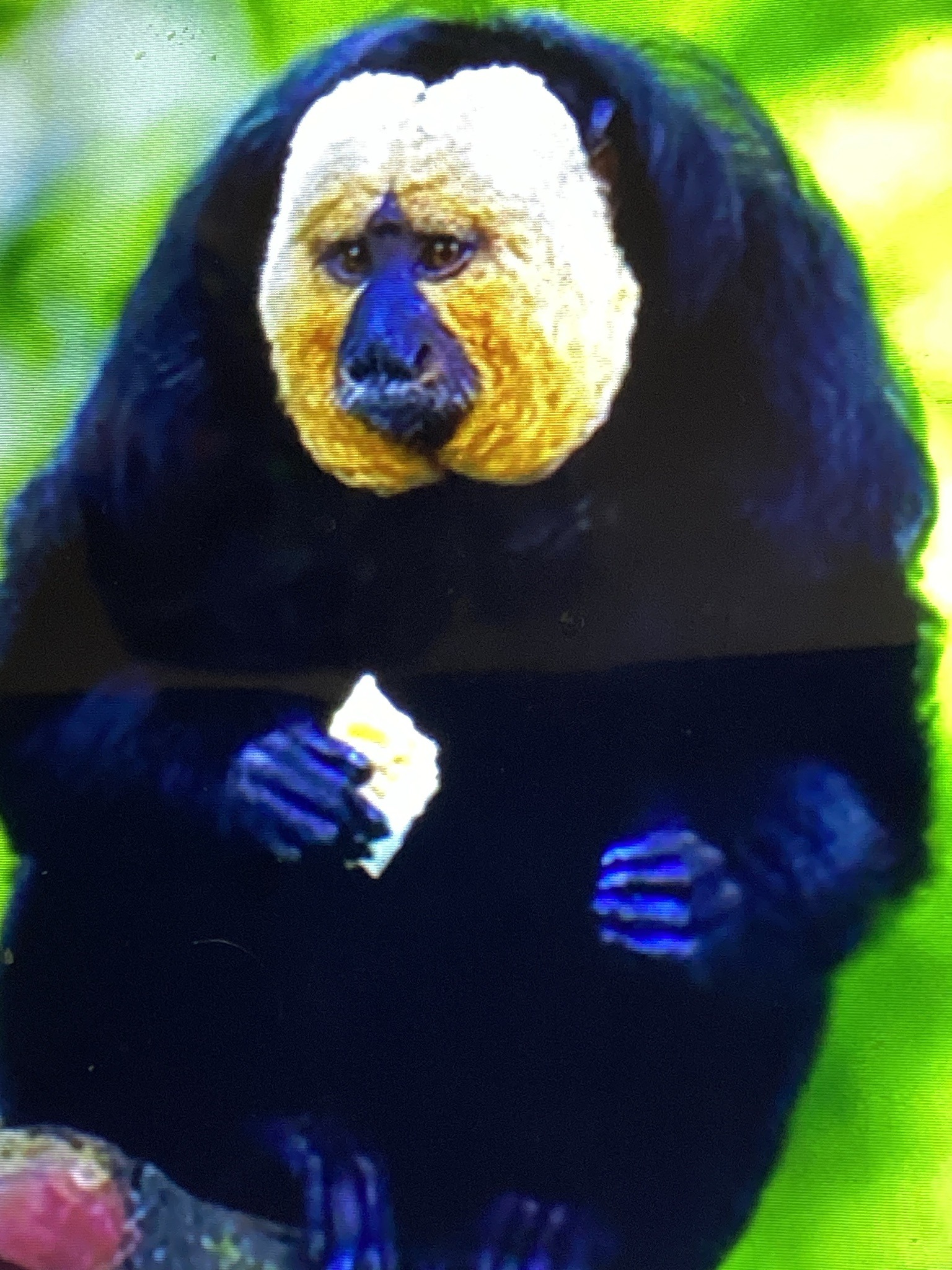
The white-faced saki is a New World monkey easily recognized by the male's striking contrast of a stark white or pale yellowish face framed by thick black body fur.
Characteristics
Males feature dense black fur covering the body with a prominent off-white or yellowish facial disk surrounding a dark nose and eyes. Females look remarkably different, with brownish-gray fur and light streaks running from the eyes down beside the nose. They have long, bushy, non-prehensile tails.
Habitat
Tropical rainforests, specifically preferring the middle and lower canopy levels of lowland rainforests, flooded forests, and swamp forests in northern South America (Guianas, Brazil, Venezuela).
When to Find It
Diurnal and active year-round; most active during early morning and late afternoon hours.
Conservation Status
Least Concern (IUCN Red List), though localized populations face threats from habitat destruction and hunting.
Ecological Role
Plays a crucial role in tropical forest ecosystems as a primary seed disperser. Their specialized teeth allow them to crush hard seeds and fruits, aiding plant reproduction and forest diversity.
Easily Confused With
Monk saki (Pithecia monachus) and other saki monkey species, which lack the stark, solid white facial mask present in male white-faced sakis.
Observation Tips
Look high in the rainforest mid-canopy. They are remarkable acrobats capable of leaping great distances (up to 30 feet) between trees, earning them the nickname 'flying monkeys'.
Interesting Facts
White-faced sakis exhibit strong sexual dimorphism, meaning males and females look so different that early naturalists thought they were two completely separate species. They also form monogamous pairs that mate for life and defend small territories together.