Clam Worm
Scientific Name: Alitta brandti (or Alitta virens)
Category: other
Brief Description
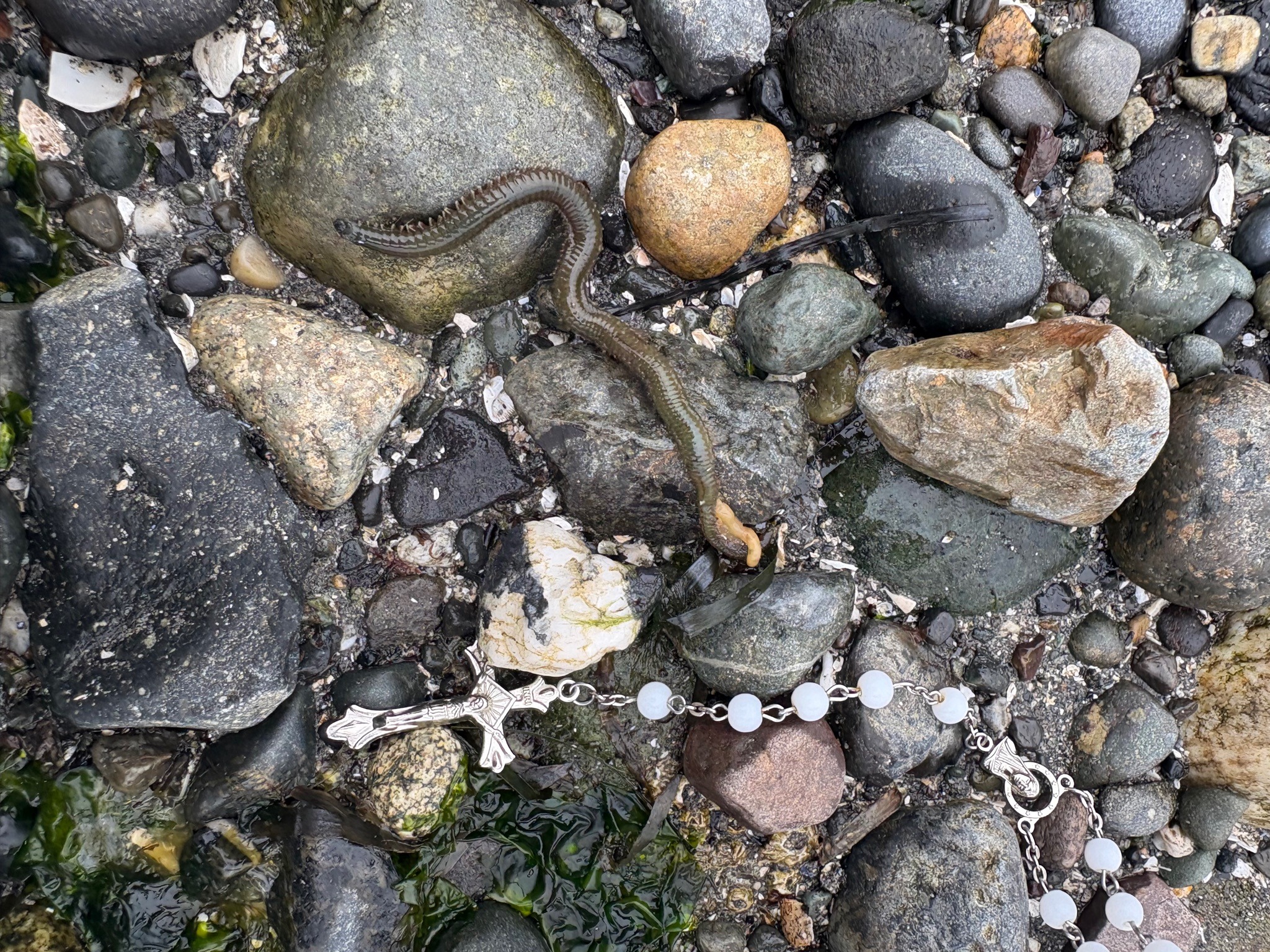
A segmented marine polychaete worm commonly found in intertidal zones, recognized by its iridescent body and many leg-like appendages.
Characteristics
Elongated, segmented body with numerous lateral parapodia (fleshy, leg-like projections). They often exhibit a metallic or iridescent sheen and possess powerful, retractable black jaws used for feeding.
Habitat
Found in the intertidal and subtidal zones of coastal areas, typically burrowing in mud, sand, or hiding under rocks and eelgrass.
When to Find It
Most active at night; during spring and summer nights, they may swarm near the surface of the water to spawn (the 'epitoke' phase).
Conservation Status
N/A
Ecological Role
A critical part of the coastal food web, serving as both a predator of smaller invertebrates and a primary food source for shorebirds, fish, and crabs.
Easily Confused With
Lugworms (thicker, less distinct legs) or Bloodworms (distinctly redder and lacking the prominent parapodia). Distinguishable by their more 'centipede-like' appearance and iridescence.
Observation Tips
Best found during low tide by carefully flipping over rocks or digging in sandy mud. Caution: do not handle with bare hands as larger specimens can deliver a painful pinch with their jaws.
Interesting Facts
During their breeding cycle, these worms undergo a physiological transformation called 'epitoky' where their bodies change shape to become better swimmers for a one-time mass spawning event.
User Notes
What is that weird worm thing, found on Washington state beach