Bunchberry
Scientific Name: Cornus canadensis
Category: plant
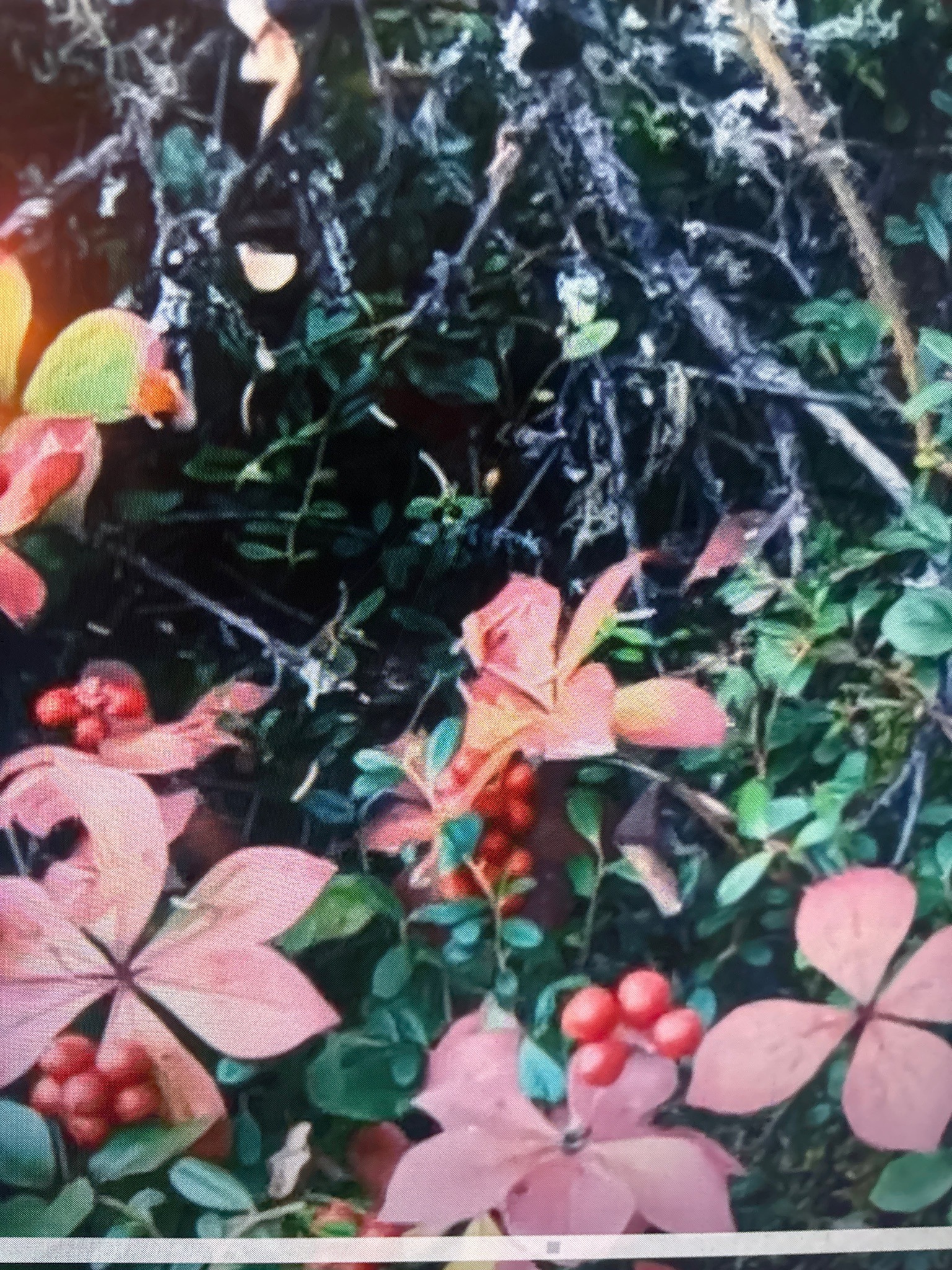
Brief Description
A low-growing woodland perennial plant known for its whorled leaves, attractive white bracts, and bright red clusters of edible berries.
Characteristics
Features a single whorl of 4 to 6 leaves near the top of a low stem. In summer, it produces a cluster of small greenish flowers surrounded by four white petal-like bracts, which develop into dense clusters of bright red, globular berries in autumn. The leaves often turn a brilliant reddish-purple in the fall.
Habitat
Found in moist coniferous or mixed forests, bogs, and shaded acidic soils across northern and cool temperate regions.
When to Find It
Best observed in summer when in flower or autumn when leaves turn red and berries ripen.
Conservation Status
Secure
Ecological Role
Provides an important food source for various forest birds and small mammals, which help disperse the seeds.
Easily Confused With
Dwarf cornel (Cornus suecica), which is very similar and sometimes considered the same species or a closely related counterpart in different regions; distinguishing is primarily geographical and subtle floral details.
Observation Tips
Look closely at the forest floor in damp, shaded areas beneath conifers or deciduous trees during late summer and autumn.
Interesting Facts
Bunchberry has one of the fastest plant movements known: its flowers explode to release pollen in less than 0.5 milliseconds, using a catapult mechanism.