Black Walnut
Scientific Name: Juglans nigra
Category: tree
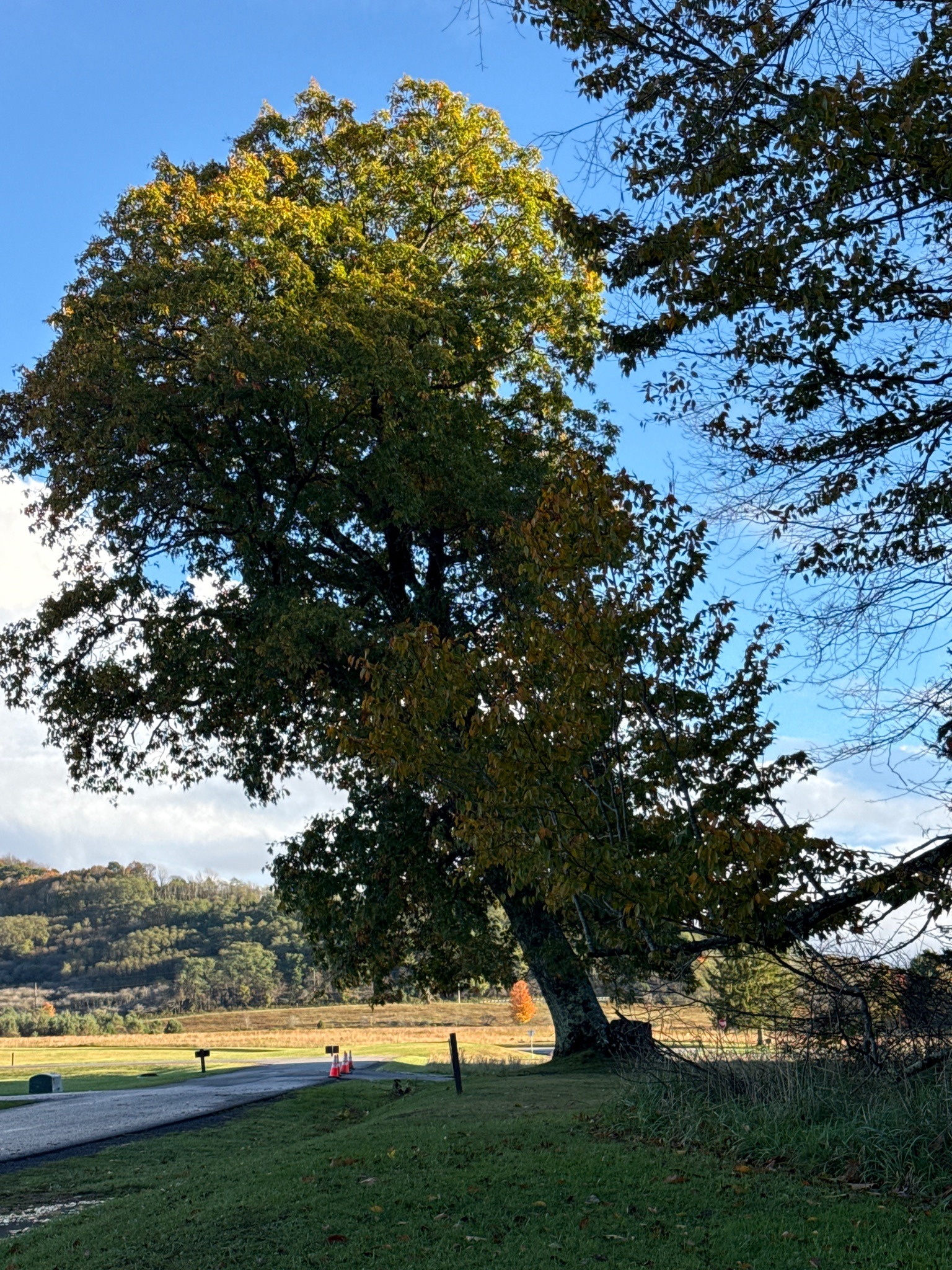
Brief Description
A large deciduous tree characterized by a dark, deeply furrowed bark, large compound leaves, and round green fruits containing hard-shelled nuts.
Characteristics
Grows up to 30-40 meters tall with a straight trunk and a rounded crown. Leaves are alternate, pinnately compound with 10-24 leaflets and a terminal leaflet. Bark is dark brown to black, deeply furrowed into distinct ridges. Produces large, round, green husk-covered fruits that turn yellowish-brown as they mature.
Habitat
Found naturally in rich, deep, moist soils along streams and in mixed forests, but frequently planted in open fields, yards, and roadsides.
When to Find It
Best observed in spring and summer for lush foliage, autumn for golden-yellow leaf color and falling nuts, and winter for silhouette and persistent twigs.
Conservation Status
Least Concern
Ecological Role
Provides food and habitat for numerous birds and mammals, particularly squirrels. Produces a chemical called juglone which inhibits the growth of certain competing plants.
Easily Confused With
Butternut (Juglans cinerea), which has sticky, elongated fruits and lighter bark.
Observation Tips
Look for the distinctive dark ridged bark and large compound leaves. Watch out for falling heavy nuts in the autumn.
Interesting Facts
Black walnut wood is highly valued for fine furniture and cabinetry due to its rich dark color and durability. The hulls have historically been used to make brown dyes.