Cougar
Scientific Name: Puma concolor
Category: mammal
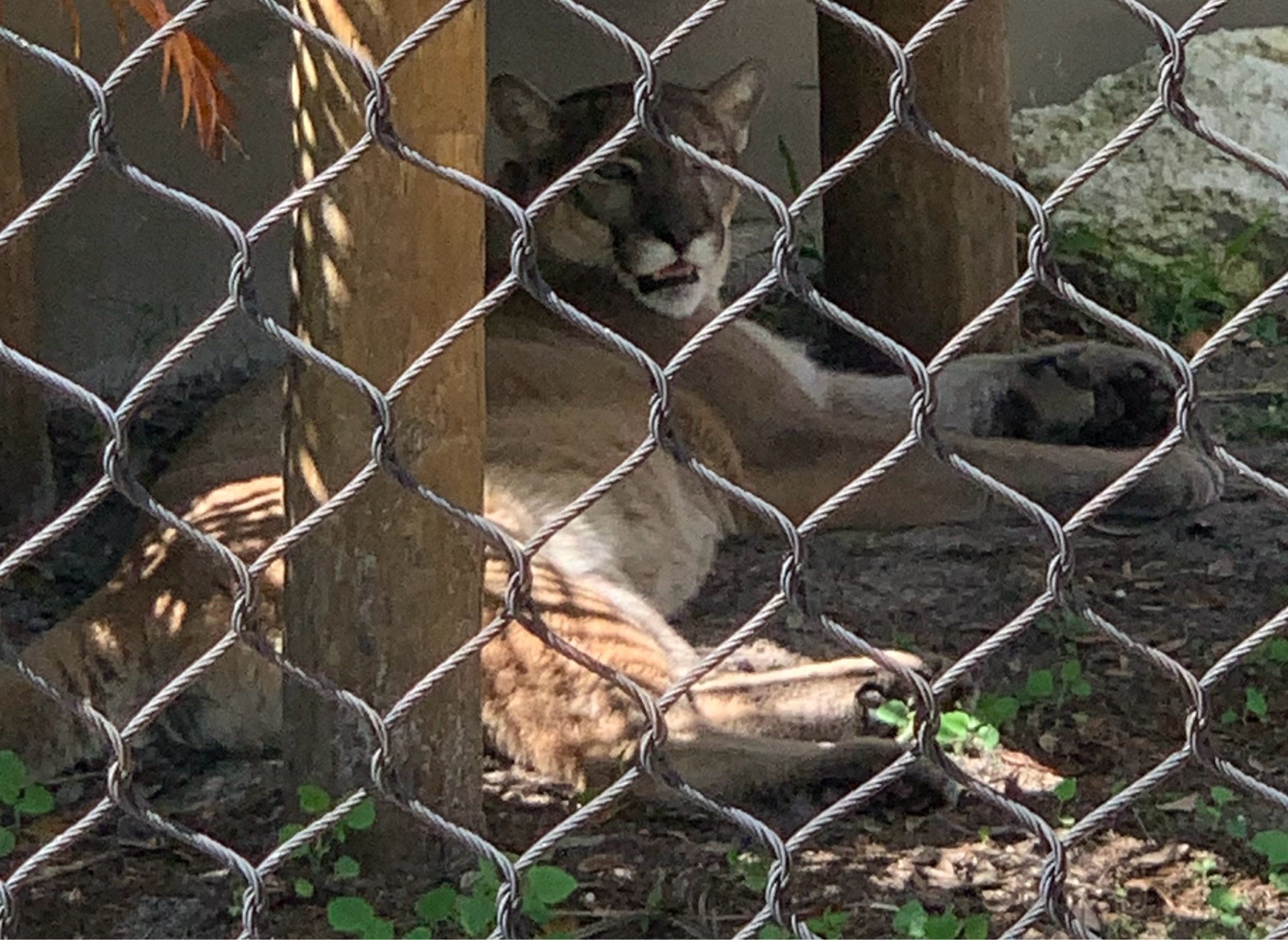
Brief Description
A large, powerful tawny-colored wild cat native to the Americas, also known as a mountain lion or puma.
Characteristics
Slender and agile with a tawny, grayish-brown or reddish coat. It has a long neck, a small head with short, rounded ears, and a long tail with a black tip. Adults have green-gold or brown eyes.
Habitat
Found in diverse habitats including mountains, forests, deserts, and wetlands. They require areas with dense undergrowth or rocky cover for stalking. Range extends from the Canadian Yukon to the southern Andes in South America.
When to Find It
Active year-round; most active at dawn and dusk (crepuscular).
Conservation Status
Least Concern (population stable overall, but certain subspecies like the Florida Panther are Endangered).
Ecological Role
As an apex predator, they play a vital role in regulating deer and elk populations and influencing the movement of other species, which contributes to overall ecosystem health.
Easily Confused With
Jaguar (larger, stockier, with rosettes), Bobcat (much smaller with a short 'bobbed' tail and ear tufts).
Observation Tips
In the wild, they are incredibly elusive and avoid humans. If encountered, do not run; stand tall, make noise, and maintain eye contact. In captivity, observe quietly from behind safety barriers.
Interesting Facts
The cougar holds the Guinness World Record for the animal with the most names, with over 40 names in English alone. Despite their size, they cannot roar; instead, they purr, hiss, and scream.