Chocolate Tube Slime Mold
Scientific Name: Stemonitis fusca
Category: fungi
Brief Description
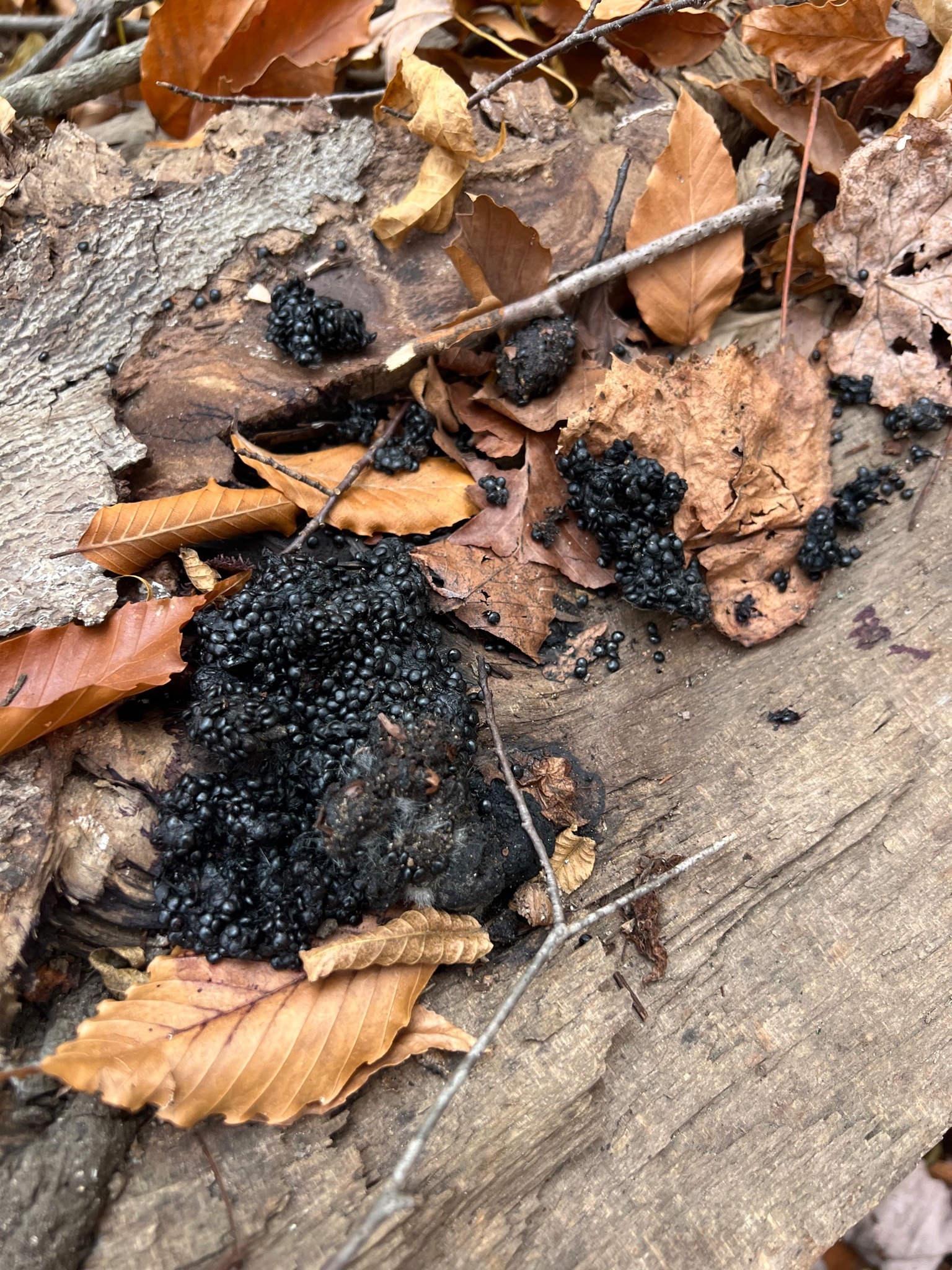
A slime mold characterized by clusters of dark brown to black, egg-shaped or cylindrical spore-bearing structures (sporangia) found on decaying wood.
Characteristics
Forms tightly packed clusters of cylindrical, dark brown to black sporangia on slender stalks, though sometimes appearing sessile or melting into a mass of spores when mature.
Habitat
Decaying logs, stumps, and dead wood in moist forests and woodlands.
When to Find It
Most commonly observed during damp, warm periods in spring, summer, and autumn.
Conservation Status
N/A
Ecological Role
Plays an important role in decomposition and nutrient cycling by feeding on bacteria, yeasts, and fungal spores on decaying wood.
Easily Confused With
Other Stemonitis species or other dark slime molds like Didymium, distinguished primarily by microscopic spore ornamentation and exact growth habit.
Observation Tips
Look closely at rotting logs on humid or rainy days. Do not disturb them unnecessarily to watch their life cycle progress.
Interesting Facts
Slime molds are not true fungi; they are amoebozoans that can move as a single unified mass (plasmodium) during their feeding stage before producing fruiting bodies.