Ocelot
Scientific Name: Leopardus pardalis
Category: mammal
Brief Description
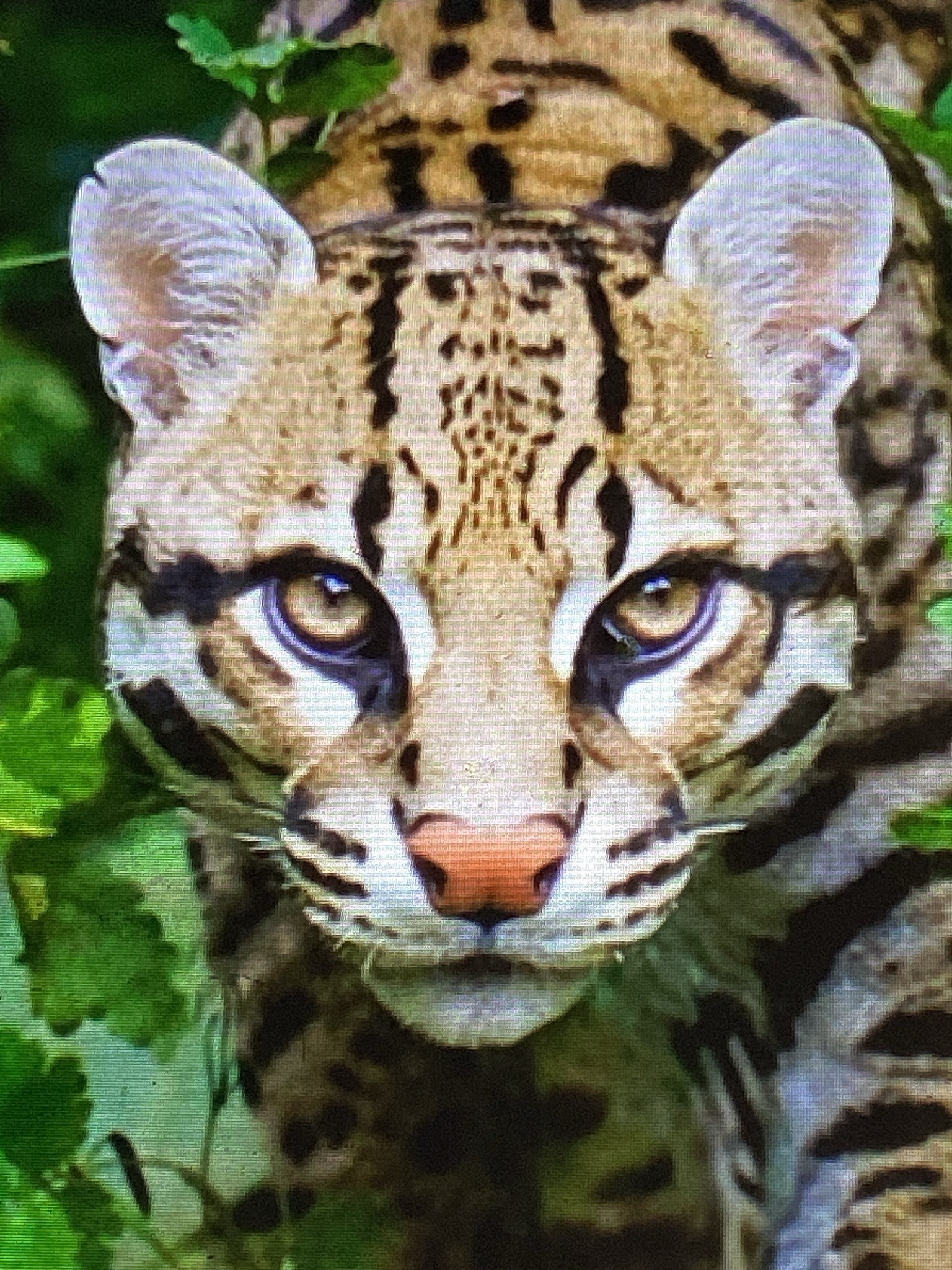
The ocelot is a medium-sized wild cat native to the Americas, recognizable by its striking golden coat decorated with dark chain-like spots and stripes.
Characteristics
Yellowish to tawny coat with chain-like dark spots (rosettes) outlining dark centers, white facial rings with dark facial stripes running from the inner corners of the eyes up the forehead, large rounded ears with a white spot on the back, and a relatively short tail.
Habitat
Dense vegetation, tropical rainforests, thorn scrub, mangrove forests, and savannas across South America, Central America, Mexico, and extreme southern Texas.
When to Find It
Primarily nocturnal and crepuscular, active mostly at night and during dusk or dawn. Active year-round.
Conservation Status
Least Concern globally according to the IUCN, but critically endangered in specific northern parts of its range, such as the United States (southern Texas).
Ecological Role
As a mesopredator, the ocelot helps control populations of small mammals, rodents, reptiles, and birds, playing a vital role in maintaining ecological balance in forest ecosystems.
Easily Confused With
Margay (Leopardus wiedii) is smaller with larger eyes and a longer tail; Oncilla (Leopardus tigrinus) is smaller and slimmer; Jaguar (Panthera onca) is vastly larger and heavier.
Observation Tips
Because they are highly secretive, elusive, and nocturnal, wild ocelots are rarely seen directly; motion-activated trail cameras in dense brush are the most effective way to observe them.
Interesting Facts
Unlike many domestic cats, ocelots are adept swimmers and comfortable in water. Each ocelot's coat pattern is unique, acting much like a human fingerprint.
User Notes