Rose Hip
Scientific Name: Rosa spp.
Category: plant
Brief Description
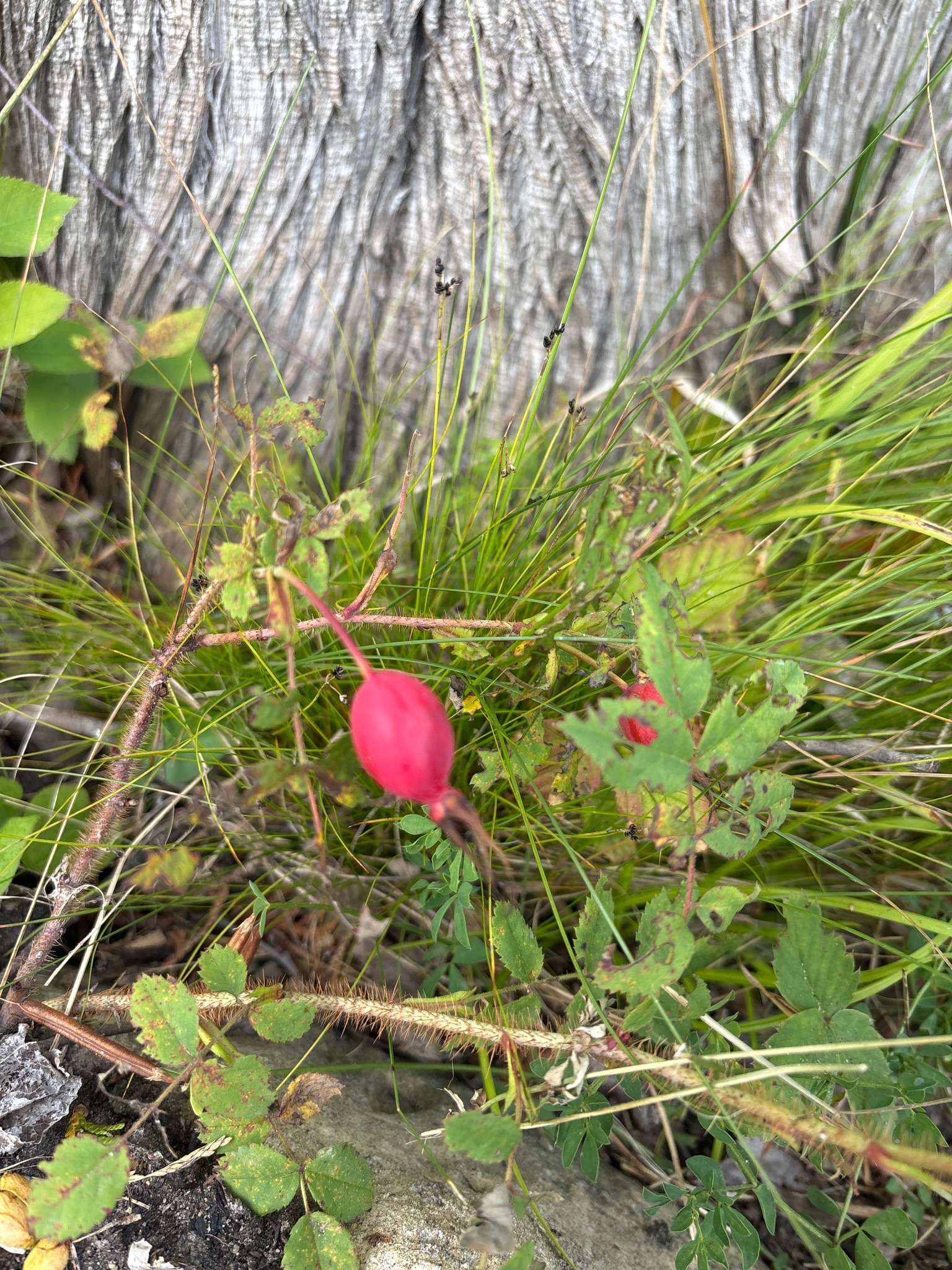
The pseudo-fruit of the rose plant, typically red or orange, containing seeds and remaining on the stem after the flower petals drop.
Characteristics
Bright red to orange-red oval or round fleshy structures, topped with remnants of the flower's sepals at the base. Stems often feature sharp, prickly thorns and compound leaves with serrated leaflets.
Habitat
Found in wild and cultivated areas including woodlands, edges of forests, roadsides, hedgerows, and open fields.
When to Find It
Forms in late summer and typically persists through autumn and into winter.
Conservation Status
N/A
Ecological Role
Provides an essential food source for birds and small mammals during the winter months, and helps with seed dispersal.
Easily Confused With
Can be confused with other red wild berries such as cotoneaster or pyracantha berries, but rose hips are distinguished by the distinct calyx remnants (the 'eye') at the bottom and their connection to prickly rose canes.
Observation Tips
Look along woodland edges and hedgerows in late summer and autumn when the bright red color contrasts with fading foliage.
Interesting Facts
Rose hips are exceptionally rich in vitamin C and are frequently used to make herbal teas, syrups, and jellies.