Large-leaved Lupine
Scientific Name: Lupinus polyphyllus
Category: plant
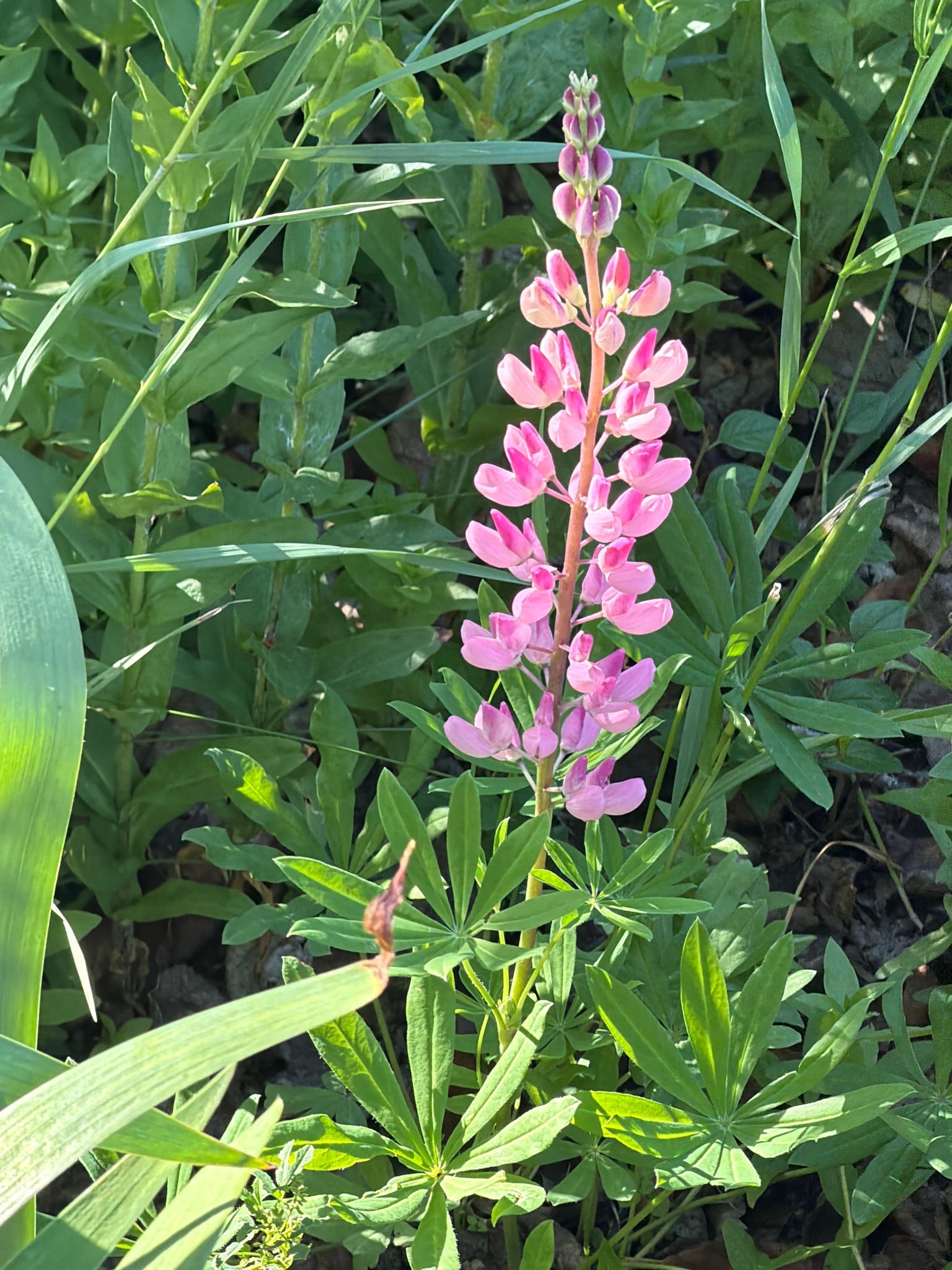
Brief Description
A tall flowering perennial known for its dense spikes of pea-like flowers and palmately compound leaves.
Characteristics
Features an upright flower spike (raceme) with numerous pink to purple pea-shaped blossoms. The leaves are palmately compound, typically having 9 to 17 leaflets radiating from a central point.
Habitat
Found in moist meadows, stream banks, open woodlands, and along roadsides.
When to Find It
Late spring to early summer (typically May through July).
Conservation Status
Common; however, it is considered invasive in some parts of Europe and New Zealand.
Ecological Role
Provides food for various pollinators including bees and hummingbirds. Like other legumes, it facilitates nitrogen fixation in the soil. It is also a host plant for certain butterfly larvae.
Easily Confused With
Wild Lupine (Lupinus perennis) which is smaller and usually has fewer leaflets (7 to 11). Often confused with Delphiniums, which have differently shaped spurred flowers.
Observation Tips
Look for them in full sun to partial shade in damp areas. They are best photographed in the soft light of early morning when dew might still be on the leaves.
Interesting Facts
Many species of Lupinus contain alkaloids that can be toxic to livestock if consumed in large quantities. The name 'lupine' comes from the Latin 'lupus' (wolf), based on the mistaken belief that the plants 'wolfed' nutrients from the soil.