Rugosa Rose
Scientific Name: Rosa rugosa
Category: plant
Brief Description
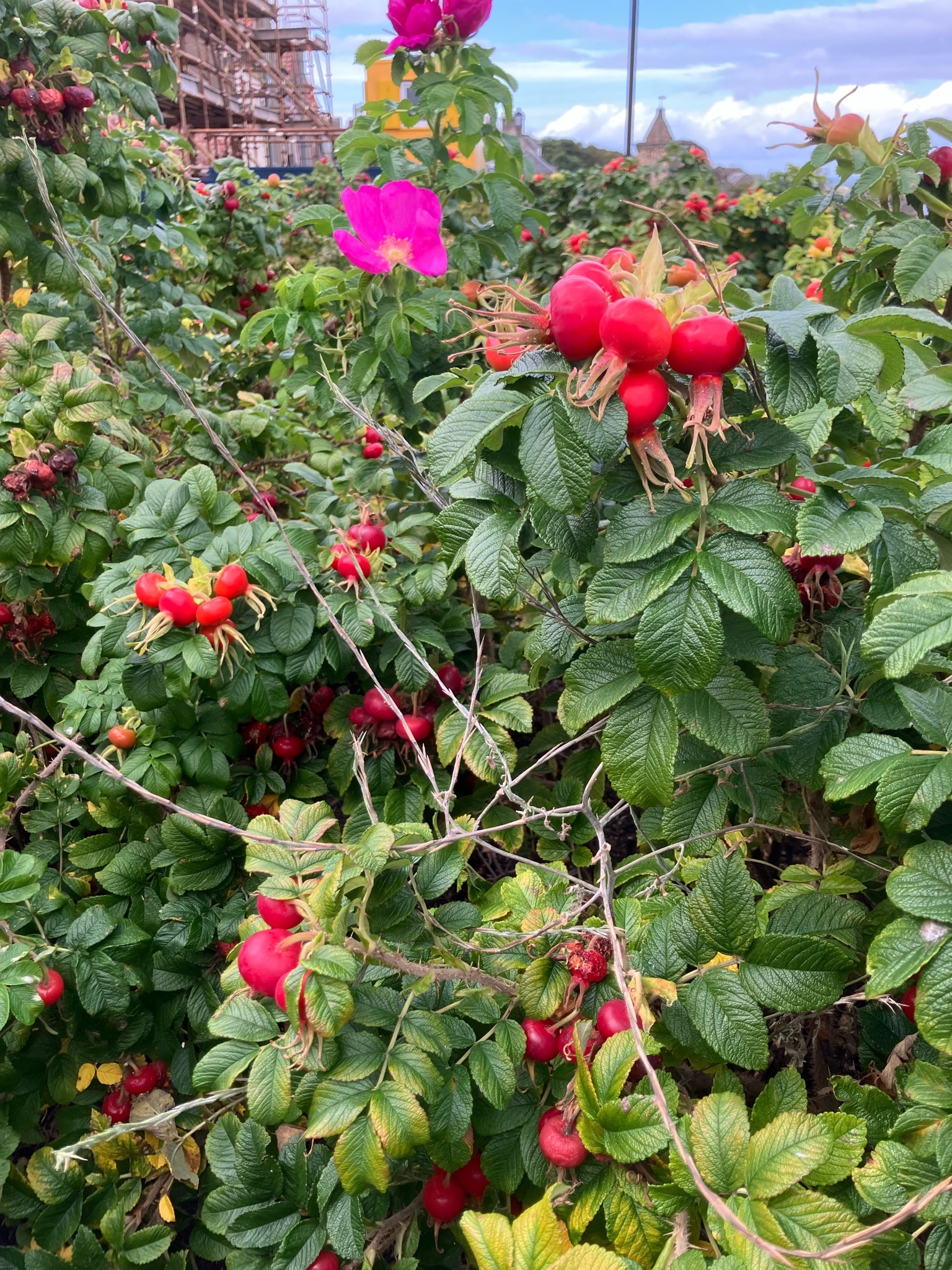
A dense, thorny shrub featuring wrinkled, dark green leaves, large pink or white fragrant flowers, and large, bright red tomato-like rose hips.
Characteristics
Stems are densely covered in numerous straight, slender prickles of varying sizes. Leaves are dark green, thick, and characteristically heavily wrinkled (rugose) with a dull surface and downy undersides. Flowers are large (6-9 cm across) with five petals, typically magenta or pink. Fruits (hips) are large, globose, smooth, and remain on the plant into winter.
Habitat
Coastal dunes, sandy beaches, sea cliffs, and occasionally disturbed inland areas, thriving in sandy, well-drained soils and high salt tolerance.
When to Find It
Flowers from spring through late summer; large red rose hips develop in late summer and persist through autumn and winter.
Conservation Status
N/A
Ecological Role
Provides food for birds and small mammals through its hips, and nectar for pollinators via its open flowers. Often used for coastal stabilization due to its extensive root system.
Easily Confused With
Other wild roses such as the Dog Rose (Rosa canina), which has smoother, less wrinkled leaves, smaller hips, and hooked prickles rather than dense straight thorns.
Observation Tips
Look for dense shrub thickets near coastlines or planted in coastal parks. Be cautious of the extremely dense, sharp thorns when approaching.
Interesting Facts
The rose hips are exceptionally rich in vitamin C and are frequently used to make jams, jellies, and teas. The species name 'rugosa' means 'wrinkled' in Latin, referring to the texture of the leaves.