Carolina Grass-of-Parnassus
Scientific Name: Parnassia caroliniana
Category: plant
Brief Description
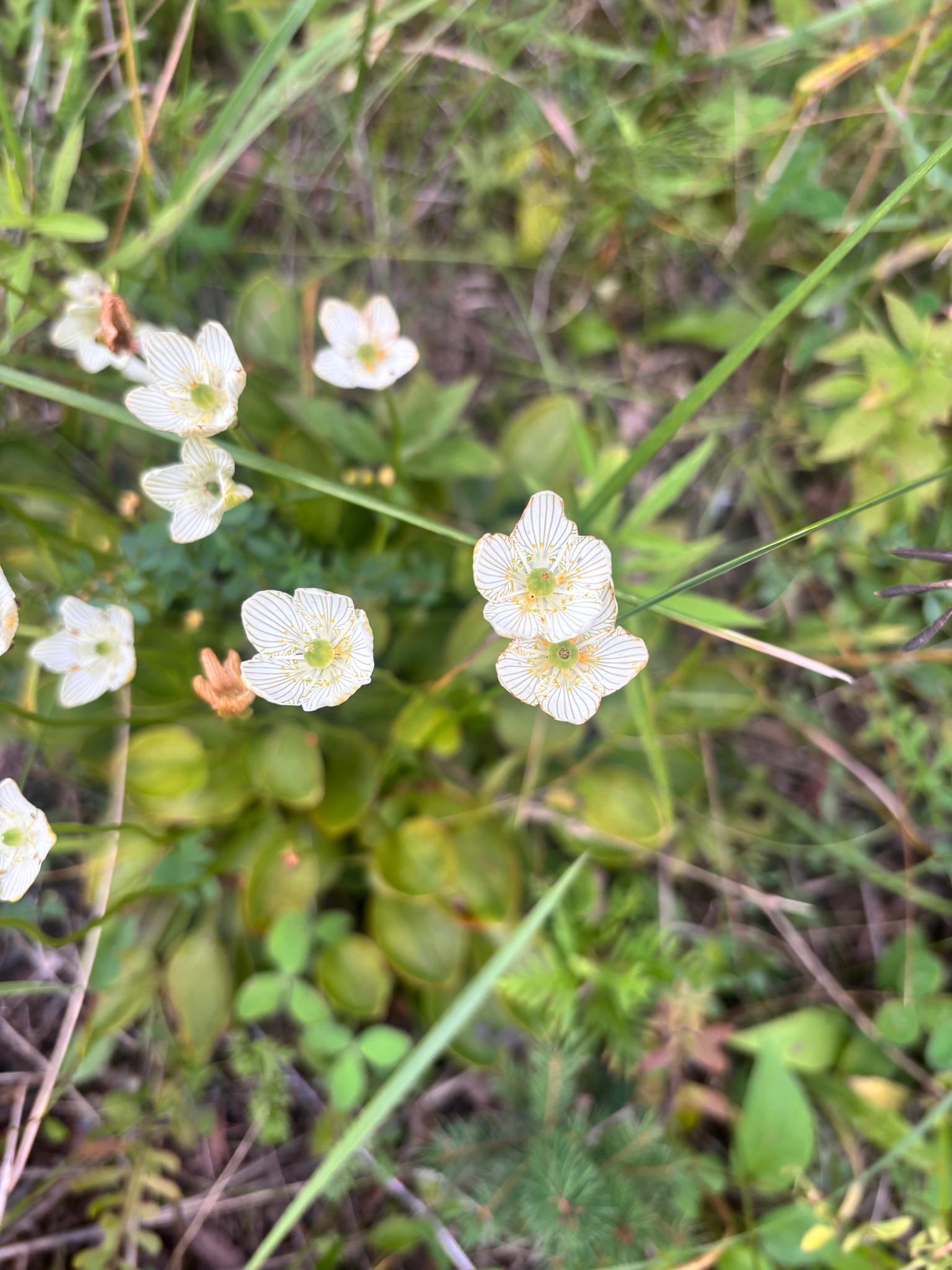
A delicate perennial wildflower featuring solitary white flowers with distinctive translucent green or yellow veins on the petals.
Characteristics
Features smooth, rounded basal leaves and upright stems bearing a single white flower with five petals distinctly marked with fine, branching green veins. The center includes a prominent green ovary and specialized sterile stamens (staminodes) tipped with glandular structures that mimic nectar droplets.
Habitat
Wet meadows, bogs, fens, seepage slopes, and damp woodland borders.
When to Find It
Blooms from late summer to autumn, typically July through October.
Conservation Status
Varies by region; secure in parts of its range but considered rare or of conservation concern in certain states due to wetland habitat loss.
Ecological Role
Attracts various pollinating insects such as flies and bees with its nectar-mimicking staminodes, contributing to wetland biodiversity.
Easily Confused With
Other Parnassia species (such as Parnassia glauca), distinguished primarily by leaf shape, stem leaf attachment, and exact geographical range.
Observation Tips
Look in calcareous fens and damp open areas during late summer. Wear waterproof footwear as their preferred habitat is typically very wet.
Interesting Facts
Despite the common name, grasses-of-Parnassus are not grasses at all, but members of the staff-tree family (Celastraceae) or Saxifragaceae depending on modern taxonomic revisions, and derive their name from Mount Parnassus in Greek mythology.