Rugosa Rose (Rose Hips)
Scientific Name: Rosa rugosa
Category: plant
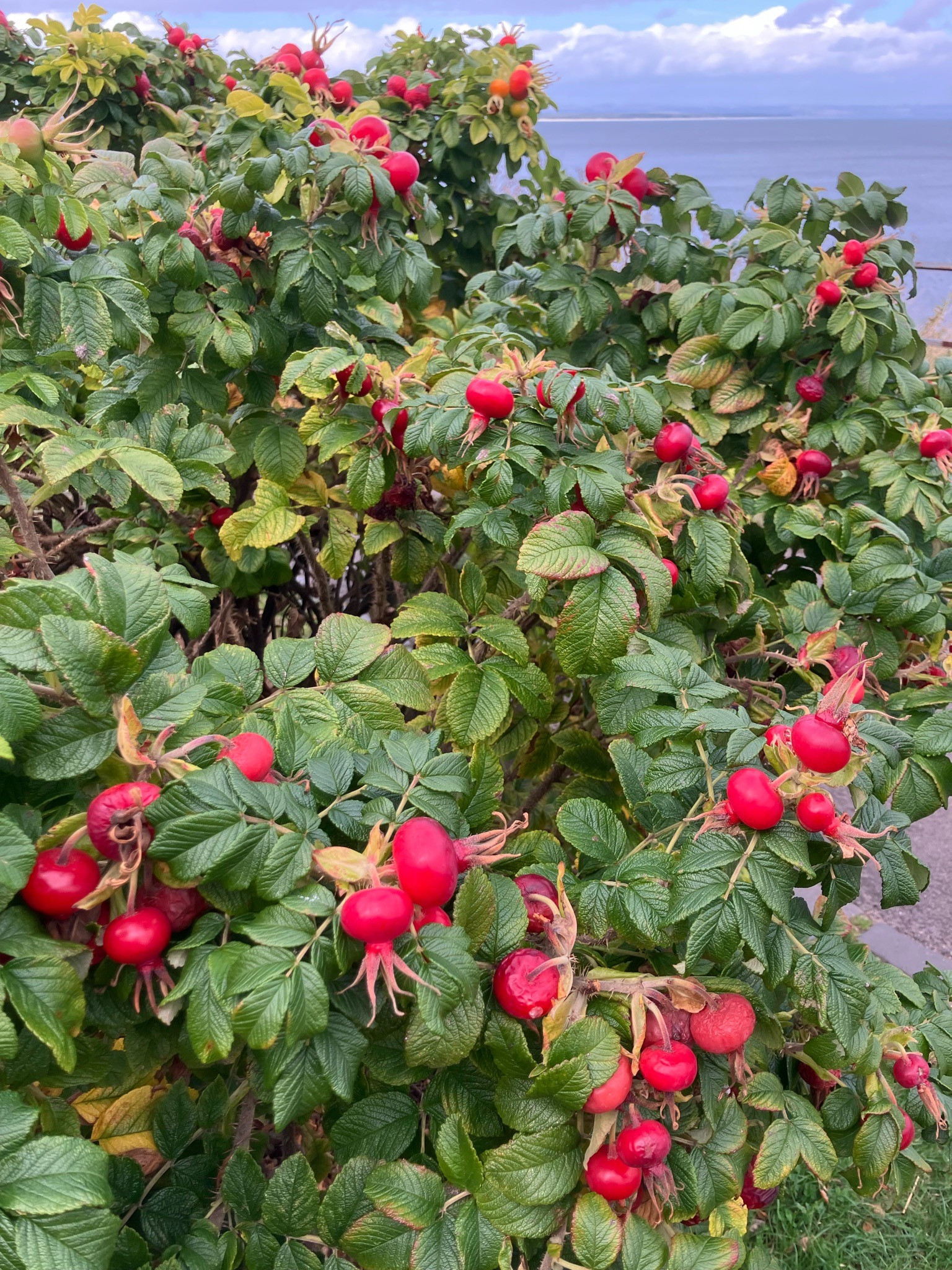
Brief Description
A dense, thorny shrub featuring wrinkled, dark green leaves and large, fleshy bright red to orange-red fruits known as rose hips.
Characteristics
Stems are densely covered in numerous straight, slender thorns and prickles. Leaves are pinnate with 5 to 9 leaflets that have strongly wrinkled (rugose) upper surfaces and hairy undersides. The fruits (hips) are large, globose, tomato-like, and topped with persistent sepals.
Habitat
Coastal dunes, sandy beaches, sea cliffs, and disturbed areas, though frequently planted in gardens and parks.
When to Find It
Rose hips typically develop in late summer and persist through autumn and winter.
Conservation Status
Least Concern
Ecological Role
Provides food for birds and small mammals, which help disperse the seeds. The flowers offer nectar for various pollinators.
Easily Confused With
Other rose species with hips, such as Dog Rose (Rosa canina), which generally has smoother stems with fewer prickles and smaller, more oval hips.
Observation Tips
Look along coastal paths and sandy shores in late summer and autumn when the vibrant red hips stand out against the foliage.
Interesting Facts
Rose hips are exceptionally rich in vitamin C and are commonly used to make teas, jams, and syrups. The species name 'rugosa' means wrinkled, referring to the texture of the leaves.