Bluegill
Scientific Name: Lepomis macrochirus
Category: fish
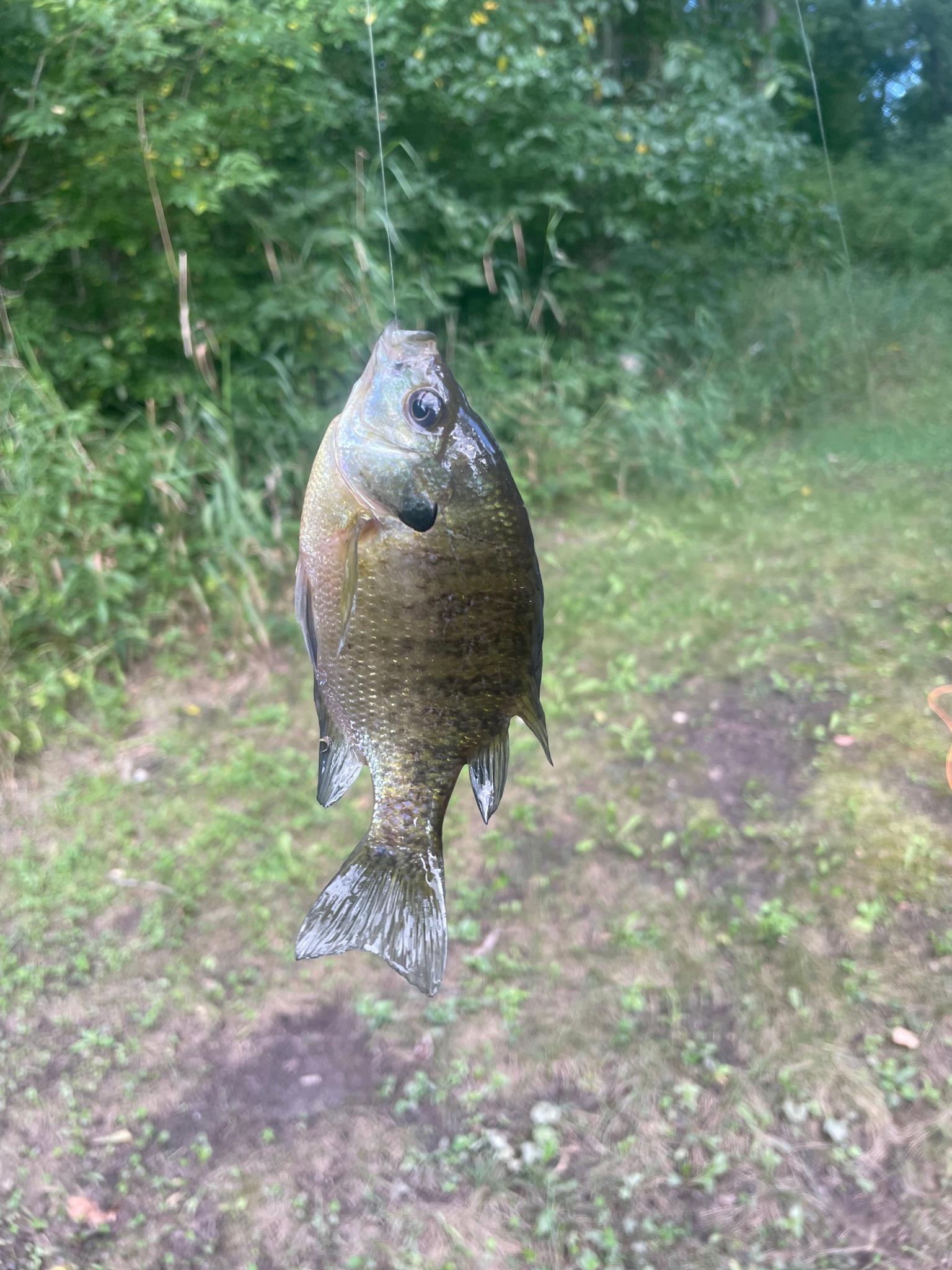
Brief Description
A freshwater fish belonging to the sunfish family, easily recognized by its distinctive dark blue or black 'ear' flap and deep, compressed body.
Characteristics
Deep, compressed, oval-shaped body; small mouth; dark spot at the rear of the dorsal fin; distinct dark opercular flap (ear flap) without a light border; vertical bars along the sides which can become more prominent when stressed.
Habitat
Freshwater lakes, ponds, slow-moving streams, and reservoirs, typically preferring areas with abundant aquatic vegetation, submerged logs, or docks.
When to Find It
Most active during spring and summer months, especially during spawning season in late spring and early summer in shallow water.
Conservation Status
Least Concern
Ecological Role
Serves as an important prey species for larger game fish and birds, and helps control insect populations by feeding on aquatic invertebrates and mosquito larvae.
Easily Confused With
Pumpkinseed sunfish, which features bright turquoise markings on the gill covers and a red or orange spot on the ear flap, and Green sunfish, which has a larger mouth and a body that is more elongated.
Observation Tips
Look near shallow weed beds, docks, or sunken timber during late spring and summer using light tackle or polarized sunglasses to spot them in clear water.
Interesting Facts
Bluegills build circular nests in shallow water during the spawning season, and males fiercely guard these nests and the resulting eggs and fry from predators.