Wolf Spider
Scientific Name: Family Lycosidae
Category: insect
Brief Description
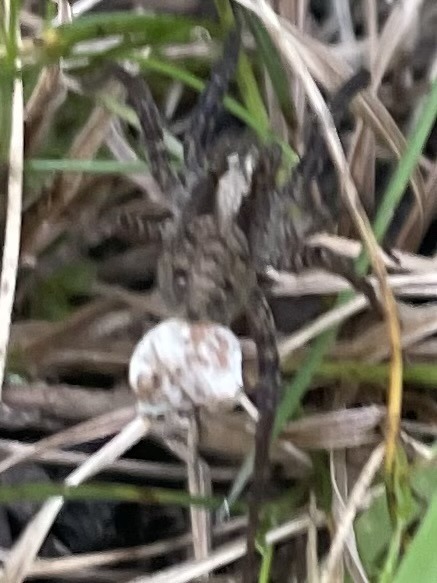
A robust and agile ground-dwelling spider that actively hunts prey rather than building webs, often recognized by its distinctive eye arrangement and carrying an egg sac attached to its spinnerets.
Characteristics
Medium to large size with robust bodies and long, spiny legs. They typically feature mottled brown, grey, or black coloration for camouflage and have eight eyes arranged in three rows, with the middle row containing two very large eyes.
Habitat
Found in a wide range of habitats including grasslands, shrublands, woodlands, gardens, and along shores, living primarily on the ground among leaf litter, grass, or rocks.
When to Find It
Active mainly during spring, summer, and autumn, often becoming more noticeable at night when their eyes reflect light.
Conservation Status
N/A
Ecological Role
Acts as an important generalist predator that helps control insect populations in various ecosystems.
Easily Confused With
Nursery web spiders (family Pisauridae), which look similar but carry their egg sacs in their chelicerae (jaws) rather than attaching them to the spinnerets.
Observation Tips
Look for them on the ground at night by using a flashlight, which will catch the reflective glint of their eyes in the grass or leaf litter.
Interesting Facts
Female wolf spiders are unique for their maternal care, carrying their egg sacs attached to their abdomen and later carrying hundreds of newly hatched spiderlings on their backs.