Leucadendron (Conebush)
Scientific Name: Leucadendron sp.
Category: plant
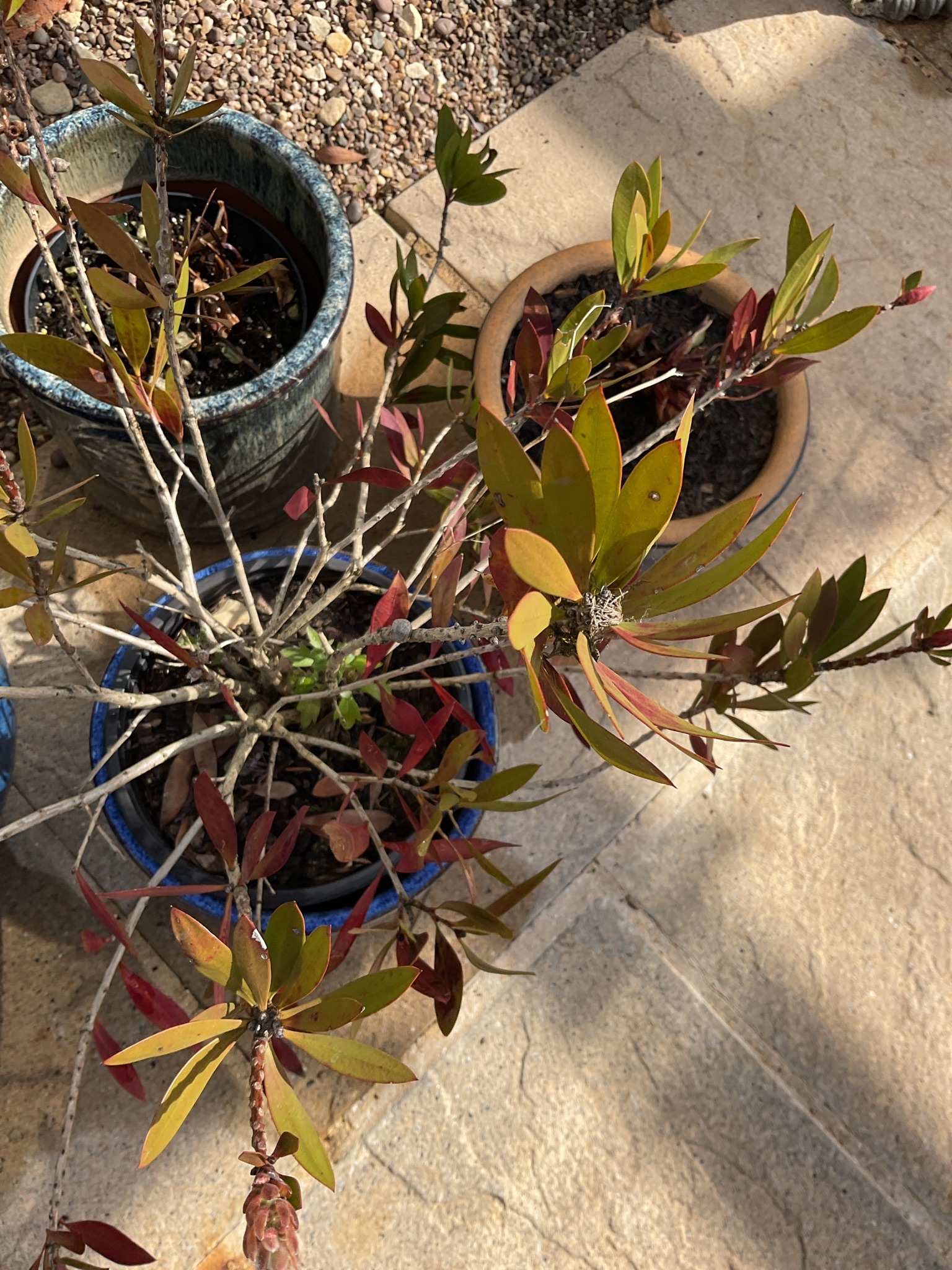
Brief Description
An evergreen shrub belonging to the Protea family, known for its colorful, petal-like bracts surrounding the flowers.
Characteristics
Leathery, lance-shaped leaves arranged spirally. The 'flowers' are actually colorful bracts that change color, often turning shades of red, yellow, or orange. They are dioecious, meaning male and female flowers occur on separate plants.
Habitat
Typically found in acidic, nutrient-poor soils in fynbos shrublands; prefers full sun and well-drained soil.
When to Find It
Bracts usually reach peak color in winter through early spring, providing color when most other plants are dormant.
Conservation Status
Varies by species (some are common, many are endangered or threatened in the wild).
Ecological Role
Key component of the fynbos ecosystem. They provide nectar for specialist pollinators like sunbirds and sugarbirds, and their seeds are often dispersed by ants or wind.
Easily Confused With
Proteas and Banksias. Leucadendrons are distinguished by their smaller, cone-like flower heads and the colorful bracts that surround them, unlike the large, hairy flowers of many Proteas.
Observation Tips
In home gardens, avoid fertilizers with high phosphorus as it is toxic to them. To photograph, capture the plant from above to highlight the geometric arrangement of the bracts.
Interesting Facts
Leucadendron names come from the Greek words 'leukos' (white) and 'dendron' (tree). They are very popular in the cut-flower industry because their bracts remain vibrant for a long time after being harvested.