Anise Hyssop
Scientific Name: Agastache foeniculum
Category: plant
Brief Description
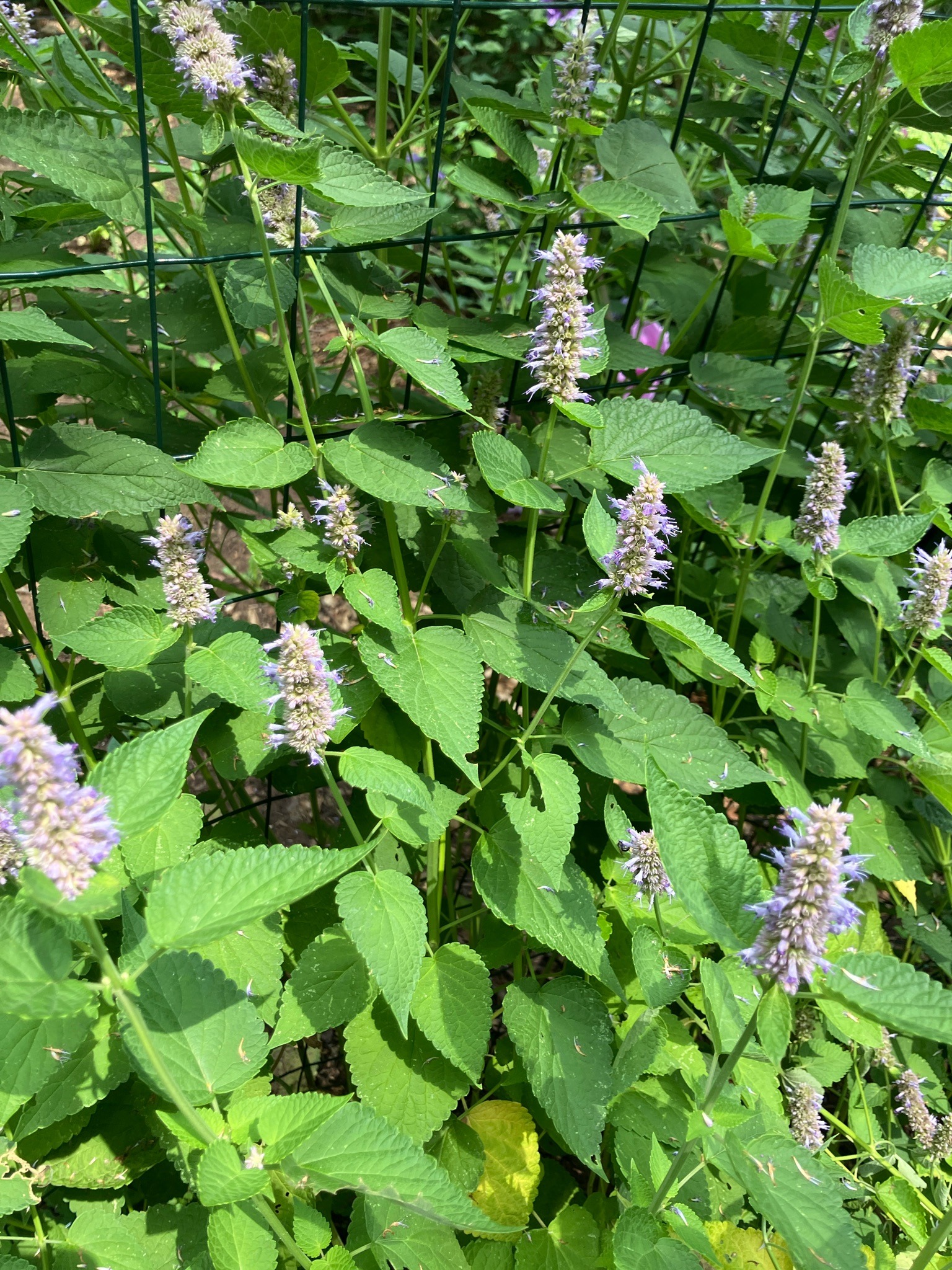
Anise Hyssop is a perennial flowering plant in the mint family, recognizable by its upright spikes of lavender-purple flowers and licorice-scented foliage.
Characteristics
Stems are square-shaped; leaves are ovate with serrated edges and a white tint on the underside. The flowers are small, tube-shaped, and clustered in dense terminal spikes.
Habitat
Found in dry to moist prairies, wood edges, and sunny gardens. It prefers well-drained loamy soils and full sun to partial shade.
When to Find It
Typically blooms from early summer to early autumn (June through September).
Conservation Status
Secure/LC (Least Concern)
Ecological Role
A major nectar source for honeybees, bumblebees, butterflies, and hummingbirds. It is often referred to as a 'pollinator magnet'.
Easily Confused With
Blue Giant Hyssop (Agastache scrophulariifolia) has greenish-purple flowers and lacks the strong anise scent. Catnip (Nepeta cataria) has smaller, whiter flowers and different leaf texture.
Observation Tips
Crush a leaf gently to detect the distinct anise or licorice scent. Observe in mid-day during the summer to see a high diversity of visiting bee species.
Interesting Facts
Despite its name, it is not a true hyssop. Native Americans historically used the plant for treating coughs, fevers, and as a sweetener.