Canada Goldenrod
Scientific Name: Solidago canadensis
Category: plant
Brief Description
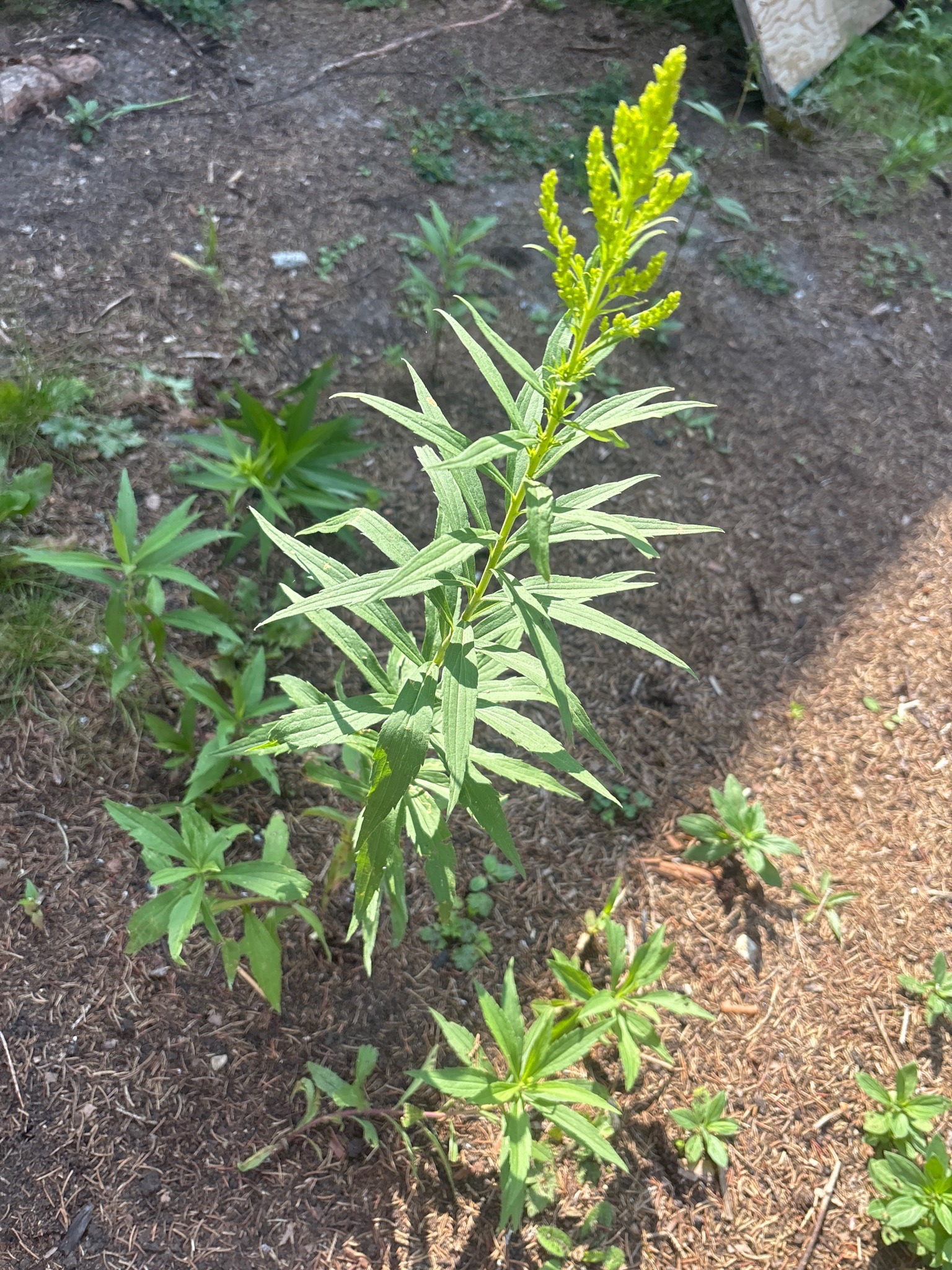
A herbaceous perennial plant characterized by tall, upright stems, lance-shaped alternate leaves, and terminal clusters of small yellow flower heads.
Characteristics
Grows up to 1.5 meters tall with unbranched, hairy stems in the upper portions. Leaves are lance-shaped, sharply toothed, and alternate along the stem. Flowers are tiny, bright yellow, and arranged in plume-like or pyramidal panicles at the top of the plant.
Habitat
Found in open fields, prairies, disturbed areas, roadsides, and along the edges of woods and marshes across North America.
When to Find It
Blooms from mid-summer through autumn (typically July to October).
Conservation Status
Secure (Least Concern)
Ecological Role
Provides essential late-season nectar and pollen for a wide variety of native pollinators, including bees, butterflies, and beneficial insects.
Easily Confused With
Often confused with ragweed (Ambrosia artemisiifolia), but goldenrod has showy yellow flowers and lacks the deeply lobed leaves of ragweed. Ragweed has inconspicuous green flowers and is the primary culprit for hay fever, whereas goldenrod pollen is heavy and sticky, pollinated by insects rather than wind.
Observation Tips
Look for them in sunny, open areas during late summer when their vibrant yellow plumes stand out against surrounding vegetation. Great for insect photography.
Interesting Facts
Despite common misconceptions, goldenrod does not cause hay fever; its pollen is too heavy to be carried by the wind. It has historically been used in herbal medicine and yields a natural yellow dye.