Pacific Mole Crab
Scientific Name: Emerita analoga
Category: other
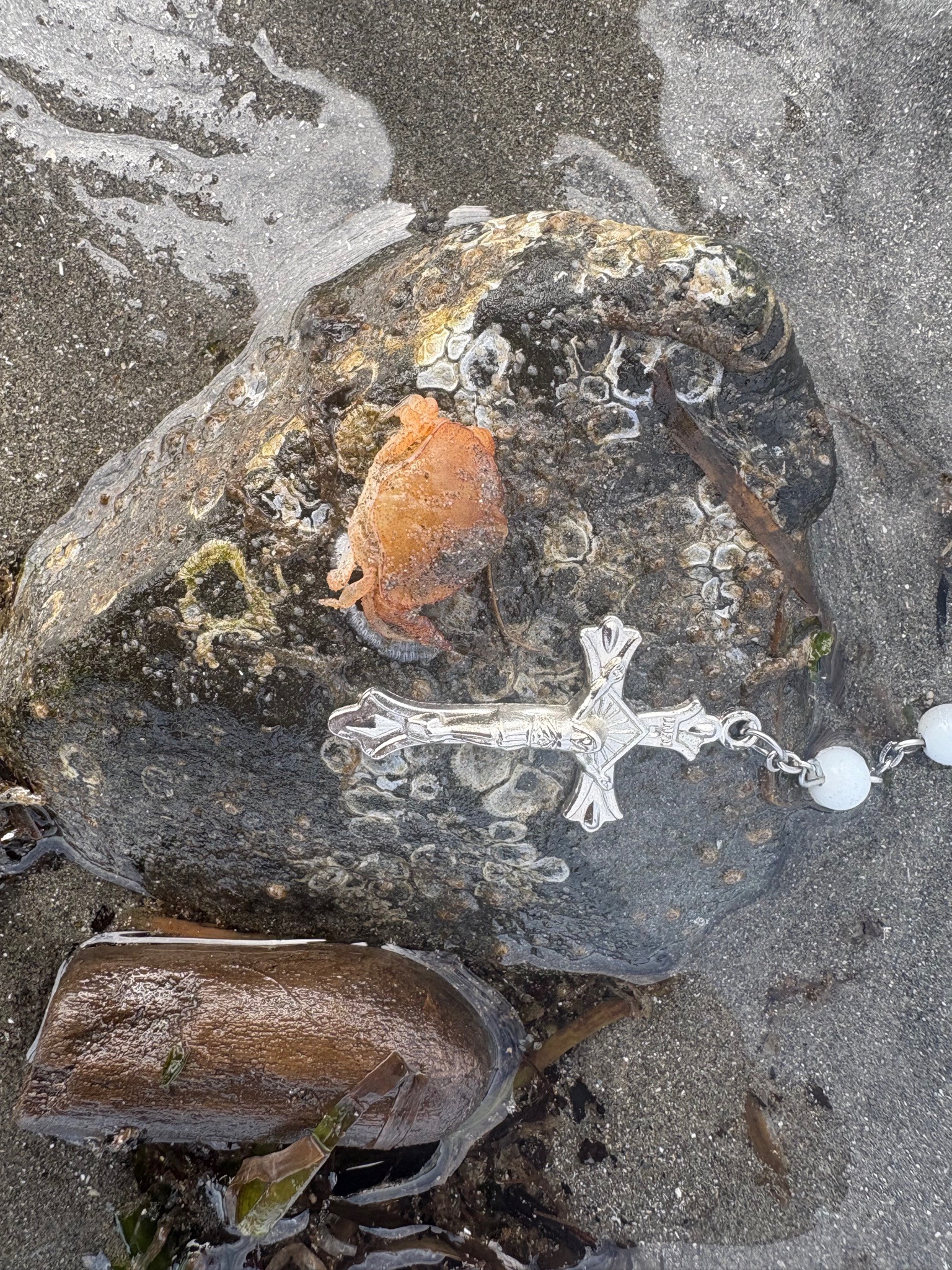
Brief Description
A small, oval-shaped crustacean that lives in the swash zone of sandy beaches, often found partially buried.
Characteristics
Oval or egg-shaped carapace, usually grey or tan (this specimen appears to be an orange/red variant or possibly dead/molted), specialized for burrowing backward into wet sand. They have feathery antennae for filter feeding.
Habitat
The swash zone of sandy beaches where waves break; they move up and down the beach with the tide.
When to Find It
Available year-round, but most easily observed during low tide or when waves recede.
Conservation Status
N/A
Ecological Role
Crucial part of the sandy beach food web, acting as a primary consumer of plankton and a major food source for shorebirds, fish, and surf scoters.
Easily Confused With
Other Emerita species. They are distinguished from typical crabs by their lack of claws and their ability to only crawl/burrow backwards.
Observation Tips
Look for small 'V' shapes in the sand as waves recede; these are created by their antennae. They can be found by quickly digging into the wet sand at the water's edge.
Interesting Facts
Mole crabs cannot walk; they are strictly adapted for swimming and burrowing. They use their feathery antennae to filter plankton and detritus from the receding waves.