Emu
Scientific Name: Dromaius novaehollandiae
Category: bird
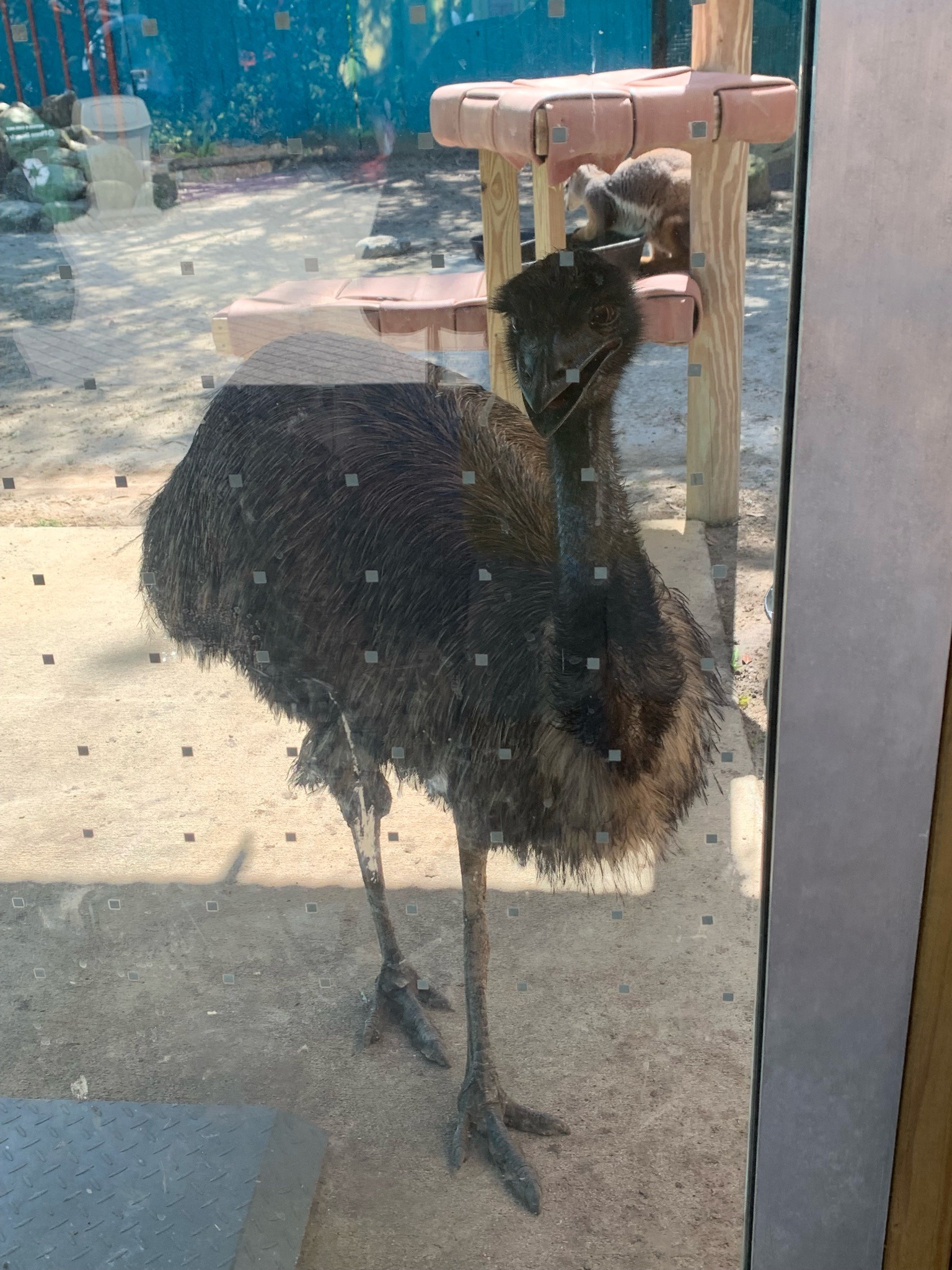
Brief Description
The emu is the second-largest living bird by height, after the ostrich. It is a flightless ratite endemic to Australia.
Characteristics
Large flightless bird with long legs and neck. Covered in shaggy, grayish-brown feathers that have a hair-like appearance. It has three toes on each foot and a distinctive bluish tint on the skin of its neck.
Habitat
Found across most of mainland Australia, inhabiting savannas, grasslands, and subtropical forests. They generally avoid heavily populated areas and dense forests.
When to Find It
Diurnal; most active during the day. Breeding takes place in the cooler months of May and June.
Conservation Status
Least Concern
Ecological Role
Emus play a vital role in their ecosystem by dispersing seeds over long distances. They consume a wide variety of plants and insects, helping to manage vegetation and pest populations.
Easily Confused With
Often confused with the Ostrich (which is larger and has only two toes) and the Southern Cassowary (which has a distinctive bony casque on its head and vibrant blue neck skin).
Observation Tips
In the wild, keep a safe distance as they can be defensive if they feel threatened. In captivity, avoid feeding them unless permitted, as they have strict dietary needs.
Interesting Facts
The male emu is the one who incubates the eggs for about 8 weeks, during which he does not eat, drink, or defecate. Emus are also excellent swimmers and can run at speeds up to 30 mph (50 km/h).