Turkish Towel
Scientific Name: Chondracanthus monopapillatus / Chondracanthus exasperatus
Category: plant
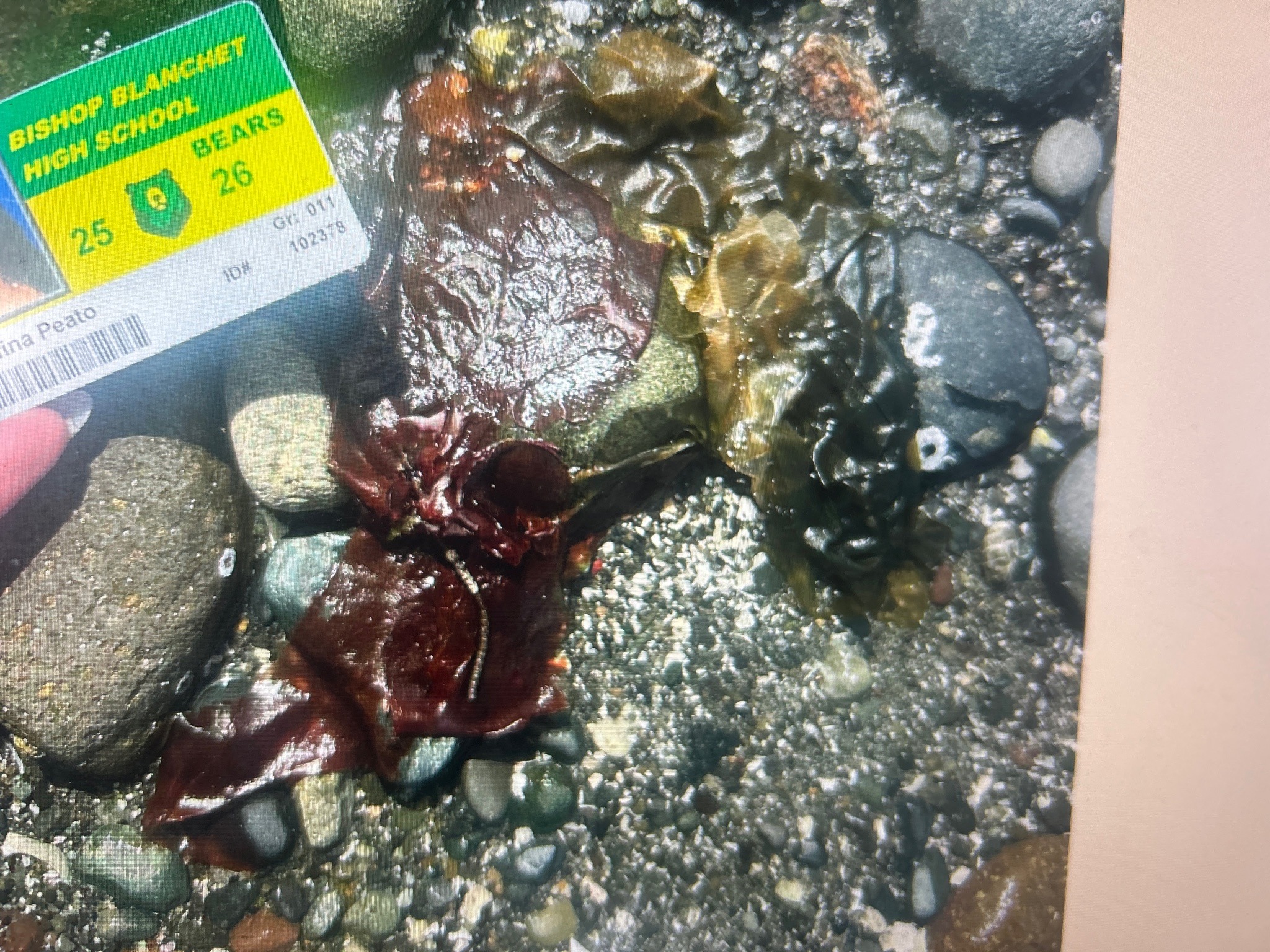
Brief Description
A reddish-purple to dark-brown sea algae with a distinctive bumpy, sandpaper-like texture, commonly found in Pacific Northwest tide pools.
Characteristics
Thick, blade-like fronds that are covered in small, raised fleshy bumps called papillae, giving it a rough texture. The color ranges from dark burgundy to iridescent purple when submerged.
Habitat
Found in the intertidal and subtidal zones of rocky shorelines and mixed-gravel beaches.
When to Find It
Perennial, visible year-round but most prominent in spring and summer.
Conservation Status
N/A
Ecological Role
Provides habitat and shelter for small invertebrates and serves as a primary producer in the marine food web.
Easily Confused With
Iridea (Iridescent Seaweed) which is smoother and lacks the distinctive rough bumps, and Porphyra (Nori) which is much thinner and translucent.
Observation Tips
Look for these washed up on the beach after a high tide or attached to rocks during low tide. Feeling the texture is the best way to distinguish them from other red seaweeds.
Interesting Facts
The name 'Turkish Towel' comes from its rough texture which historical beachgoers compared to a washcloth; it contains carrageenan, which can be used as a thickening agent in foods.
User Notes
Puget sound