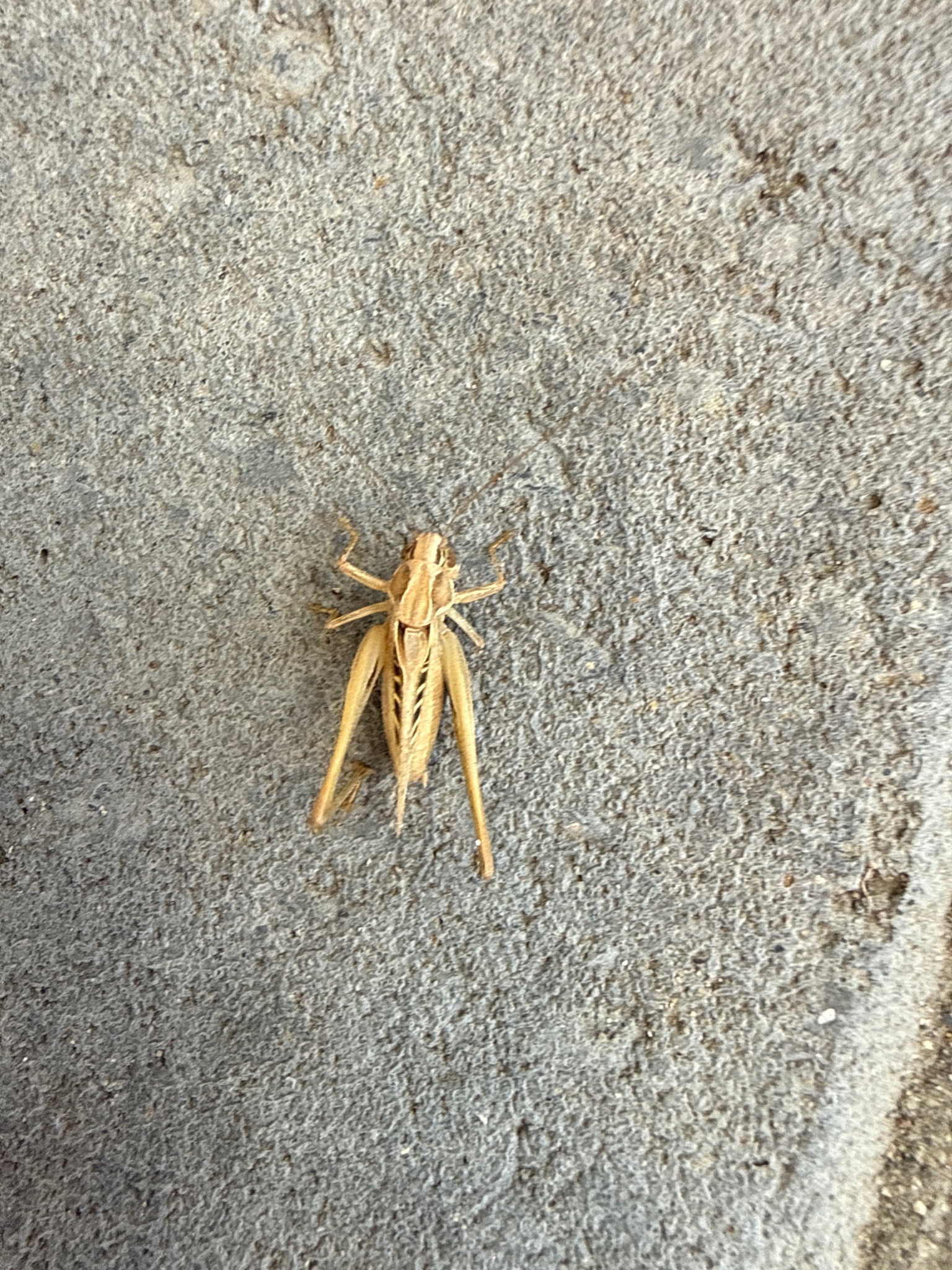
Grasshopper Exoskeleton (Molt)
Scientific Name: Caelifera (Suborder)
Category: insect
Brief Description
An empty, discarded external skeleton left behind by a grasshopper after a process called molting (ecdysis).
Characteristics
Hollow, straw-colored or tan translucent shell. It retains the shape of the original insect, including the long jumping legs, antennae, and segmented body, but lacks internal organs and eyes.
Habitat
Found in gardens, yards, grasslands, and meadows where grasshoppers live. Often attached to plant stems, leaves, or found on the ground after falling.
When to Find It
Common in late spring, summer, and early autumn when insects are actively growing.
Conservation Status
N/A
Ecological Role
Provides a source of calcium and other nutrients as it decomposes back into the soil; serves as evidence of insect growth and development in the local ecosystem.
Easily Confused With
Cicada shells (which are bulkier and more round) or Cricket molts (which are usually darker and found in more sheltered areas). Distinguished by the characteristic long, powerful hind jumping legs.
Observation Tips
Look for these on the undersides of leaves or on vertical surfaces like fences. Handle gently as they are extremely brittle and thin.
Interesting Facts
Insects must shed their rigid exoskeleton to grow. A grasshopper may molt 5 to 6 times before reaching adulthood. Sometimes the grasshopper will eat its old skin to reclaim lost nutrients.
User Notes
In my yard