Bivalve Shell (Cockle or Clam)
Scientific Name: Class Bivalvia
Category: shell
Brief Description
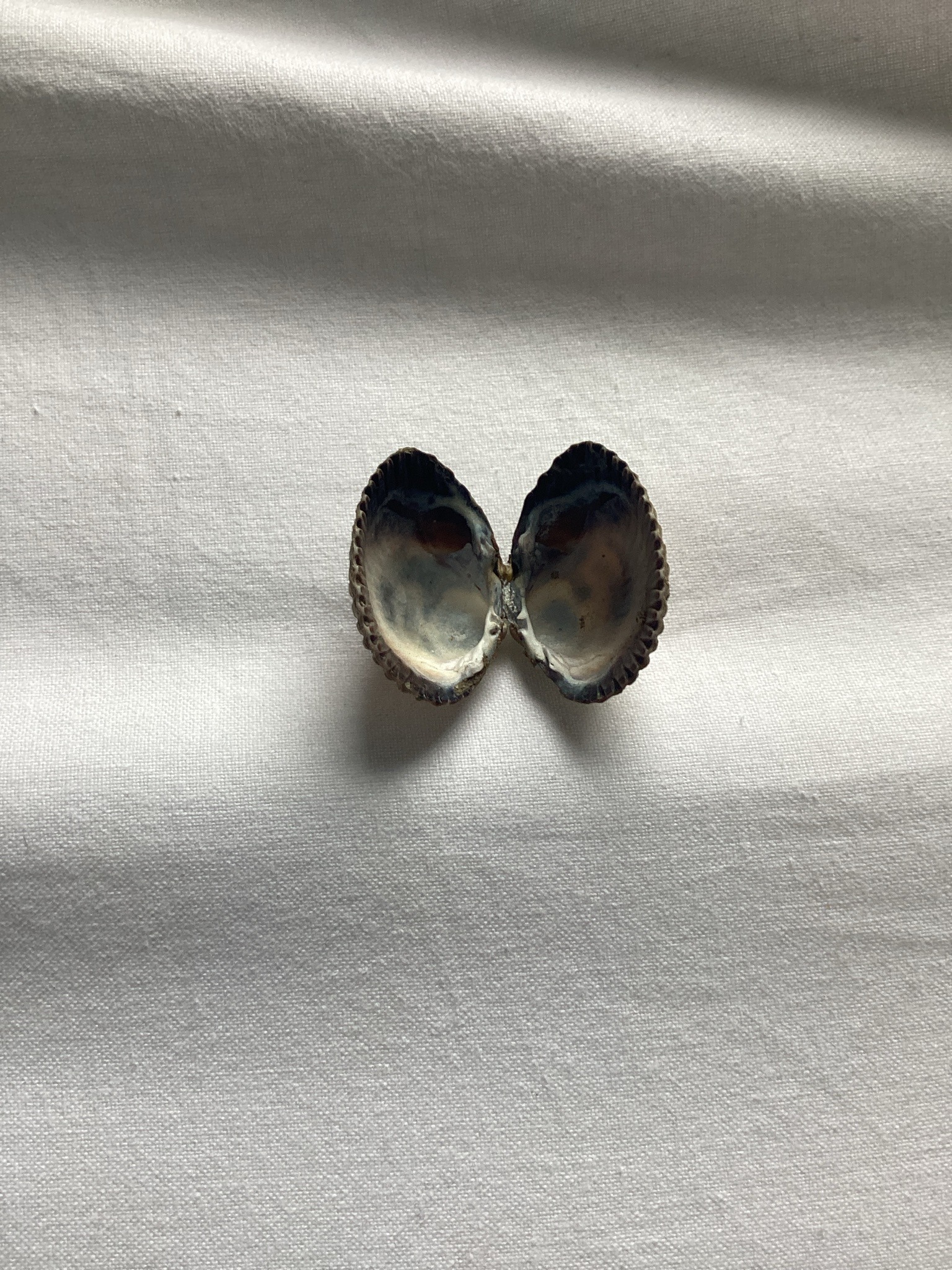
An open bivalve mollusk shell displaying the interior, featuring symmetrical valves hinged together.
Characteristics
Symmetrical paired valves connected by a hinge ligament, showing radial ribs and internal muscle scars.
Habitat
Marine and freshwater environments, typically found buried in sandy or muddy substrates in shallow coastal waters.
When to Find It
N/A
Conservation Status
N/A
Ecological Role
Bivalves play a crucial role in aquatic ecosystems as filter feeders, improving water quality and serving as an important food source for various marine predators.
Easily Confused With
Various other bivalve families such as Cardiidae (cockles) or Veneridae (venus clams), distinguished by hinge teeth and exterior ornamentation.
Observation Tips
Look along sandy tidelines and beaches at low tide for washed-up shells.
Interesting Facts
Bivalve shells are primarily composed of calcium carbonate secreted by the animal's mantle.
User Notes
I found this shell in the sea 🐠🌊