House Sparrow
Scientific Name: Passer domesticus
Category: bird
Brief Description
A small, chunky bird frequently found near human settlements, recognizable by its streaked brown back and grayish underparts.
Characteristics
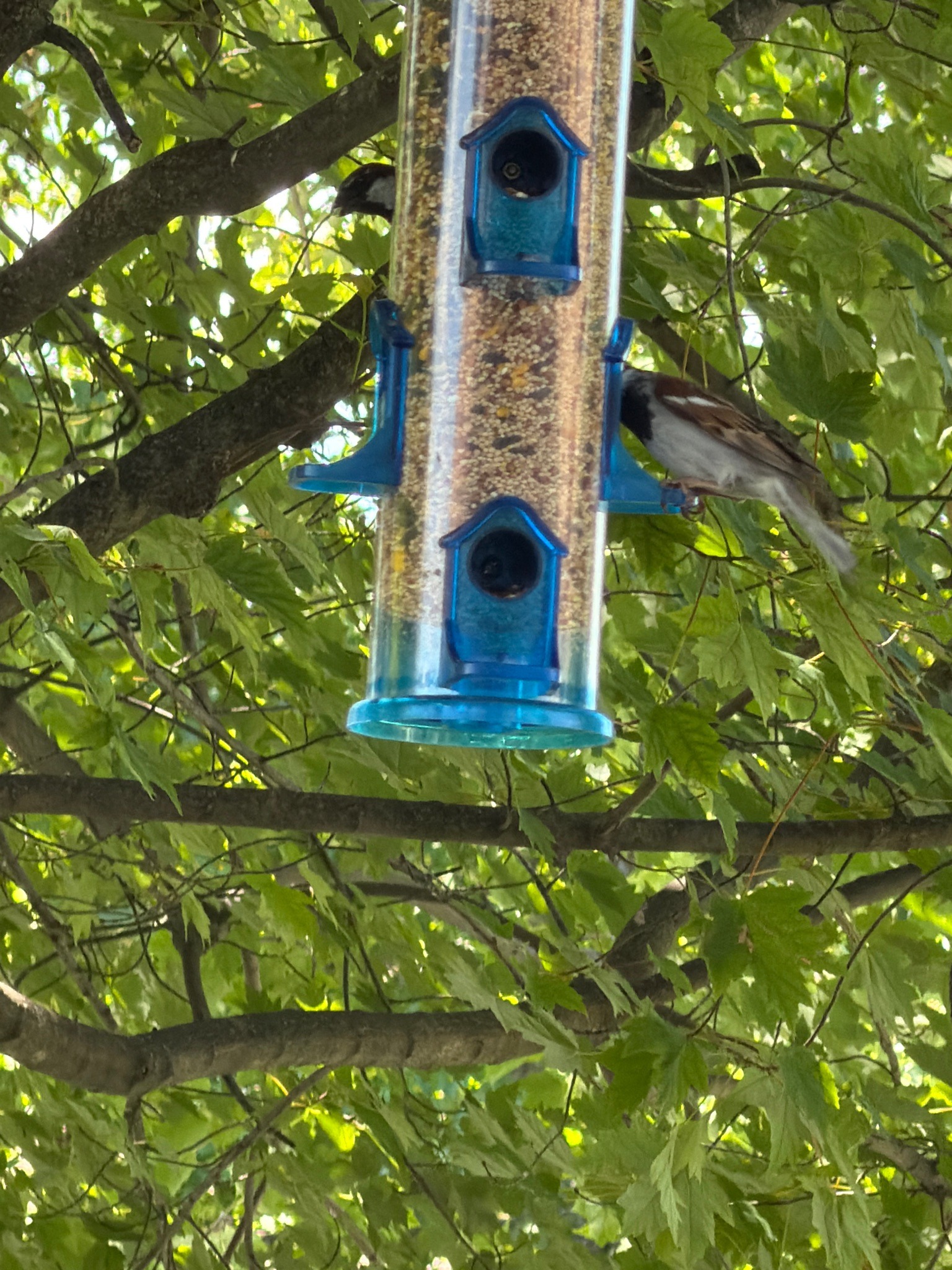
Males have a brown back with black streaks, a gray crown, chestnut-colored neck, and a prominent black bib on a white chest. Females and juveniles are a plain sandy brown with a pale buffy line over the eye.
Habitat
Urban, suburban, and agricultural areas; they are rarely found in uninhabited woodlands or grasslands.
When to Find It
Visible throughout the year as they are non-migratory in most of their range.
Conservation Status
Least Concern, though populations are declining in some native European ranges.
Ecological Role
They help control insect populations during the breeding season but can also compete with native cavity-nesting birds for nesting sites.
Easily Confused With
Eurasian Tree Sparrow (distinguished by a chestnut crown and black cheek spot) and various American Sparrows (which generally lack the thick bill and specific bib pattern).
Observation Tips
Easily observed at backyard bird feeders or in city parks; they are highly social and usually found in small flocks.
Interesting Facts
House Sparrows are not closely related to American sparrows; they are members of the Old World sparrow family and were introduced to North America in the 1850s.