California Sycamore
Scientific Name: Platanus racemosa
Category: tree
Brief Description
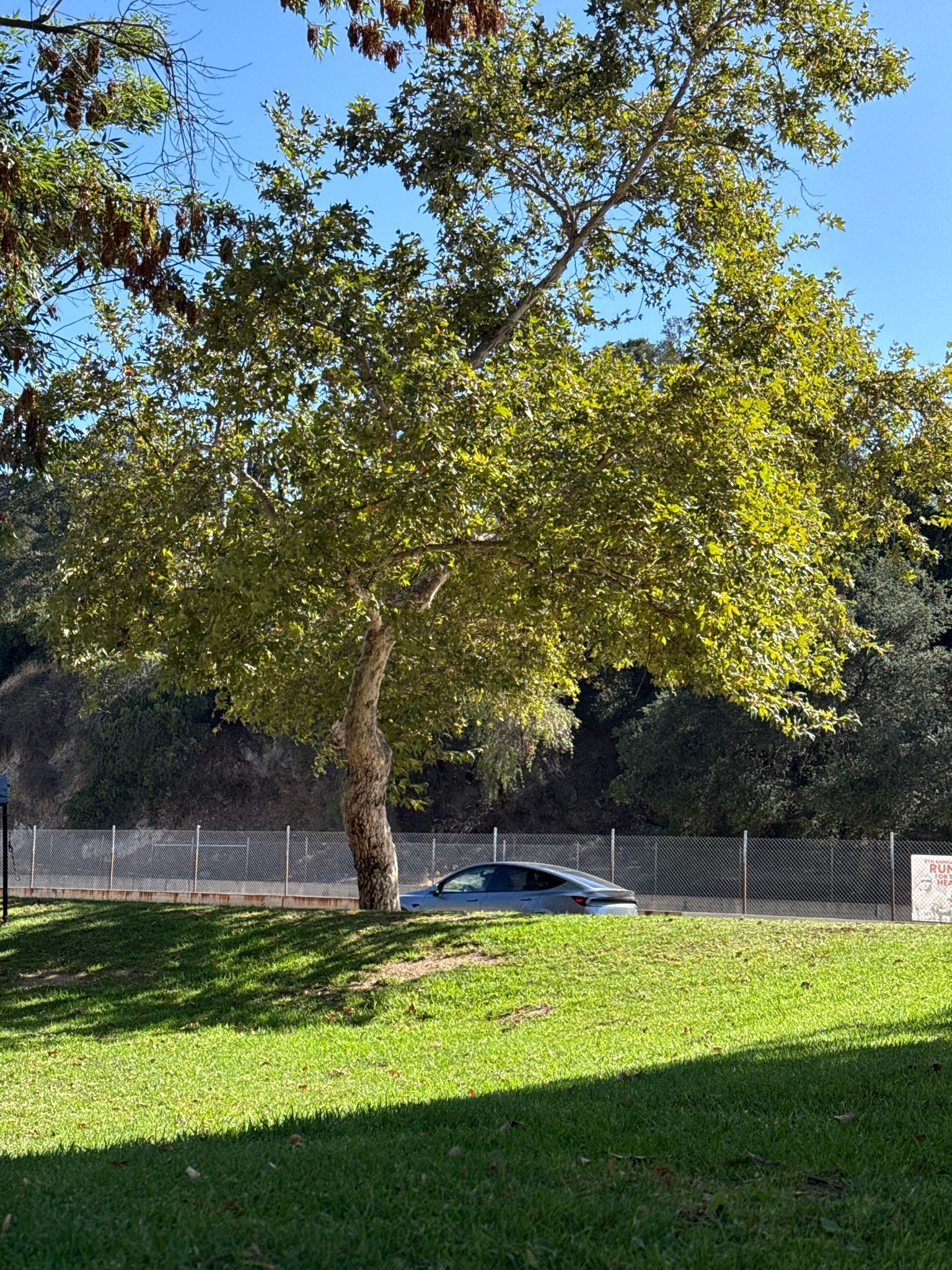
A large, fast-growing deciduous tree native to California, easily identified by its distinctive mottled, peeling bark and maple-like leaves.
Characteristics
Features a 'camouflage' bark pattern with patches of white, gray, buff, and green. It has large, palmately lobed leaves (3-5 lobes) and produces fuzzy, spherical seed balls that hang in clusters of 2 to 7.
Habitat
Typically found in riparian areas, canyons, and floodplains. It is widely planted in parks and urban landscapes throughout California.
When to Find It
Deciduous; leaves turn dusty yellow or brown in autumn before dropping. Best observed year-round for bark, or spring/summer for foliage.
Conservation Status
Common; not currently threatened.
Ecological Role
Provides vital habitat and nesting sites for birds like Red-shouldered Hawks and Western Bluebirds. Its dense canopy offers shade that cools riparian ecosystems.
Easily Confused With
London Plane Tree (Platanus × acerifolia), which usually has seed balls in pairs rather than clusters of 3-7 and slightly less white bark; and American Sycamore (Platanus occidentalis), which has single seed balls.
Observation Tips
Look for the bright white upper branches often visible against the sky. In late summer at locations like the Rose Bowl, they provide significant shade. Avoid touching the fuzzy leaf undersides if you have sensitive skin, as the hairs can be an irritant.
Interesting Facts
The California Sycamore is incredibly long-lived and can reach heights of over 100 feet. The 'hairs' on the seeds are designed to help them float on water or catch the wind for dispersal.
User Notes
i saw it at the rosebowl, sometime in late summer