Satan's Bolete
Scientific Name: Rubroboletus satanas
Category: fungi
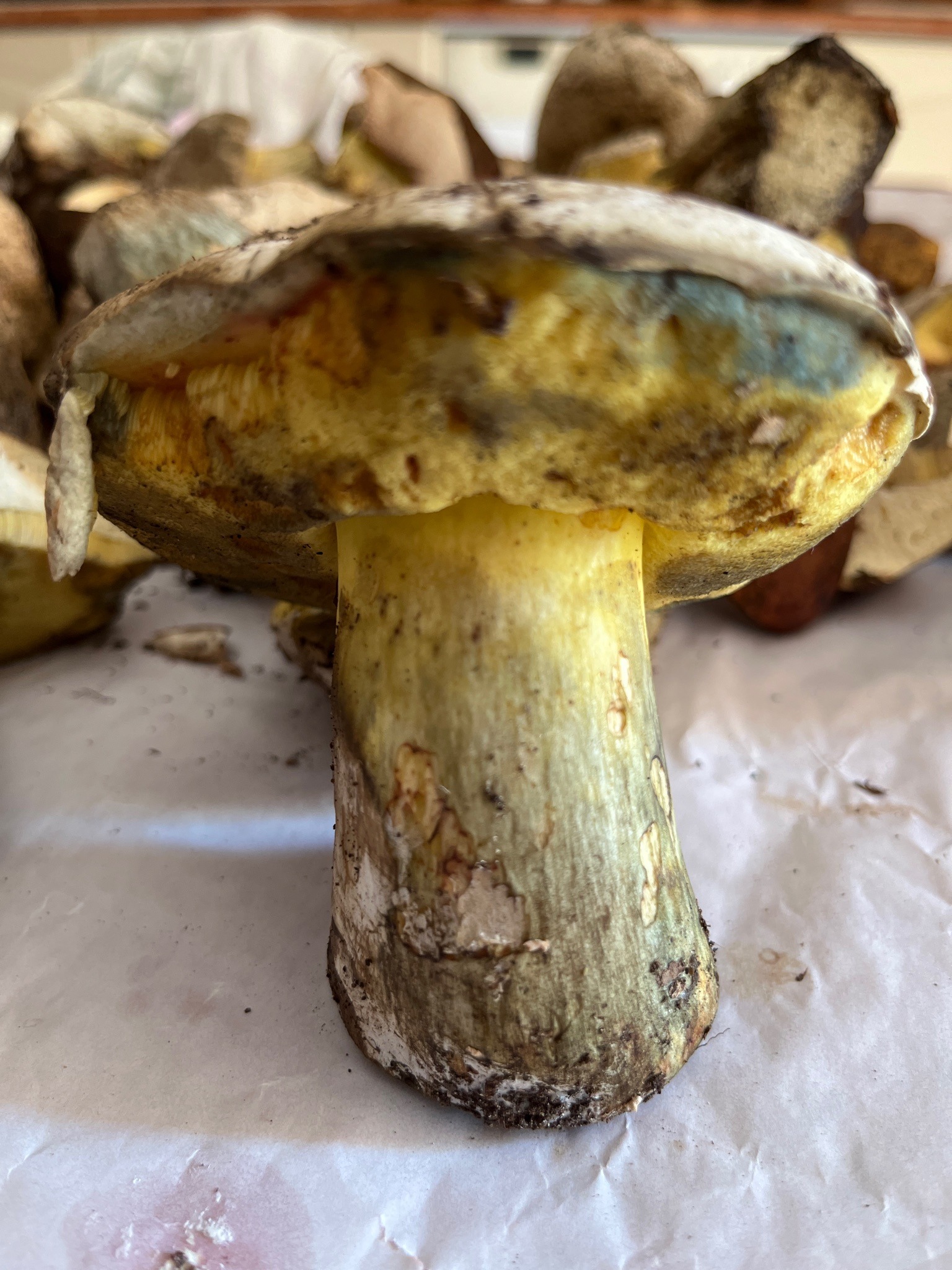
Brief Description
A large and striking bolete mushroom characterized by a pale cap, bright red or reddish-orange pores that quickly bruise blue, and a stout, bulbous stem with a distinct reddish network.
Characteristics
Cap is 8-30 cm across, whitish to pale gray or ochraceous, often becoming cracked with age. Pores are initially yellowish then turn intense red-orange and bruise blue immediately when touched. Stem is thick, yellowish near the top and red below, covered with a prominent red or reddish-brown reticulation (net-like pattern). Flesh is whitish to yellowish, bruising blue when cut or exposed.
Habitat
Found in deciduous woodlands, typically associated with broad-leaved trees such as beech (Fagus) and oak (Quercus) on calcareous (lime-rich) soils.
When to Find It
Summer to autumn (July to October), mostly during warm, wet periods.
Conservation Status
Uncommon to rare in many parts of Europe; protected in some regions.
Ecological Role
Forms ectomycorrhizal associations with various tree species, aiding in nutrient and water exchange between trees and the soil.
Easily Confused With
Can be confused with other red-pored boletes like Neoboletus luridiformis (which has a dark brown cap and no net on the stem) or Caloboletus calopus (which tastes very bitter and has yellow pores).
Observation Tips
Observe in deciduous woods, particularly on chalky or limestone soils. Do not ingest.
Interesting Facts
Despite its terrifying common name and severe toxicity, it is rarely fatal, but consumption leads to severe gastrointestinal distress.