Cabbage Palmetto
Scientific Name: Sabal palmetto
Category: tree
Brief Description
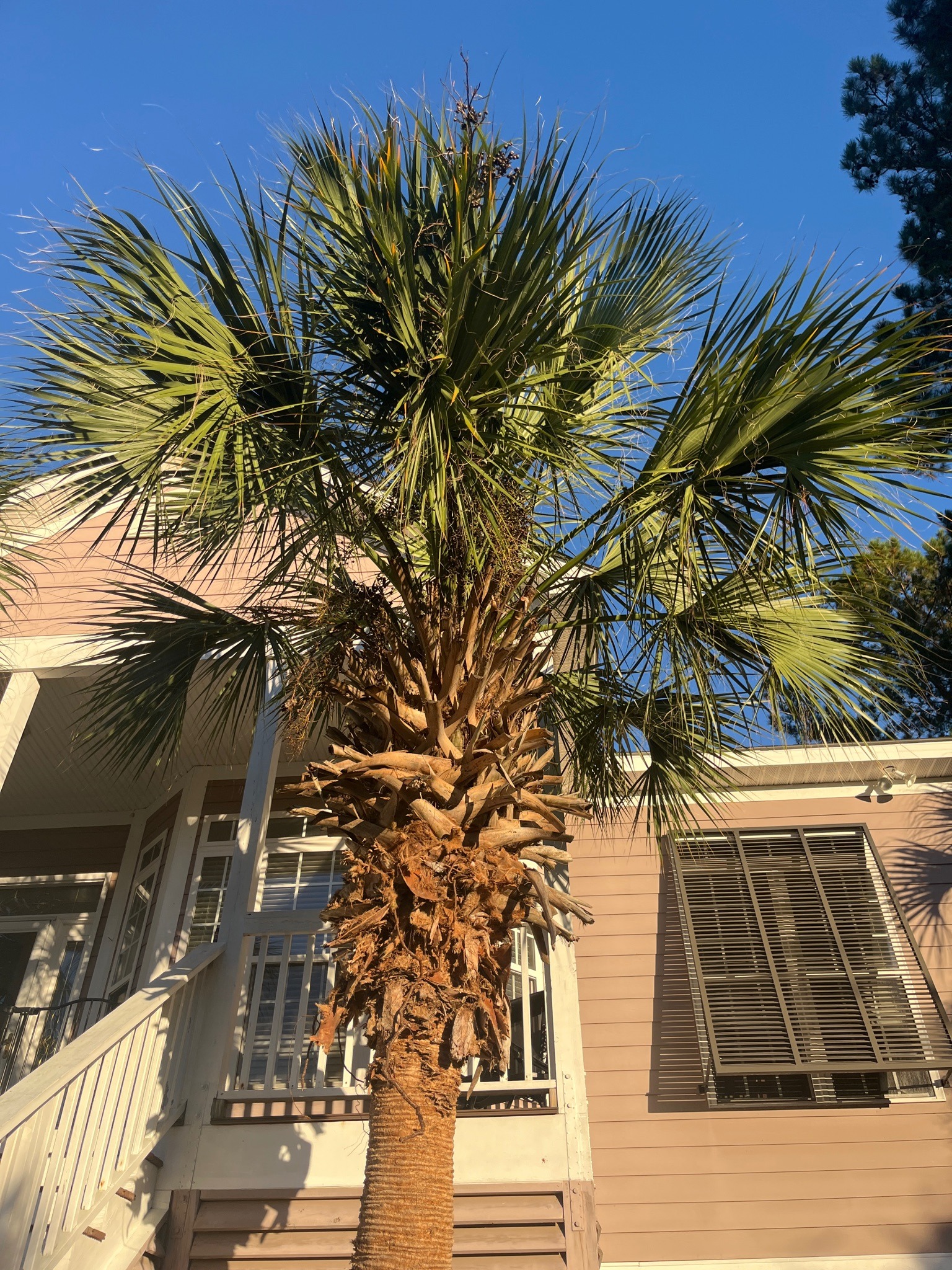
A hardy, single-stemmed palm tree characterized by fan-shaped leaves and a persistent boot-like leaf base structure on the trunk.
Characteristics
Features a single upright trunk covered in rough, crisscrossed persistent leaf bases (boots). The leaves are costapalmate, meaning they are shaped like a cross between a fan and a feather, with drooping tips and thread-like fibers along the margins. It can grow up to 20 meters tall.
Habitat
Coastal strands, maritime forests, sandy coastal plains, swamps, and inland hammocks, frequently planted in urban and suburban landscapes.
When to Find It
Evergreen year-round; typically produces small, creamy-white, fragrant flowers in spring followed by dark, round drupes in autumn.
Conservation Status
Secure (Least Concern)
Ecological Role
Provides nesting sites and shelter for various birds and small mammals, and its flowers are an important nectar source for bees and other pollinators.
Easily Confused With
Can be confused with other palm species such as the Washingtonia palms (Washingtonia robusta or Washingtonia filifera), which have more prominent dead leaf skirts or armed petioles with sharp teeth.
Observation Tips
Look for the distinct crisscrossed pattern on the trunk and the lack of sharp thorns on the leaf stems.
Interesting Facts
The Cabbage Palmetto is the official state tree of both Florida and South Carolina. Its terminal bud (heart of palm) is edible, though harvesting it kills the tree.