Prickly Lettuce
Scientific Name: Lactuca serriola
Category: plant
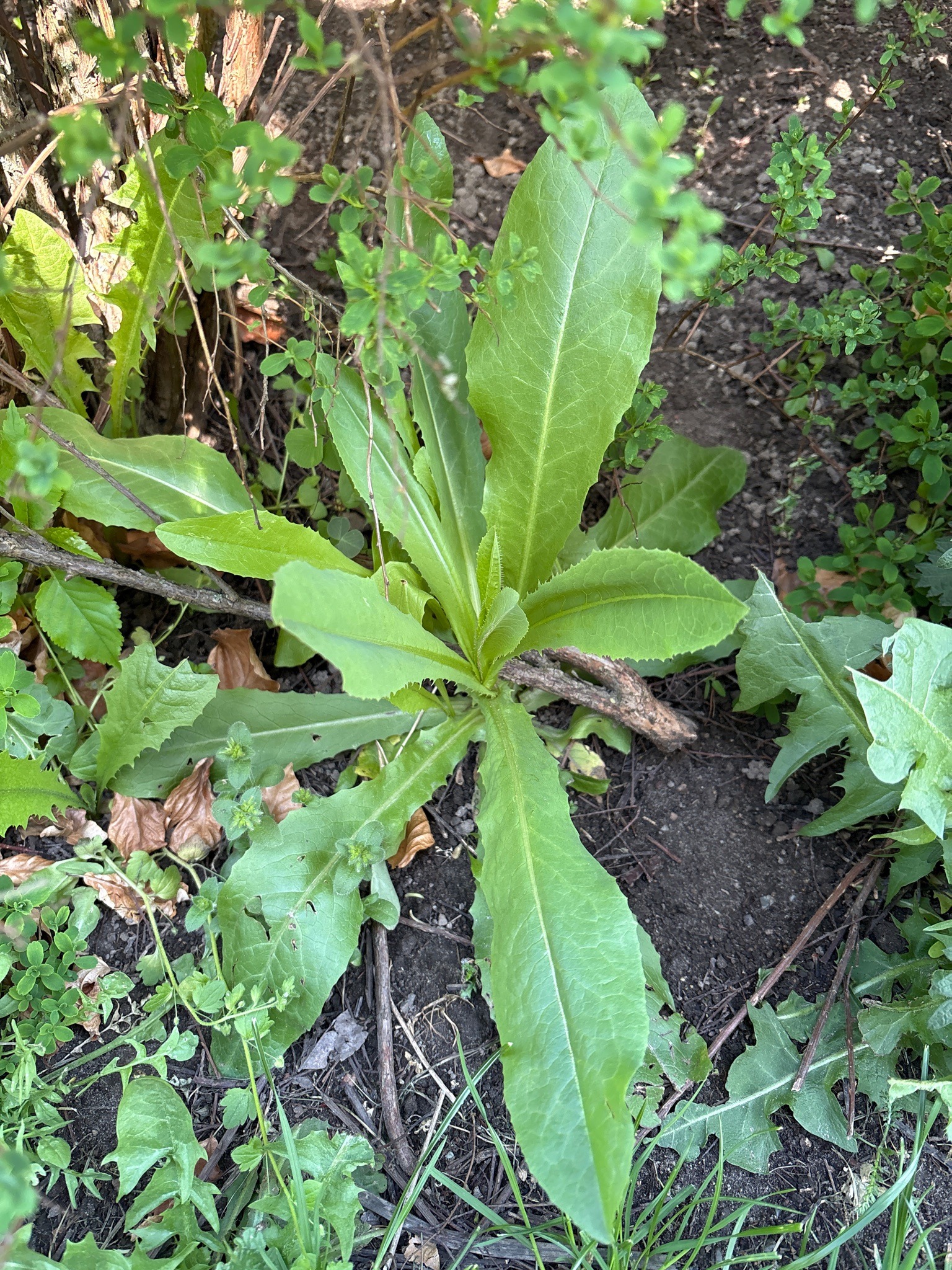
Brief Description
A common biennial herb characterized by a rosette of long leaves that often orient themselves north-south to avoid intense sunlight.
Characteristics
The leaves are long, lance-shaped, and deeply lobed with a distinctive row of prickly spines along the center vein on the underside. The stems contain a milky white latex (sap).
Habitat
Common in disturbed areas, roadsides, gardens, and waste ground.
When to Find It
The basal rosette is visible in autumn and winter; the tall flowering stalk emerges in summer.
Conservation Status
Common / Invasive in many regions
Ecological Role
Acts as a pioneer species in disturbed soils; provides food for several species of moth and butterfly larvae.
Easily Confused With
Common Dandelion (Taraxacum officinale), which lacks the prickles on the midrib, and Sow Thistles (Sonchus spp.), which have different leaf structures and no midrib spines.
Observation Tips
Check the underside of the leaf; the row of soft prickles along the midvein is the most definitive way to identify this species from other look-alikes.
Interesting Facts
Also known as the 'Compass Plant' because its upper leaves twist to hold their edges vertically in a north-south line to minimize water loss and heat stress.