American Pokeweed
Scientific Name: Phytolacca americana
Category: plant
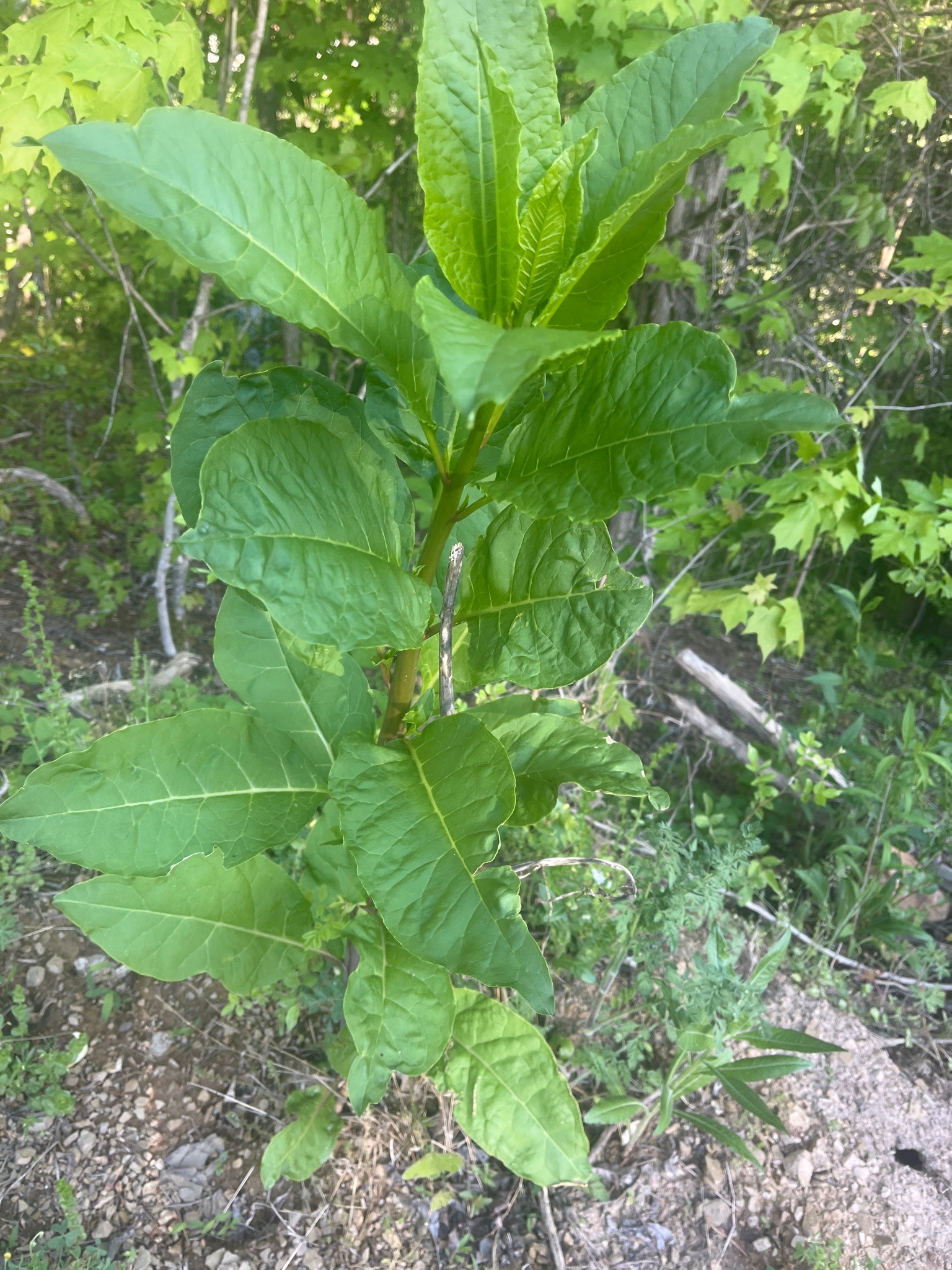
Brief Description
A large, herbaceous perennial plant known for its poisonous berries and distinctive pink-to-magenta stems as it matures.
Characteristics
Large, smooth, lance-shaped leaves; thick, succulent green stems that turn bright reddish-purple; small white or pinkish green flowers in hanging clusters; and dark purple-black berries when ripe.
Habitat
Disturbed soils, forest edges, pastures, and garden borders.
When to Find It
Grows in spring and summer, berries ripen in late summer and autumn.
Conservation Status
Common / Least Concern
Ecological Role
Provides a critical food source for birds, such as Gray Catbirds and Northern Cardinals, who spread the seeds.
Easily Confused With
Often confused with Skunk Cabbage (which has broader leaves and grows in wetlands) or Wild Lettuce (which has spiked midribs).
Observation Tips
Wear gloves if handling, as all parts of the plant contain toxins that can be absorbed through the skin.
Interesting Facts
While highly toxic to humans and livestock if not prepared correctly, 'poke sallet' is a traditional Southern US dish made by boiling young sprouts in multiple changes of water.