Watermelon
Scientific Name: Citrullus lanatus
Category: plant
Brief Description
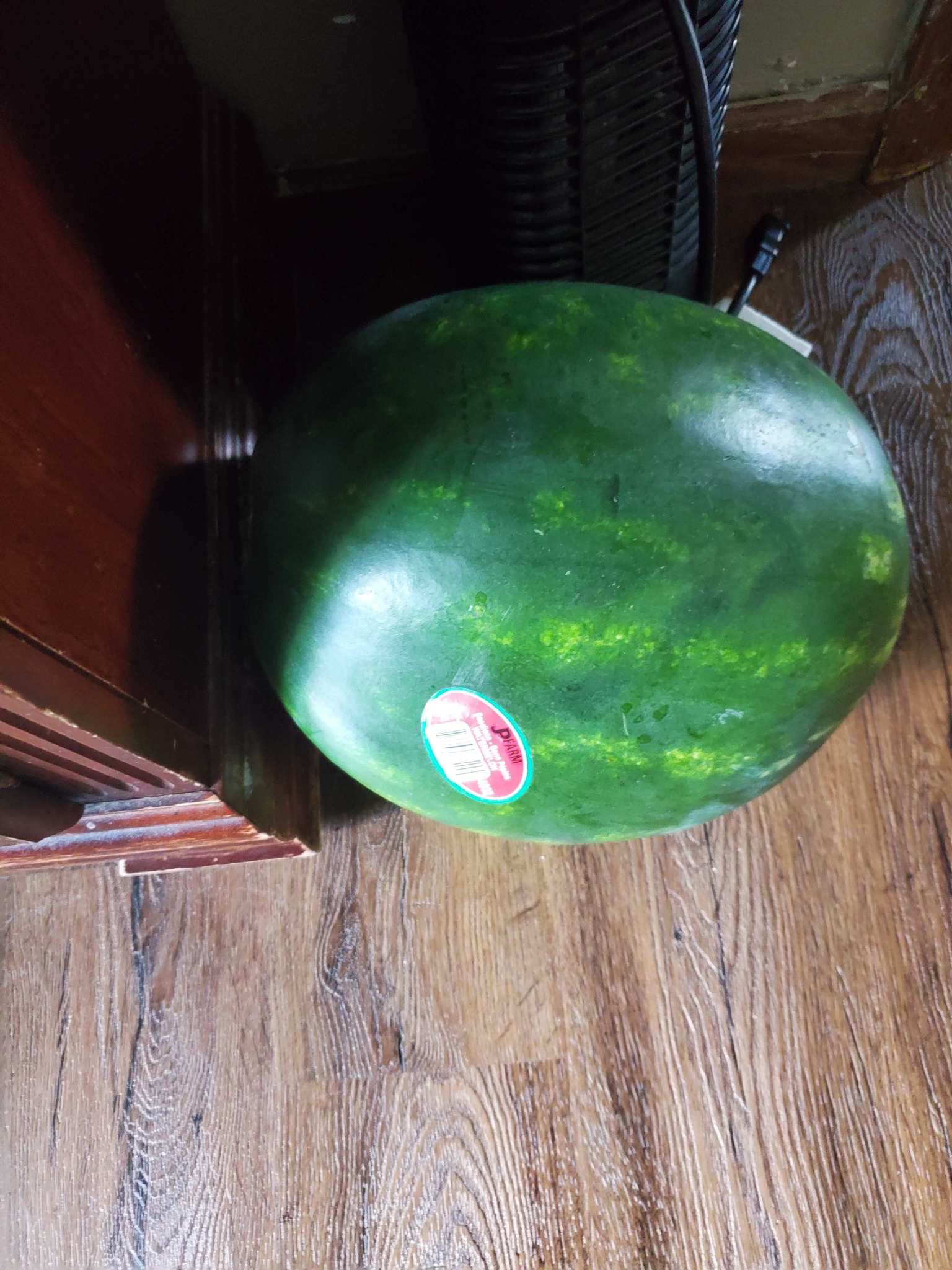
A large, edible fruit produced by a flowering vine in the cucurbit family.
Characteristics
Large, spherical or oblong fruit with a thick green rind that can be solid or striped. The interior flesh is typically red and juicy with black seeds, though seedless and yellow varieties exist.
Habitat
Cultivated in warm climates with sandy, well-drained soils and long growing seasons.
When to Find It
Harvested in summer and early autumn when temperatures are high.
Conservation Status
N/A
Ecological Role
Provides a significant water and nutrient source for various animals in its native African range; cultivated globally as a major food crop.
Easily Confused With
Honeydew or Cantaloupe melons, which have different rind textures (netted or smooth/pale) and different flesh colors and flavors.
Observation Tips
In a garden setting, look for a yellow 'field spot' on the bottom and a dried-up tendril near the stem to identify a ripe fruit.
Interesting Facts
Watermelons are about 92% water and were originally cultivated in Africa thousands of years ago, valued for their ability to store water for long periods.