Johnson Grass
Scientific Name: Sorghum halepense
Category: plant
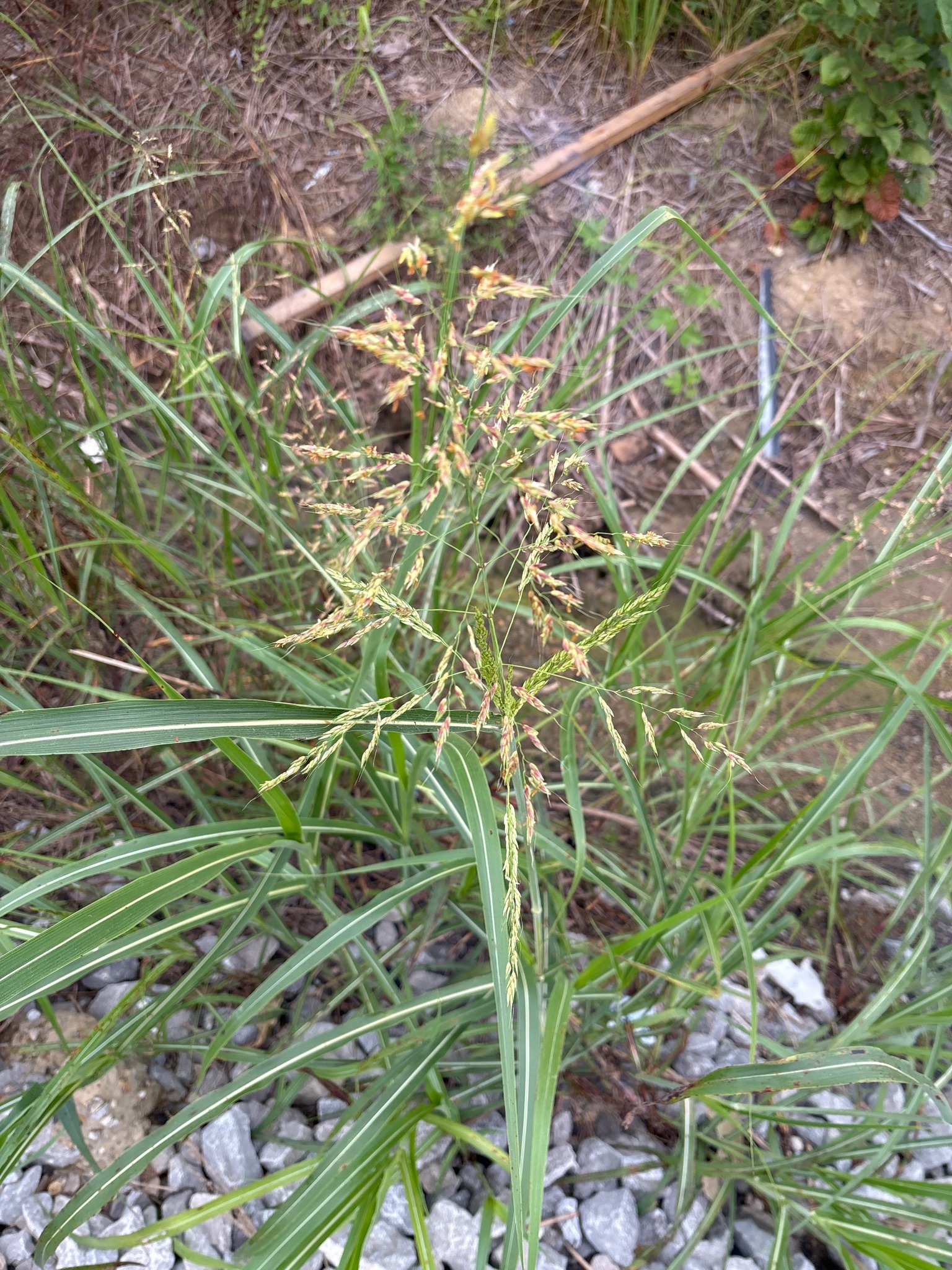
Brief Description
Johnson grass is a tall, aggressive perennial grass native to the Mediterranean region, widely naturalized as an invasive weed in many parts of the world, including North America.
Characteristics
Features tall, robust stems that can grow up to 2-7 feet or more, wide flat leaves with a prominent white midrib, and large open panicles with reddish-purple to yellowish spikelets.
Habitat
Found in disturbed areas, roadsides, agricultural fields, waste places, and along stream banks.
When to Find It
Active growth occurs in spring and summer, flowering from late spring through autumn, and dying back to rhizomes in winter.
Conservation Status
N/A
Ecological Role
Acts as an aggressive weed that outcompetes native vegetation, reduces crop yields, and can produce toxic levels of cyanogenic glycosides when stressed.
Easily Confused With
Can be confused with other tall grasses like cultivated sorghum or shattercane, but distinguished by its aggressive perennial rhizomes.
Observation Tips
Look for its characteristic wide leaves with distinct white midribs and branching seed heads along roadsides and open fields during summer months.
Interesting Facts
Johnson grass was intentionally introduced to the United States as a forage crop in the early 1800s before becoming one of the most troublesome weeds globally.
User Notes
Hanson, Kentucky