Banana Peel
Scientific Name: Musa acuminata
Category: plant
Brief Description
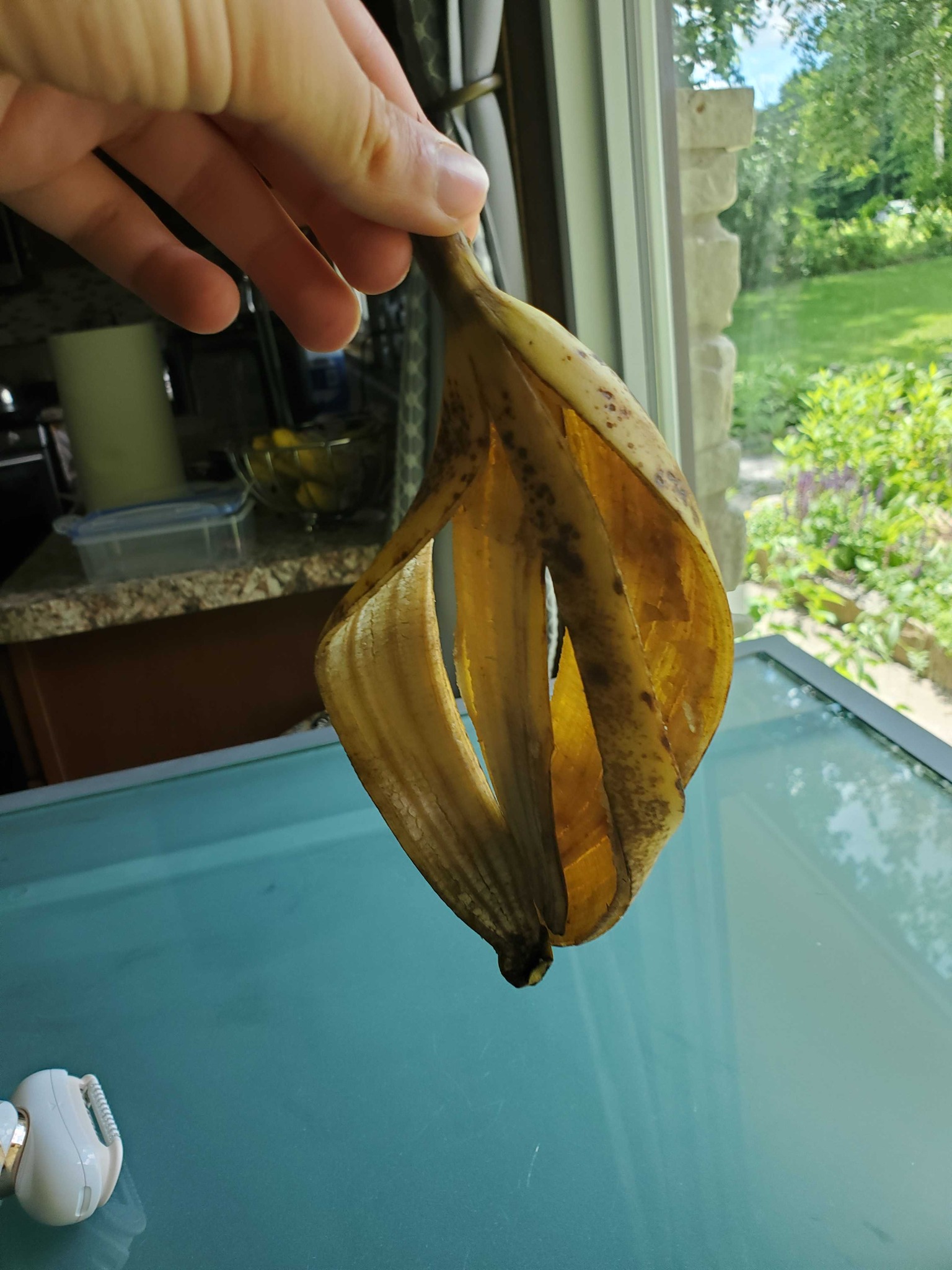
The outer protective layer of a banana fruit, which has been removed from the flesh.
Characteristics
Yellow to brown leathery skin, often with dark brown spots (sugar spots). It is fibrous on the inside and usually segmented into long strips when peeled.
Habitat
Cultivated in tropical and subtropical regions worldwide, commonly found in grocery stores and kitchens globally.
When to Find It
Available year-round due to global trade from tropical climates.
Conservation Status
N/A
Ecological Role
A significant source of organic matter; when composted, it provides potassium, phosphorus, and nitrogen to the soil.
Easily Confused With
Plantain peels, which are thicker and often greener or darker; and other tropical fruit skins.
Observation Tips
In a nature setting, look for wild bananas in tropical forests, though commercial Cavendish varieties like this one are sterile and grown on plantations.
Interesting Facts
Banana peels are biologically active and contain high levels of antioxidants; even the brown spots signify peak sweetness as starches convert to sugars.