Eastern Chipmunk
Scientific Name: Tamias striatus
Category: mammal
Brief Description
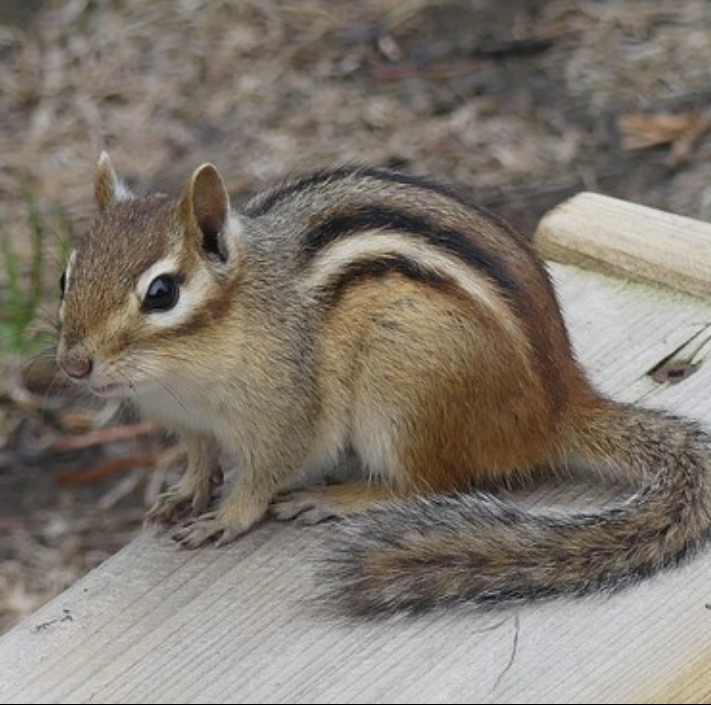
A small, ground-dwelling rodent characterized by distinct black and white stripes along its back and face, with a bushy tail.
Characteristics
Reddish-brown fur with five dark brown or black stripes alternating with two lighter stripes running down the back; pale underparts; facial stripes extending from the snout past the eyes; internal cheek pouches for carrying food; hairy, non-prehensile tail.
Habitat
Deciduous forests, forest edges, brushy areas, rocky outcrops, and suburban yards with abundant cover and nut-producing trees.
When to Find It
Most active during spring, summer, and autumn during daylight hours; undergoes periods of torpor during winter but does not truly hibernate.
Conservation Status
Least Concern
Ecological Role
Acts as an important seed disperser for various forest trees and shrubs; serves as a food source for numerous predators including birds of prey, snakes, and small carnivores.
Easily Confused With
Least chipmunk (smaller size, different geographic range), and various ground squirrels which typically lack distinct facial stripes.
Observation Tips
Look near stone walls, fallen logs, and brush piles during daytime hours; remain quiet and still as chipmunks are easily startled by sudden movements.
Interesting Facts
Eastern chipmunks can stuff up to nine acorns into their expandable cheek pouches at one time, and their underground burrows can extend over 30 feet in length with multiple chambers for nesting and food storage.