California Sycamore
Scientific Name: Platanus racemosa
Category: tree
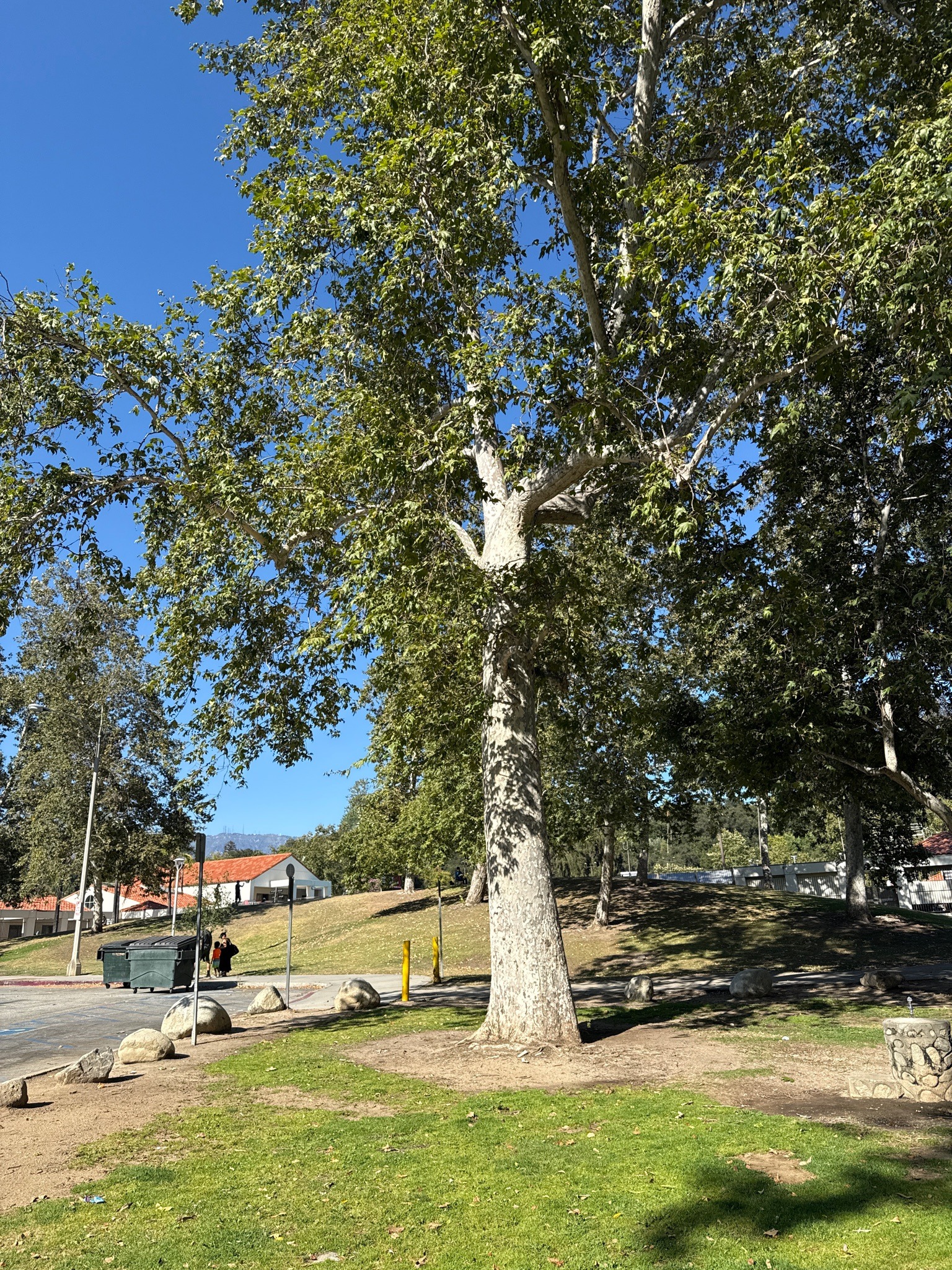
Brief Description
A large, fast-growing deciduous tree native to California and Baja California, known for its distinctive mottled bark and sprawling branches.
Characteristics
Features distinctive white, tan, and gray mottled bark that peels off in large flakes. It has large, palmately lobed leaves (3-5 lobes) that are fuzzy when young. The tree produces spherical, bristly seed balls that hang in clusters.
Habitat
Typically found in riparian areas, canyons, and floodplains where water is accessible, though it is also widely planted as an ornamental in parks and urban landscapes.
When to Find It
Deciduous; loses its leaves in late autumn and winter. Flowering occurs in late winter to early spring.
Conservation Status
Least Concern
Ecological Role
Provides vital habitat and nesting sites for birds like red-tailed hawks and hummingbirds. Its roots help stabilize stream banks and prevent erosion.
Easily Confused With
Often confused with the American Sycamore (Platanus occidentalis) or London Plane Tree (Platanus × acerifolia). The California Sycamore is distinguished by its more deeply lobed leaves and fruit balls that appear in clusters of 2 to 7 rather than singly or in pairs.
Observation Tips
Look for the striking white-patched upper branches against a clear blue sky. In summer, the broad leaves provide deep shade. Be aware that the fine hairs on new leaves can be an allergen for some.
Interesting Facts
The California Sycamore is one of the largest broadleaf trees native to California, capable of living for several hundred years. The wood was historically used by Indigenous peoples for making tools and structures.