Spotted Knapweed
Scientific Name: Centaurea stoebe
Category: plant
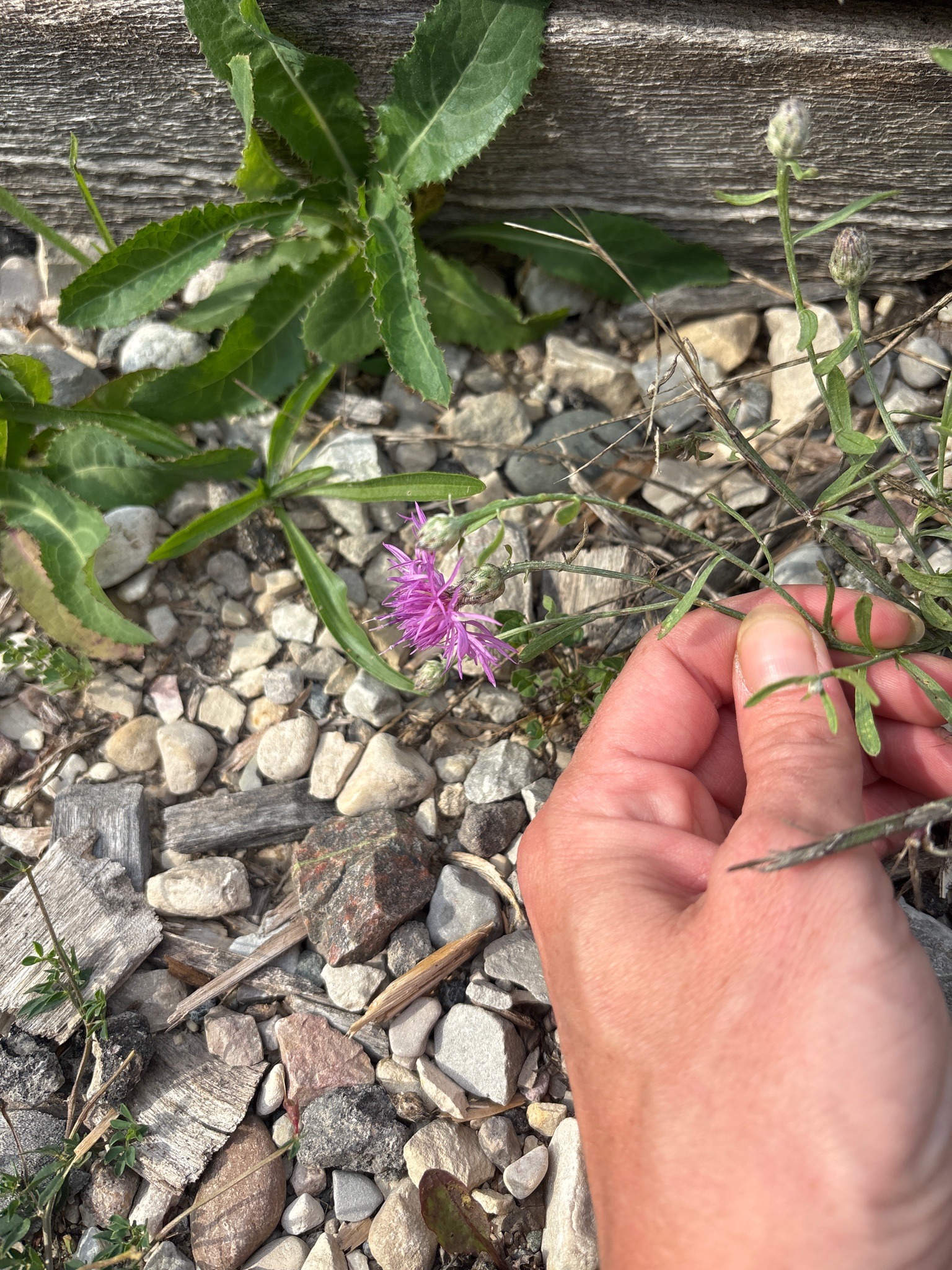
Brief Description
An invasive herbaceous plant featuring distinctive pink-to-purple, thistle-like flowers and deeply lobed, grayish-green leaves.
Characteristics
Grows up to 2-3 feet tall with a slender, branching stem. Leaves are alternate, deeply divided, and covered in fine hairs. Flower heads are solitary, pinkish-purple, surrounded by bracts tipped with dark, comb-like fringes (giving it a 'spotted' appearance).
Habitat
Disturbed areas, roadsides, pastures, prairies, and open wastelands, thriving in dry, well-drained soils.
When to Find It
Blooms from early summer through the first autumn frosts.
Conservation Status
N/A
Ecological Role
Considered a highly destructive invasive species in North America. It releases allelopathic chemicals from its roots that inhibit the growth of surrounding native vegetation, severely reducing biodiversity and livestock forage.
Easily Confused With
Other knapweed species like Diffuse Knapweed or Meadow Knapweed, which can be distinguished by the shape and color of their floral bracts.
Observation Tips
Often found along hiking trails, roadsides, and dry fields. Be cautious when handling, as it can cause skin irritation in sensitive individuals, and take care not to spread seeds on clothing or shoes.
Interesting Facts
A single spotted knapweed plant can produce up to 25,000 seeds, which can remain viable in the soil for over eight years.