Red Maple Leaf
Scientific Name: Acer rubrum
Category: tree
Brief Description
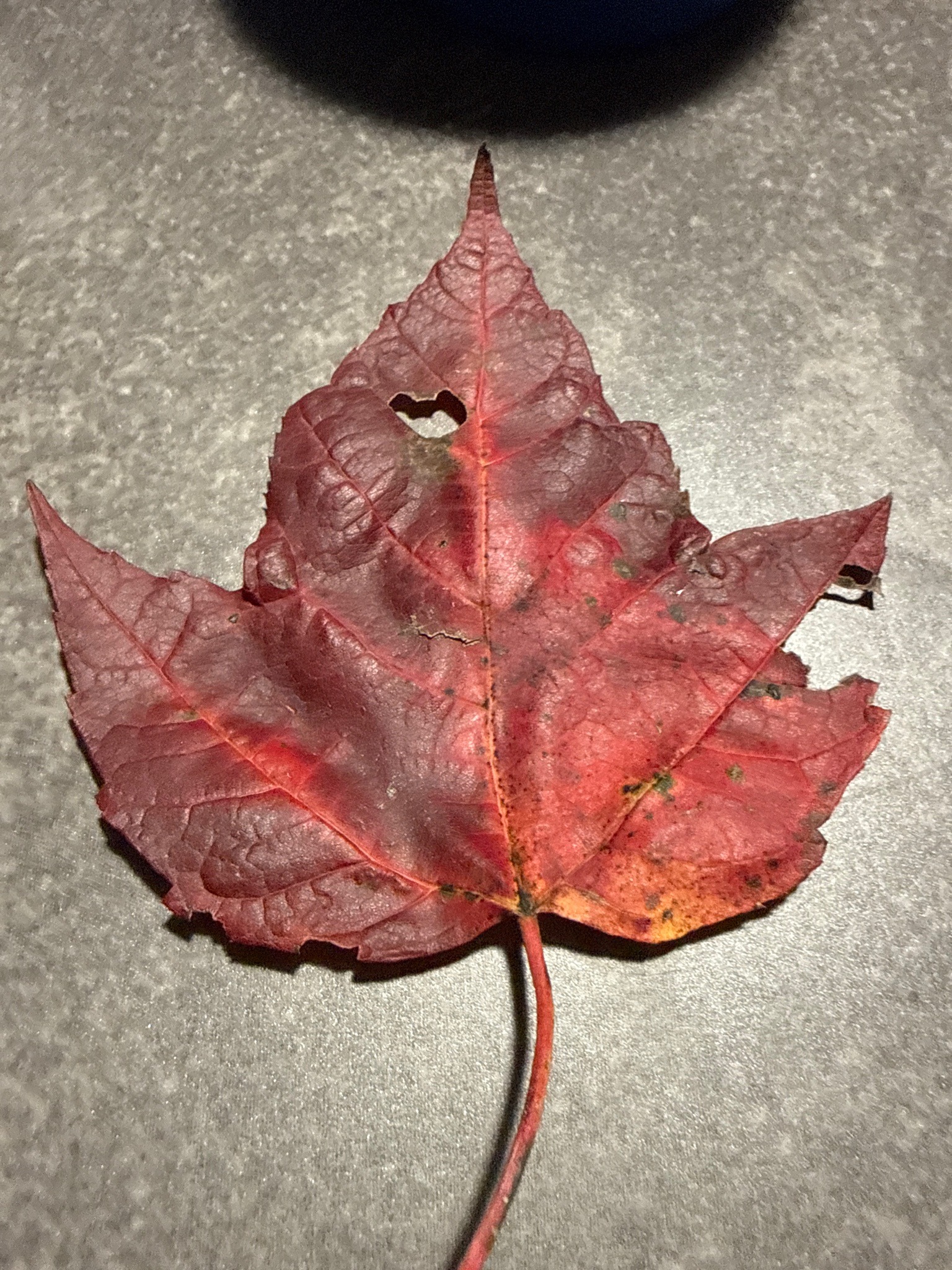
A single fallen autumn leaf characterized by its distinctive lobed shape and vibrant deep red or crimson coloration.
Characteristics
The leaf typically features three to five lobes with serrated margins, prominent palmate veins, and a reddish petiole (stem). In autumn, chlorophyll breaks down, revealing brilliant anthocyanin pigments that produce deep red and purple hues.
Habitat
Deciduous and mixed forests, wetlands, swamp edges, and along streams, as well as heavily planted in urban and suburban landscapes.
When to Find It
Most easily observed in autumn (September to November) when foliage changes color and drops, though the tree is visible year-round.
Conservation Status
Least Concern
Ecological Role
Fallen leaves contribute significantly to forest soil organic matter and nutrient cycling, while the trees themselves provide essential food and habitat for various insects, birds, and mammals.
Easily Confused With
Sugar Maple (Acer saccharum) and Norway Maple (Acer platanoides); Red maple leaves generally have serrated margins and shallower sinuses compared to the deeper sinuses of sugar maples, and lack the milky sap found in Norway maple petioles.
Observation Tips
Look down along forest paths or suburban lawns during peak autumn foliage season to find well-preserved specimen leaves.
Interesting Facts
The red maple is one of the most abundant and widespread trees in eastern North America, known for its incredible adaptability to both very wet and relatively dry soils.