European Starling
Scientific Name: Sturnus vulgaris
Category: bird
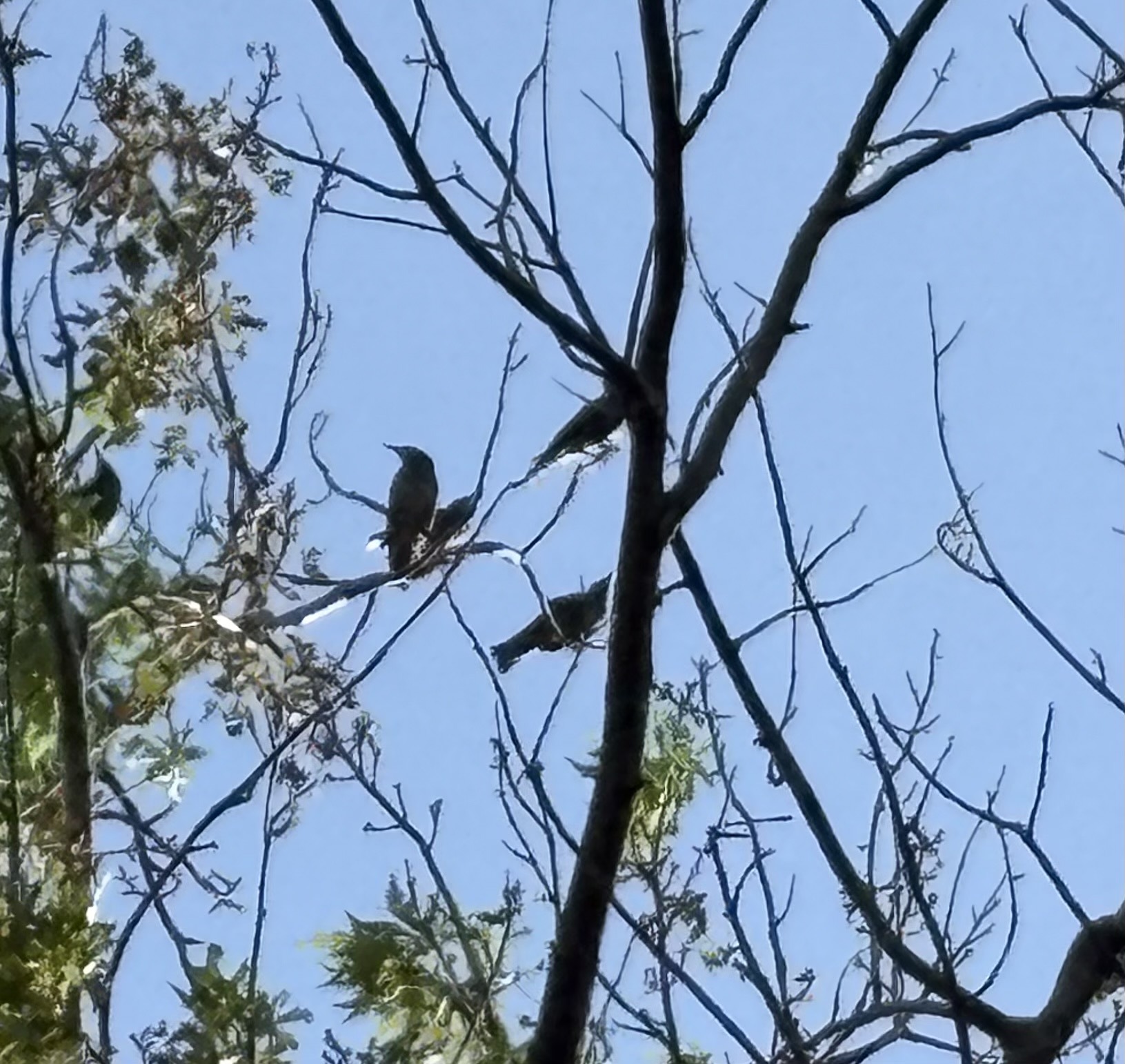
Brief Description
A medium-sized black songbird with a short tail, pointed bill, and iridescent plumage spotted with white.
Characteristics
Stocky build, triangular wings, and a short tail. In breeding plumage, adults have metallic purple and green iridescence with yellow bills. In winter, they are heavily speckled with white dots and have dark bills.
Habitat
Urban areas, suburban neighborhoods, agricultural fields, grasslands, and open woodlands.
When to Find It
Common year-round resident in Nebraska, often forming massive flocks (murmurations) in autumn and winter.
Conservation Status
Least Concern (Abundant and widespread invasive species in North America)
Ecological Role
Acts as both a seed disperser and a predator of agricultural pests, but is an aggressive invasive species that often outcompetes native cavity-nesting birds like bluebirds.
Easily Confused With
Common Grackle (larger with a longer tail and keel-shaped tail feathers) and Red-winged Blackbird (males have red shoulder patches, females are heavily streaked brownish).
Observation Tips
Look up in bare tree branches or utility wires, especially near open lawns or parks where they forage in groups.
Interesting Facts
Descendants of about 100 birds released in New York's Central Park in the 1890s by a group wanting to introduce all birds mentioned in Shakespeare's plays to North America.
User Notes
In Lincoln Nebraska