American Alligator
Scientific Name: Alligator mississippiensis
Category: reptile
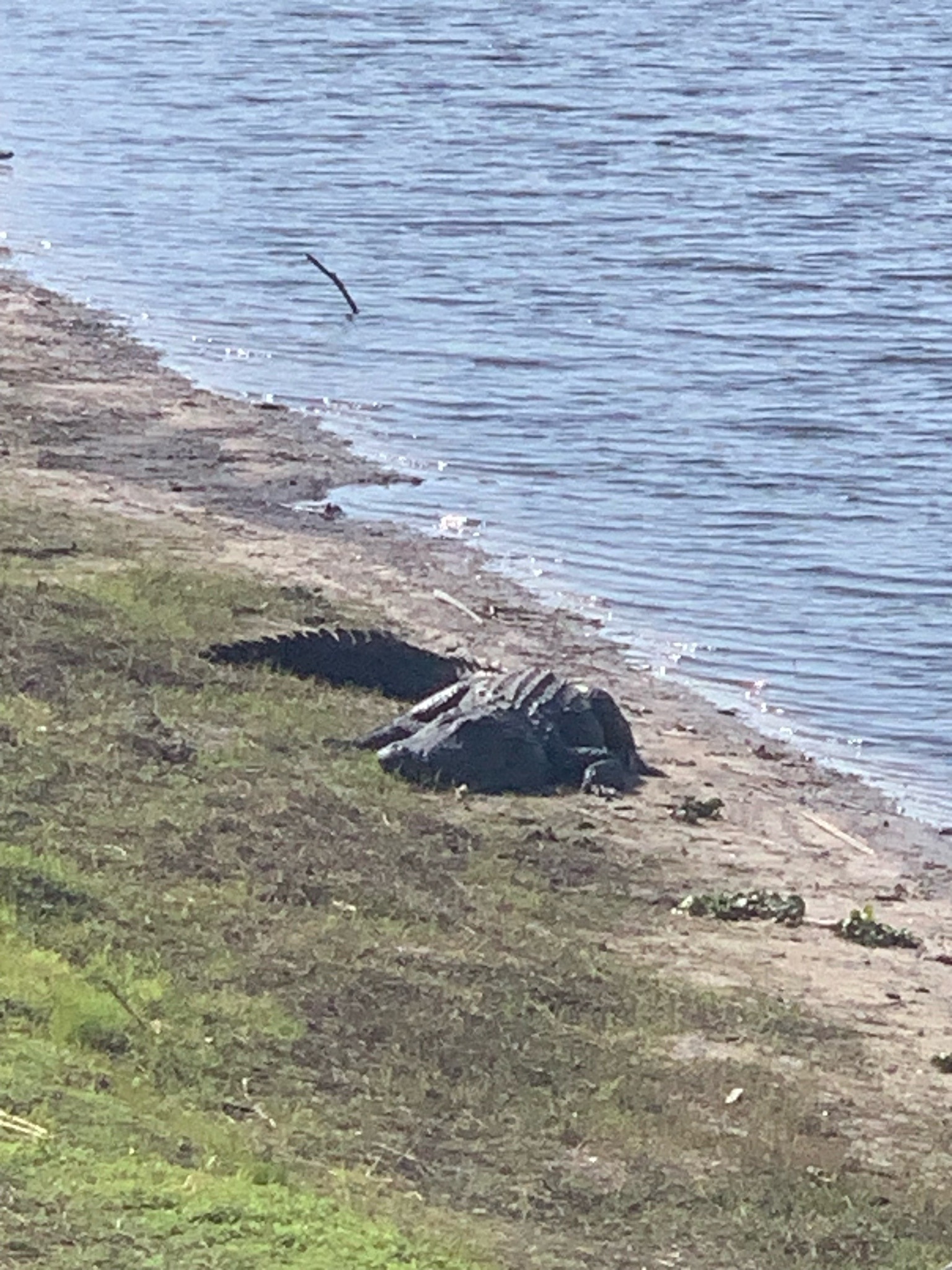
Brief Description
A large, aquatic crocodilian reptile native to the Southeastern United States, known for its dark, armored body and broad snout.
Characteristics
They have dark olive, brown, or black armored skin with a white underside. They are distinguished by a broad, rounded snout where the upper teeth remain visible when their mouth is closed. They have a powerful, vertically flattened tail and four short legs.
Habitat
Freshwater environments such as swamps, marshes, rivers, lakes, and ponds. They are found throughout the Southeastern United States from North Carolina to Texas.
When to Find It
Most active during the spring and summer. In winter, they may undergo periods of dormancy called brumation in dens or 'alligator holes'.
Conservation Status
Least Concern (formerly endangered, now a conservation success story)
Ecological Role
As an apex predator, they help control populations of other animals. They are 'ecosystem engineers' because they create 'alligator holes' that provide water for other species during dry seasons.
Easily Confused With
American Crocodiles, which have a narrower, V-shaped snout and are lighter in color with visible lower teeth when the mouth is closed.
Observation Tips
Maintain a distance of at least 60 feet (18 meters). Never feed them, as they may lose their fear of humans. They are best observed basking on banks during sunny mornings or late afternoons.
Interesting Facts
Alligators have been around for over 200 million years, surviving the extinction that killed the dinosaurs. Their sex is determined by the temperature of the nest during incubation.