Elk Scat
Scientific Name: Cervus canadensis
Category: tracks
Brief Description
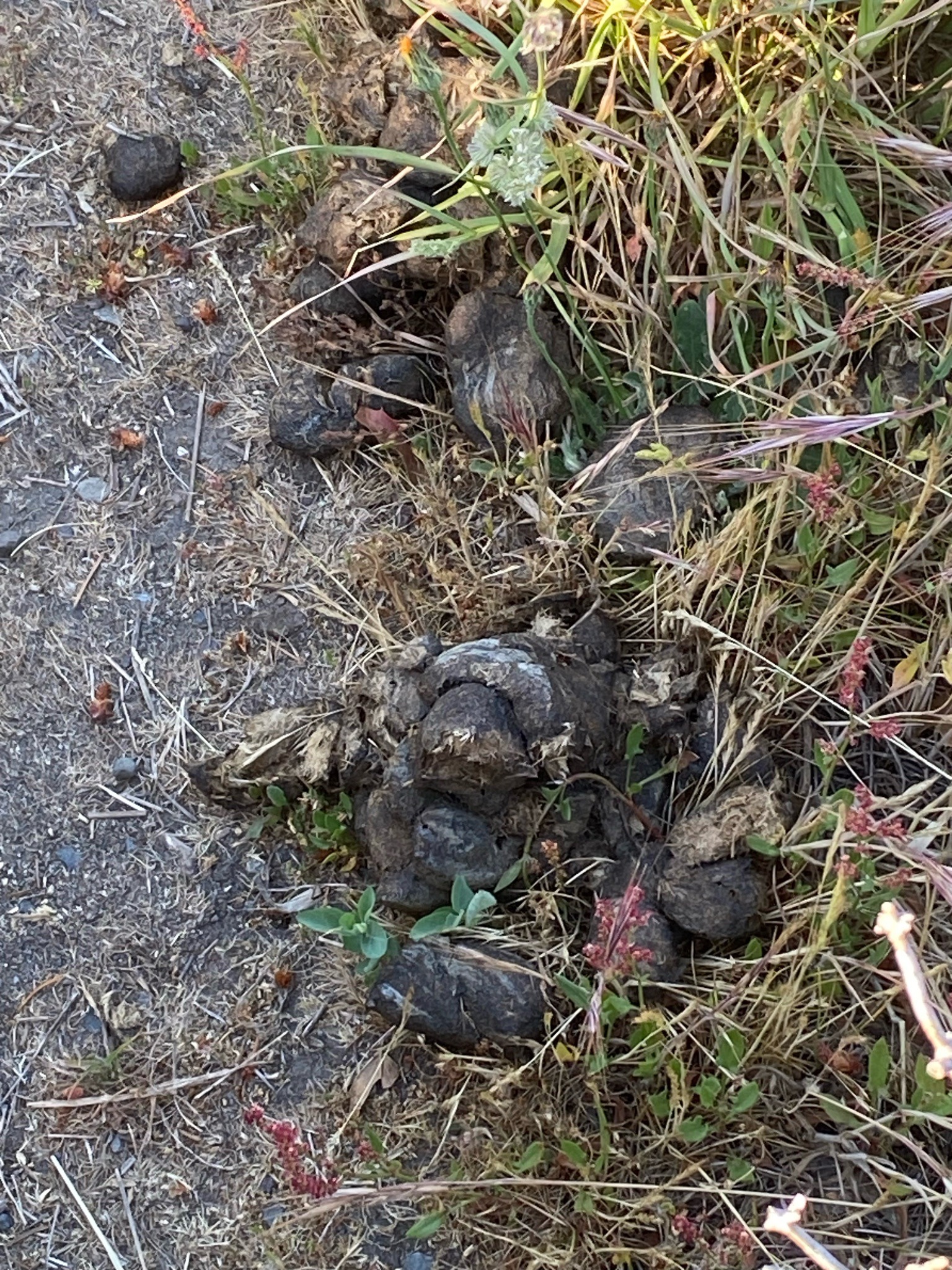
Fecal matter (scat) from an elk, showing the characteristic clumped form typical of summer and autumn diets.
Characteristics
Large, dark, oblong pellets. In summer and fall, when elk eat lush greens, the pellets often fuse together into large, irregular 'patties' or clumps. In winter, they are separate individual hard pellets.
Habitat
Found in meadows, forests, and grassy transitions where elk graze. Sequim is home to the Roosevelt elk subspecies.
When to Find It
Year-round, but the clumped appearance indicates a diet of moist vegetation typical of late spring through autumn.
Conservation Status
N/A
Ecological Role
Returns nutrients to the soil and aids in seed dispersal. Scat analysis provides researchers with data on diet, health, and population density.
Easily Confused With
Deer scat (smaller pellets, rarely in such large clumps) and bear scat (usually more amorphous and contains visible berries, seeds, or hair).
Observation Tips
Look for scat along game trails and near water sources. Do not touch with bare hands as it can carry parasites.
Interesting Facts
The consistency of elk scat changes dramatically with their diet; it is 'pelleted' when they eat dry woody browse and 'clumped' when they eat succulent grasses.
User Notes
Sequim, wa