Loquat
Scientific Name: Eriobotrya japonica
Category: tree
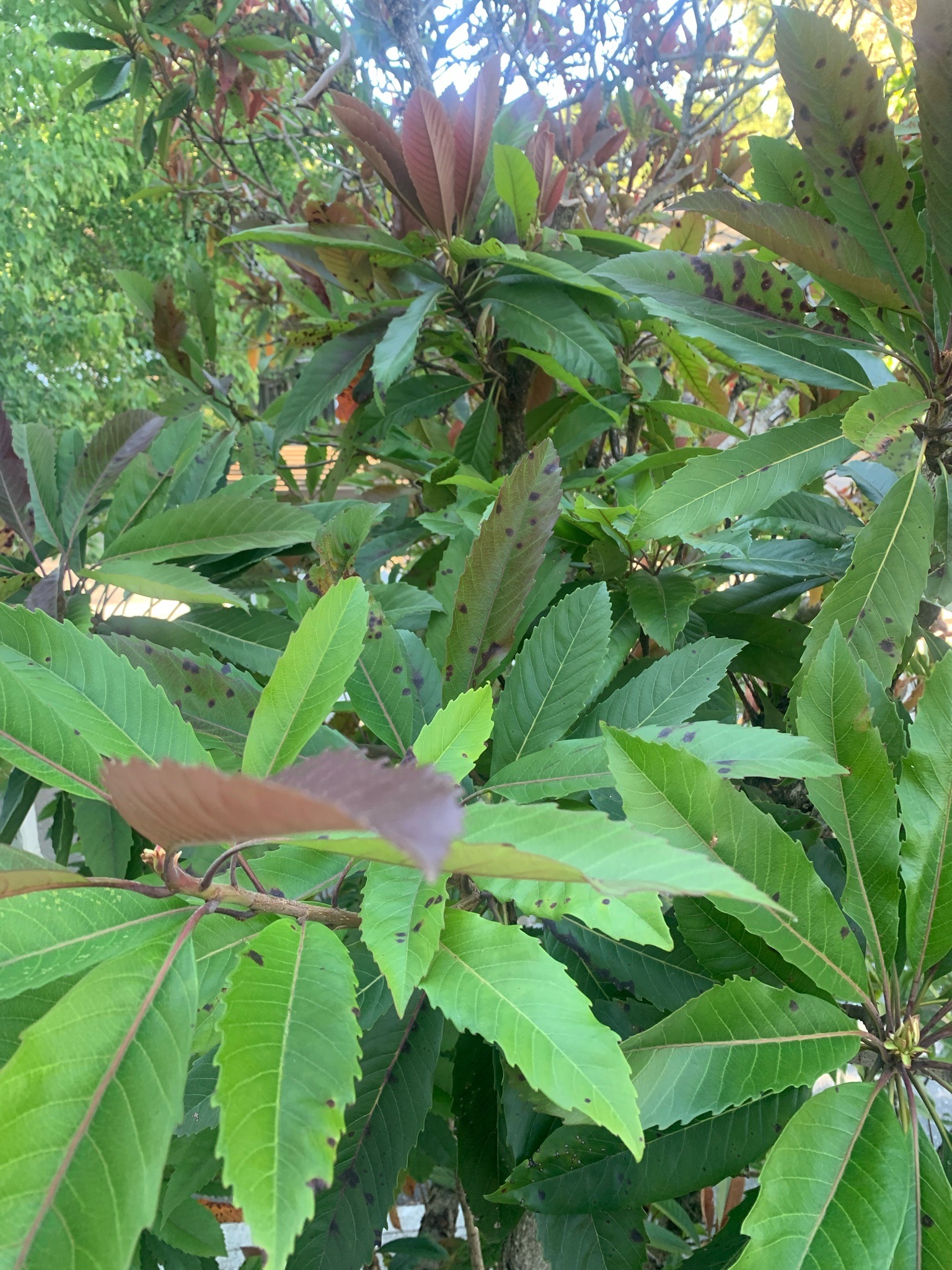
Brief Description
An evergreen large shrub or small tree primarily grown for its sweet, orange fruit and ornamental foliage.
Characteristics
Large, stiff, dark green leaves with serrated edges and a leathery texture. Leaves often have a woolly or hairy underside. New growth may appear brownish or reddish.
Habitat
Temperate to subtropical climates; common in home gardens, orchards, and urban landscapes.
When to Find It
Flowers in late autumn or early winter; fruits ripen in early spring to early summer depending on the region.
Conservation Status
Least Concern
Ecological Role
Provides food for birds, small mammals, and insects. Its winter-blooming flowers are an important nectar source for bees during colder months.
Easily Confused With
Medlar (Mespilus germanica) which has smaller leaves and different fruit, or Magnolia grandiflora which has smooth leaf margins.
Observation Tips
Look for its distinctively large, rib-veined leaves and clusters of yellow-orange fruit in the spring; check the underside of leaves for a fuzzy texture.
Interesting Facts
The loquat is originally native to cooler hill regions of south-central China and has been grown in Japan for over 1,000 years.