New Caledonian Giant Gecko
Scientific Name: Rhacodactylus leachianus
Category: reptile
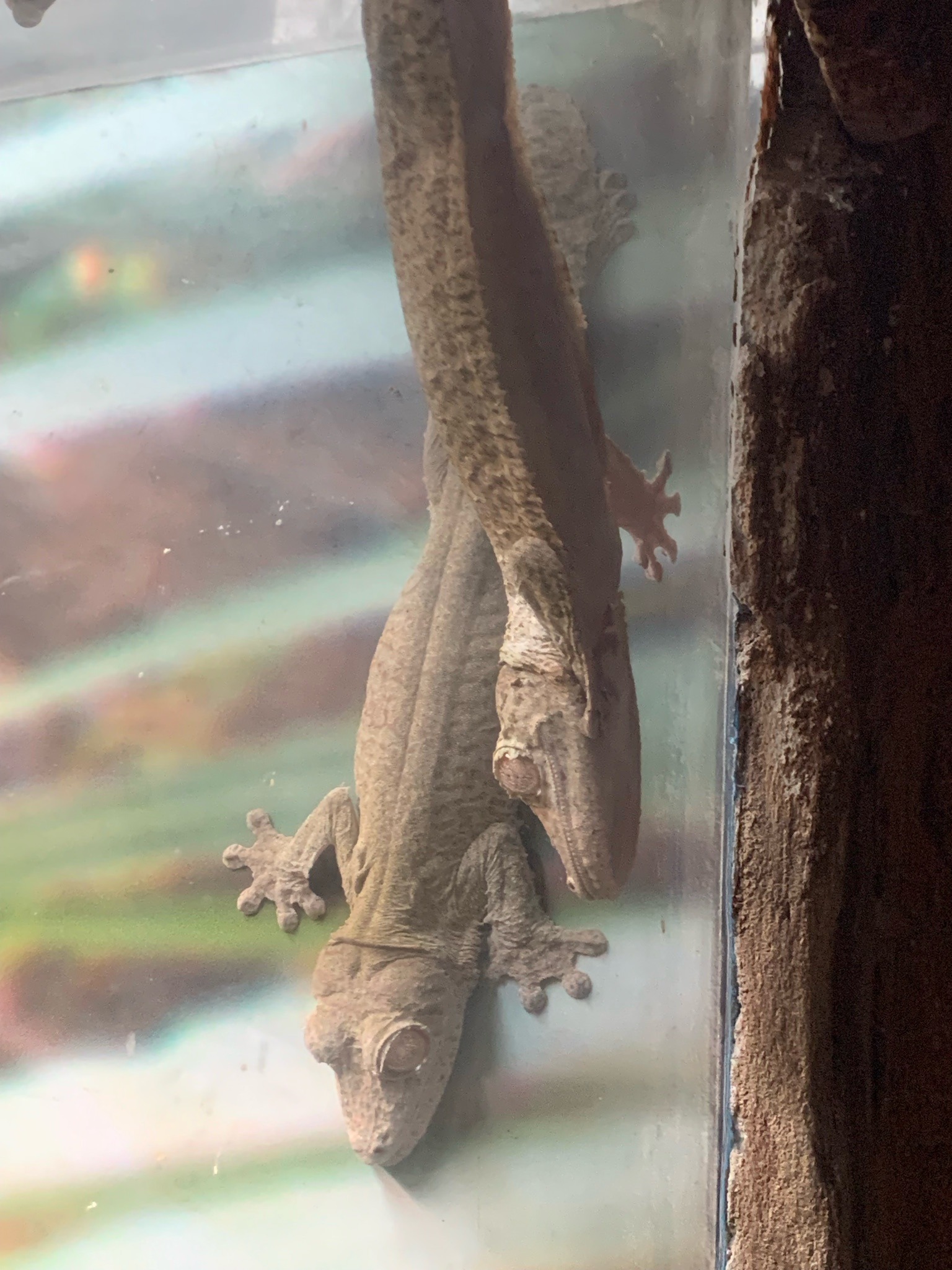
Brief Description
A large, arboreal gecko known for its impressive size and granular, lichen-like skin.
Characteristics
Heavy body, short tail, and loose, wrinkled skin. They have large heads, expanded toe pads for climbing, and cryptic coloration that ranges from olive to gray with white or pink blotches.
Habitat
Lowland and montane rainforests, where they live in tree hollows or high in the canopy.
When to Find It
Active at night (nocturnal) throughout the year.
Conservation Status
Least Concern (IUCN), though protected by CITES Appendix II.
Ecological Role
They are important opportunistic feeders, consuming insects, fruit, nectar, and occasionally small vertebrates, helping with seed dispersal and pest control.
Easily Confused With
Gargoyle Geckos (Rhacodactylus auriculatus) which are much smaller and have cranial bumps; or Sarasin's Gecko (Correlophus sarasinorum) which has an elongated snout and different body proportions.
Observation Tips
In the wild, they are heard before seen, as they make loud barking or growling sounds at night. In captivity, avoid handling them too much as they can be territorial.
Interesting Facts
This is the largest living species of gecko in the world, capable of reaching lengths of up to 14 inches (36 cm). They are locally known as 'the devil in the trees' by some indigenous populations due to their vocalizations.