Bivalve Shell on Rocky Beach
Scientific Name: Bivalvia
Category: shell
Brief Description
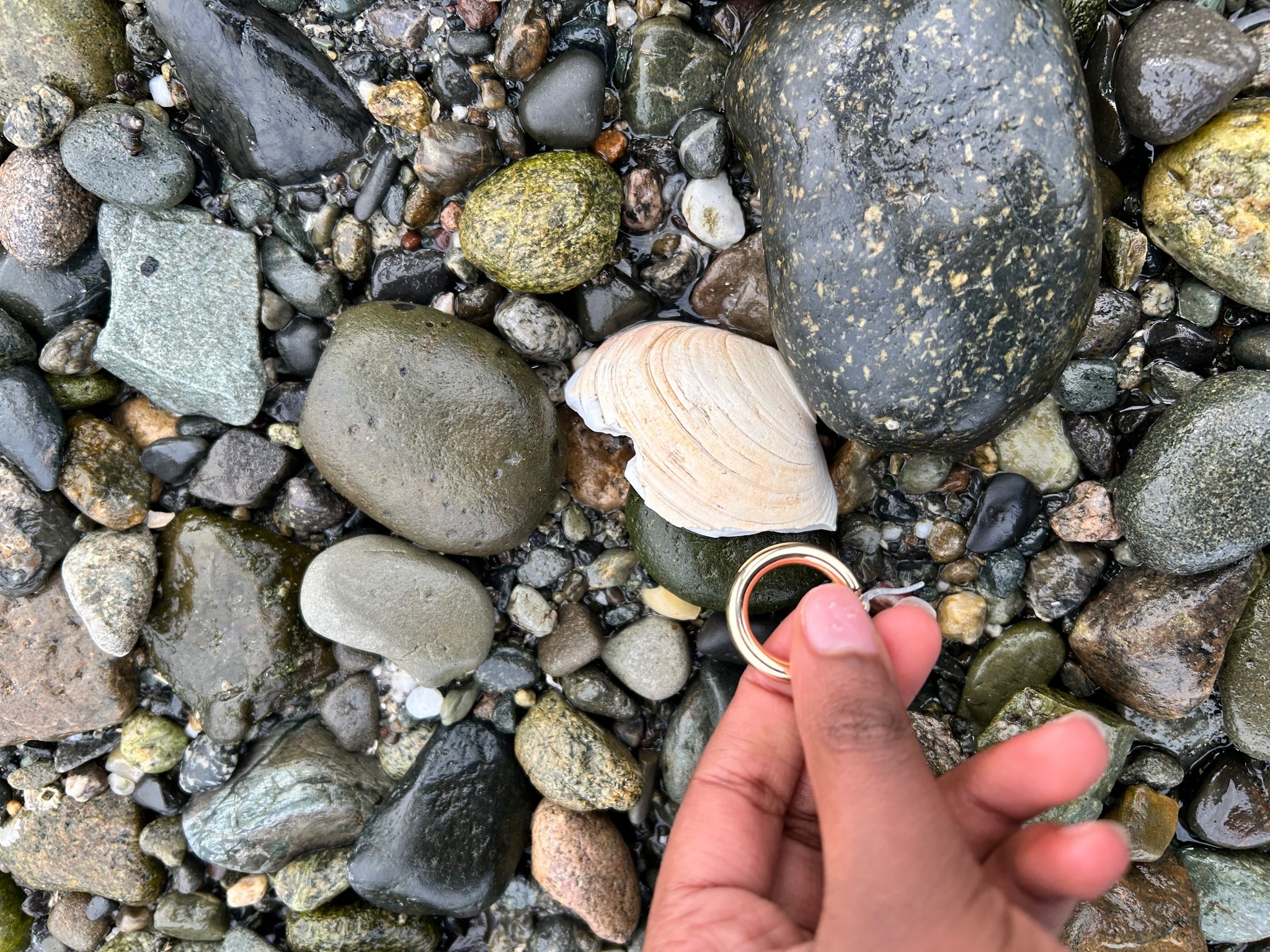
A weathered shell of a bivalve mollusk resting among wet river and sea stones on a beach shore.
Characteristics
The shell is white to off-white with visible concentric growth rings and a slightly fan-shaped structure. The surrounding rocks are smooth, rounded water-worn cobbles of varying mineral compositions.
Habitat
Intertidal zones, sandy or rocky coasts, and estuary shores.
When to Find It
Can be observed year-round; best viewed during low tide when more of the shoreline is exposed.
Conservation Status
N/A
Ecological Role
Bivalves are essential filter feeders that help clean water and provide a food source for many marine animals and coastal birds. Abandoned shells eventually break down into calcium carbonate, contributing to beach sand.
Easily Confused With
Scallops or clams; distinguished by the specific hinge structure and the thickness/texture of the valve. Sea glass or ceramic shards may appear similar but have artificial origins.
Observation Tips
Check tide tables to visit during low tide. Leave shells where you find them to avoid depleting the natural ecosystem, especially if they are inhabited by hermit crabs.
Interesting Facts
The concentric lines on a bivalve shell are called growth rings, much like those in a tree, and can sometimes be used to estimate the age of the organism that lived inside.