Horse Chestnut Conker
Scientific Name: Aesculus hippocastanum
Category: tree
Brief Description
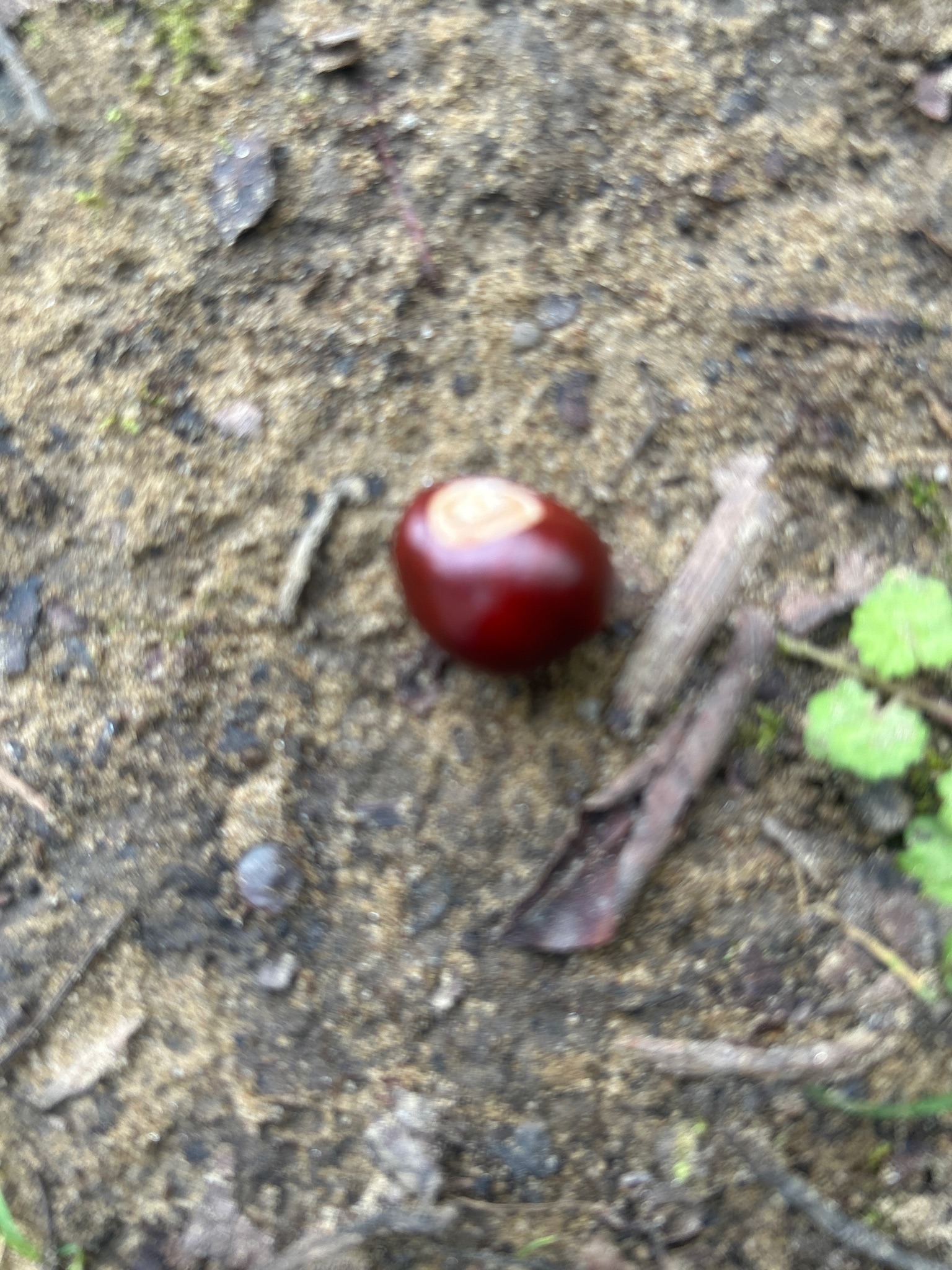
The smooth, glossy, deep reddish-brown seed of the horse chestnut tree, often called a conker, resting on the ground among soil and leaf litter.
Characteristics
Hard, shiny, mahogany-brown nut-like seed with a pale circular scar (hilum) at the base where it attached to the husk.
Habitat
Found on the ground beneath horse chestnut trees in woodlands, parks, gardens, and along streets across temperate regions.
When to Find It
Most commonly found in autumn (September to November) when the spiky green husks split open and drop the seeds to the ground.
Conservation Status
Least Concern, widely planted in urban and park settings globally.
Ecological Role
Provides food for some wildlife like deer and rodents, though they are mildly toxic to humans and many domestic animals.
Easily Confused With
Sweet chestnuts (Castanea sativa), which grow in spiny husks containing multiple flattened nuts with a pointed tip, unlike the round, single horse chestnut conker.
Observation Tips
Look under mature horse chestnut trees in autumn. Walk carefully to avoid slipping on the fallen husks and seeds.
Interesting Facts
Conkers are famously used by children in the UK for a traditional playground game called 'conkers', where players take turns trying to smash each other's suspended seed on a string.