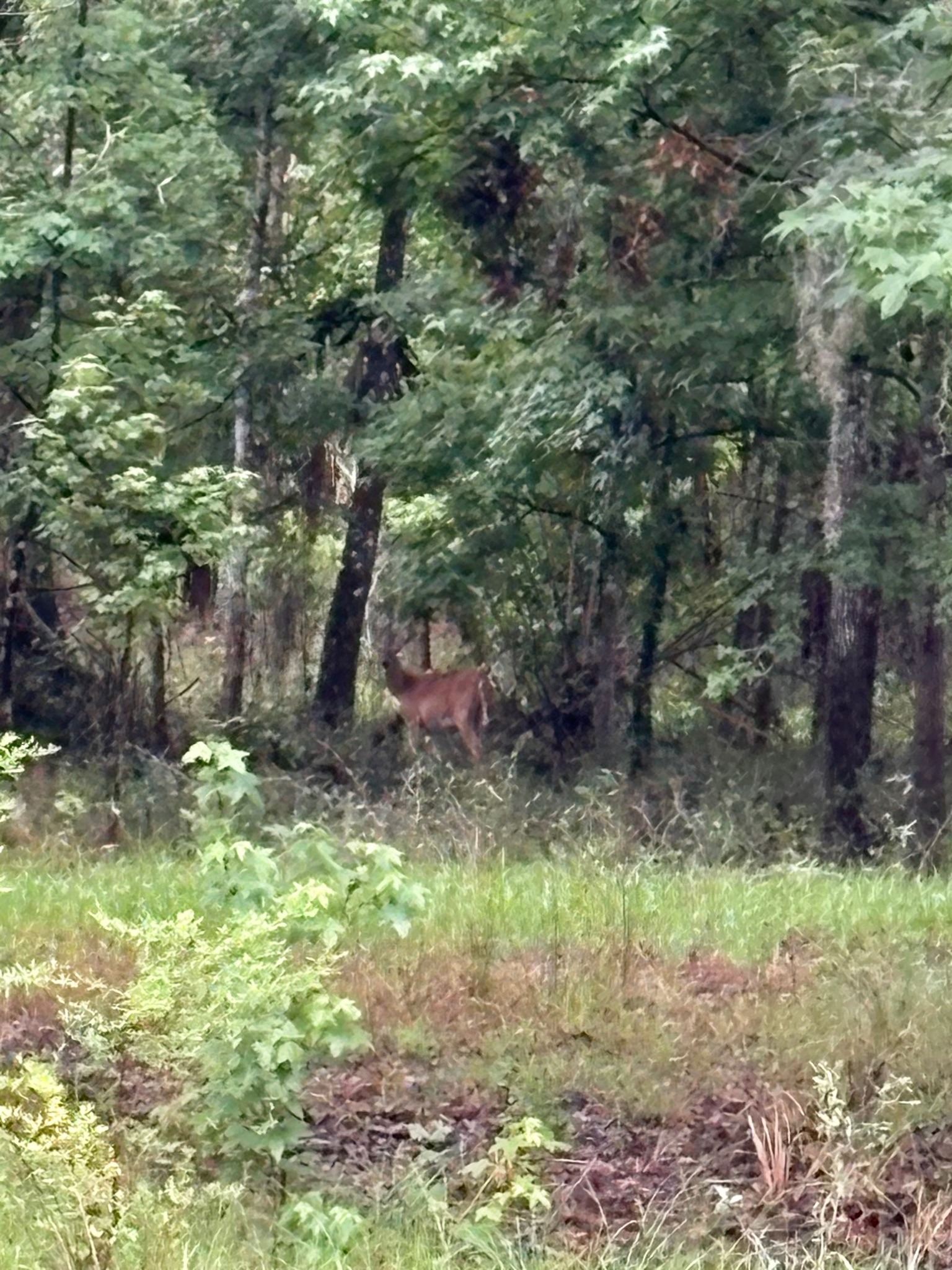
White-tailed Deer
Scientific Name: Odocoileus virginianus
Category: mammal
Brief Description
A medium-sized deer native to North America, recognized by the white underside of its tail which it raises when alarmed.
Characteristics
Reddish-brown coat in summer turning grayish-brown in winter. White fur on the throat, around the eyes, and under the tail. Males (bucks) grow antlers annually that curve forward.
Habitat
Forests, meadows, and brushy areas; often found at the edge of woodlands and agricultural fields.
When to Find It
Most active during dawn and dusk (crepuscular). Rutting season occurs in late autumn.
Conservation Status
Least Concern
Ecological Role
A major herbivore that influences plant community structure through browsing; also serves as a primary prey source for large predators.
Easily Confused With
Mule Deer (can be distinguished by their larger ears and black-tipped tails) and Elk (which are much larger with different antler structures).
Observation Tips
Move quietly and stay downwind to avoid detection. They are very sensitive to movement and scent.
Interesting Facts
White-tailed deer are excellent swimmers and can reach speeds of up to 30 miles per hour when running.