Piddock-bored Stone (Hagstone)
Scientific Name: N/A
Category: rock
Brief Description
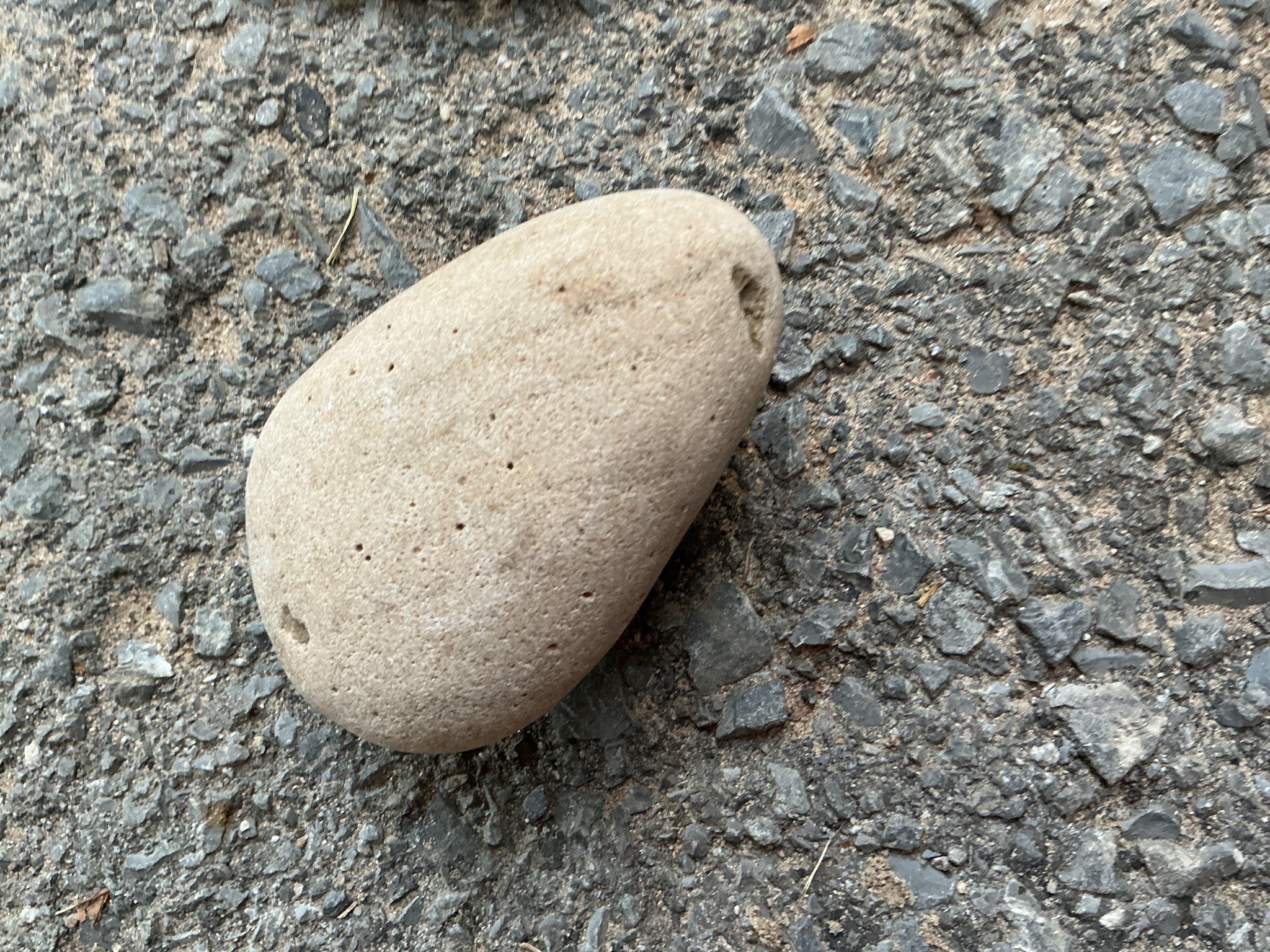
A smooth river or sea-worn pebble featuring small circular holes created by boring mollusks or natural erosion.
Characteristics
Smooth, rounded sedimentary or limestone rock with deep, cylindrical or tapered holes. The holes often have a uniform, circular shape unlike irregular weather pits.
Habitat
Coastal shorelines, tide pools, and occasionally riverbeds where sedimentary rock is exposed to water.
When to Find It
N/A
Conservation Status
N/A
Ecological Role
The holes in these rocks are often created by piddocks (boring clams), which play a role in the bioerosion of coastal substrates, eventually creating habitats for other small marine organisms.
Easily Confused With
Vesicular basalt (has many tiny bubbles from volcanic gas), Honeycomb weathering (irregular pits caused by salt crystallization). Distinguishable by the depth and circularity of the piddock borings.
Observation Tips
Look along high-tide lines or in rocky tide pools. These are most common in areas with soft sedimentary rocks like limestone, sandstone, or chalk.
Interesting Facts
In folklore, stones with naturally occurring holes are called 'Hagstones' or 'Adder Stones' and were historically believed to ward off evil spirits or allow the wearer to see through enchantments.
User Notes
Identify the holes