Poison Ivy
Scientific Name: Toxicodendron radicans
Category: plant
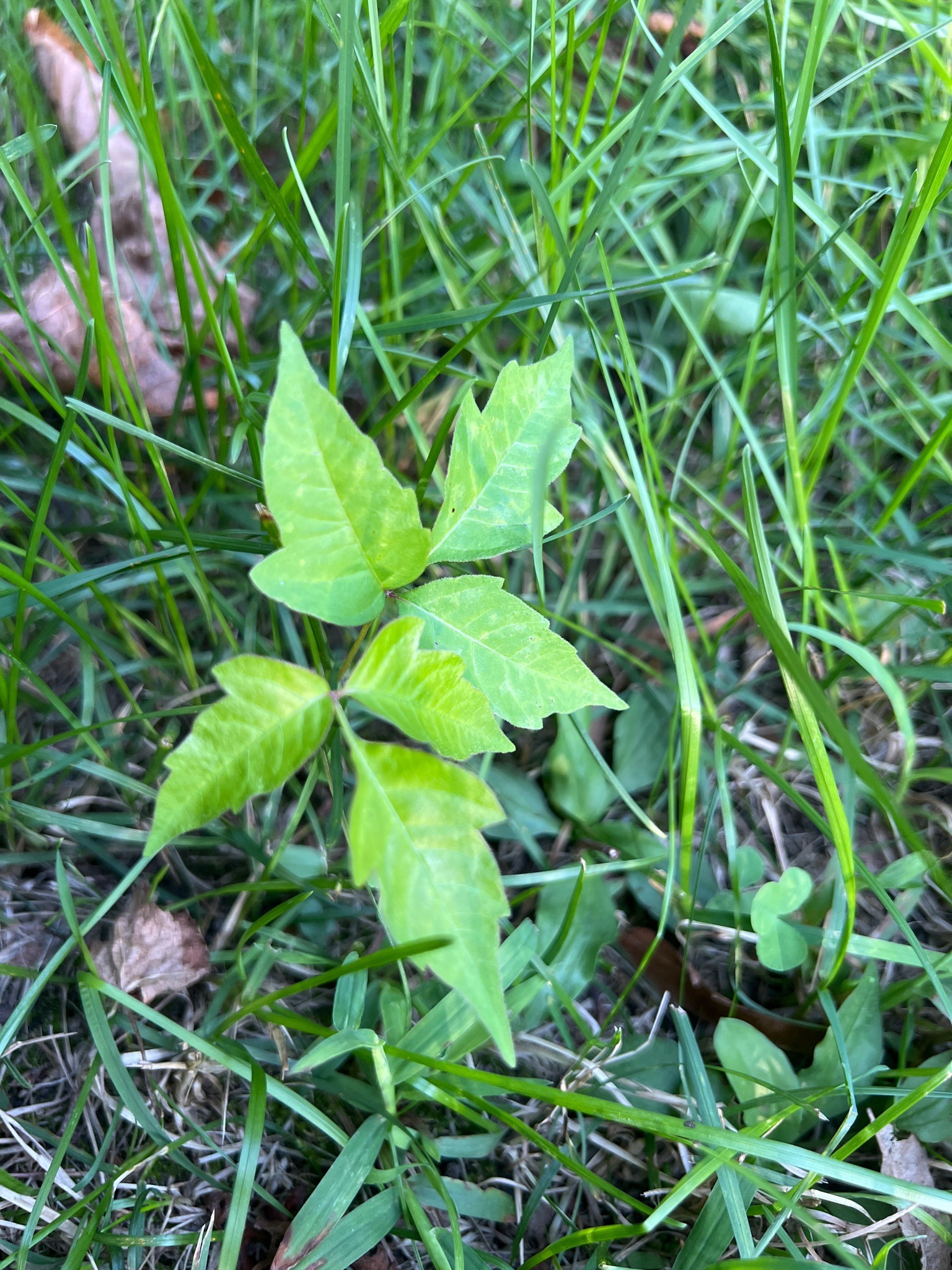
Brief Description
Poison ivy is a woody vine or shrub known for producing urushiol, an oil that causes an allergic skin rash in humans.
Characteristics
Features alternate leaves divided into three leaflets, often remembered by the adage 'leaves of three, let it be'. Leaflet margins can be smooth, toothed, or lobed. The middle leaflet typically has a longer stalk than the side leaflets.
Habitat
Found in a wide variety of habitats including forests, fields, edges of woods, along roadsides, and in suburban yards.
When to Find It
Spring and summer foliage is green, turning bright shades of yellow, orange, and red in autumn. Bare woody stems and persistent white or grey berries can be seen in winter.
Conservation Status
N/A
Ecological Role
Provides food and cover for many wildlife species, including birds and mammals, which consume the berries and disperse the seeds.
Easily Confused With
Often confused with Virginia creeper (which has five leaflets), boxelder saplings, and fragrant sumac. Distinguish by checking leaflet count and arrangement.
Observation Tips
Do not touch or attempt to handle. Wear long pants, sleeves, and closed shoes when walking in areas where poison ivy is prevalent.
Interesting Facts
Urushiol remains active on surfaces, including dead plants and clothing, for years if not washed off properly.