Olive Tree
Scientific Name: Olea europaea
Category: tree
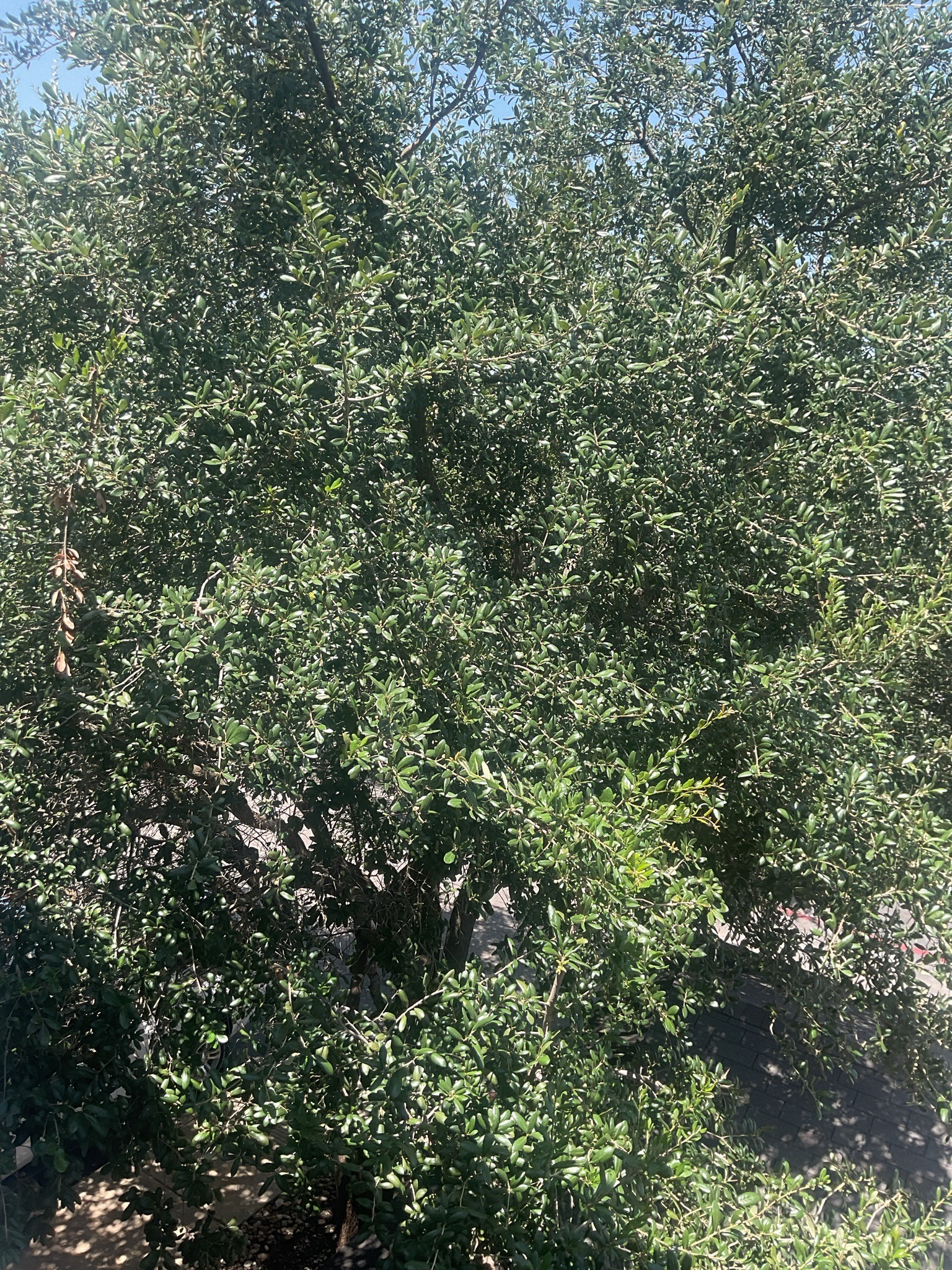
Brief Description
A dense, evergreen tree featuring small, leathery silvery-green leaves and a gnarled, twisting trunk, commonly cultivated for its edible fruit and oil.
Characteristics
Features small, oblong, opposite leaves that are green above and silvery-gray underneath, smooth gray bark that becomes deeply furrowed and gnarled with age, and small white flowers followed by drupes (olives) that ripen from green to black.
Habitat
Thrives in Mediterranean climates with hot, dry summers and mild winters, preferring well-drained soil and full sun.
When to Find It
Evergreen year-round; flowers typically bloom in late spring, and fruit ripens in autumn through winter.
Conservation Status
Not threatened; widely cultivated globally.
Ecological Role
Provides shelter and food for various birds and insects, and its deep root systems help prevent soil erosion in arid or semi-arid regions.
Easily Confused With
Can be confused with other small-leaved evergreen Mediterranean trees or shrubs like Phillyrea or certain oaks, but distinguished by the silvery underside of the leaves and characteristic fruit.
Observation Tips
Best observed in full sunlight to see the distinctive silvery shimmer of the foliage; look closely at leaf undersides and branch structure for identification.
Interesting Facts
Olive trees are remarkably resilient and can live for hundreds, sometimes thousands, of years, with some ancient specimens still producing fruit today.
User Notes
Out side my balcony