Bull Kelp
Scientific Name: Nereocystis luetkeana
Category: other
Brief Description
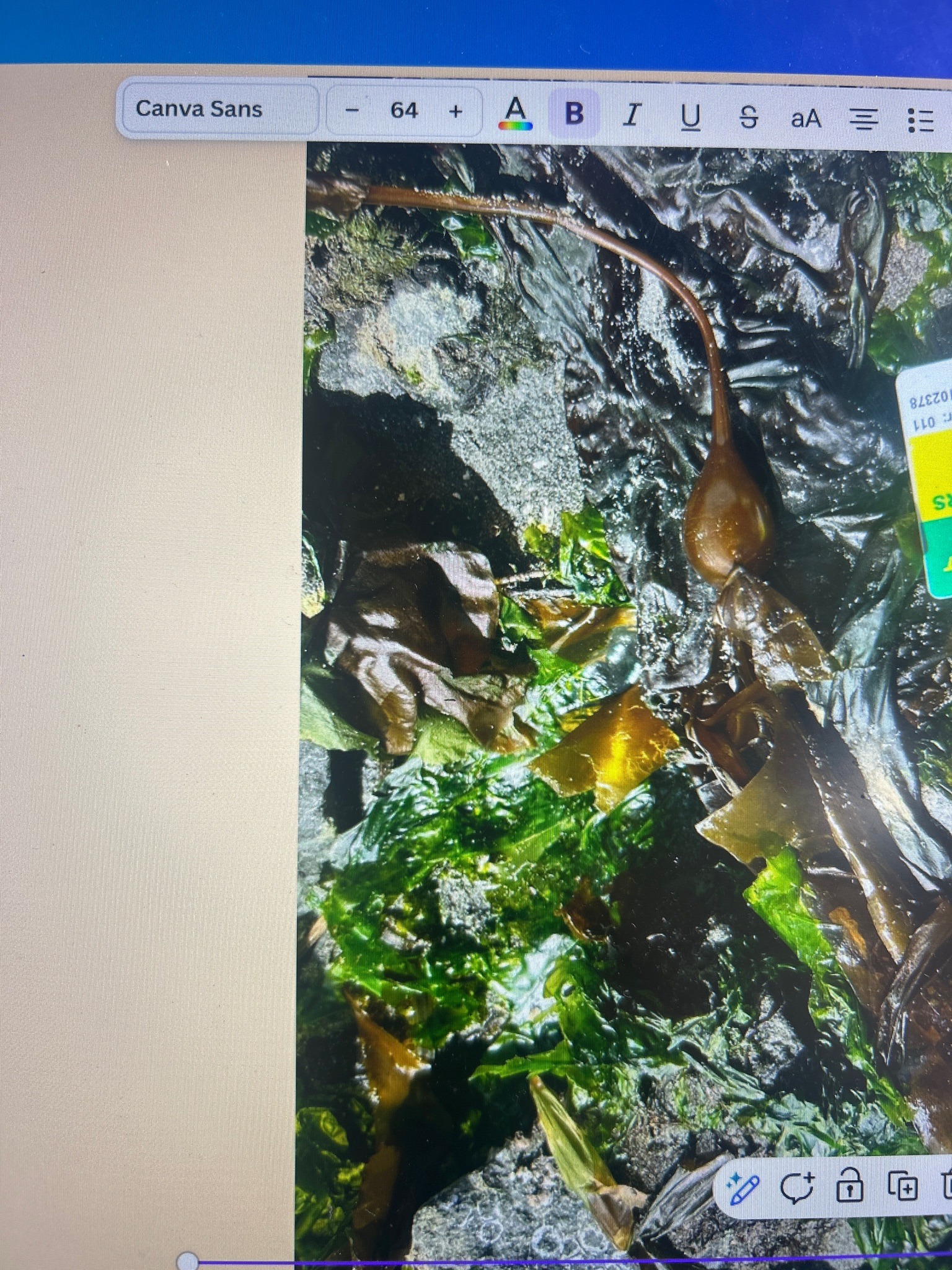
A large brown algae sea kelp with a distinctive bulb-like float and long stipe, often found washed up on beaches.
Characteristics
Features a long, whip-like rope (stipe) reaching up to 20 meters, ending in a gas-filled bulb (pneumatocyst) that keeps the blades near the surface for sunlight. Several long, golden-brown blades grow from the bulb.
Habitat
Found in the low intertidal and subtidal zones of rocky shorelines, forming dense underwater forests.
When to Find It
An annual seaweed that grows rapidly in spring/summer and is often torn loose by winter storms, appearing on beaches in autumn and winter.
Conservation Status
N/A
Ecological Role
A foundation species that provides critical habitat, food, and nursery grounds for many marine animals like rockfish and sea otters. It also helps buffer coastlines from wave energy.
Easily Confused With
Giant Kelp (Macrocystis pyrifera), which has multiple small bulbs along its stem rather than one large bulb at the end.
Observation Tips
Look for kelp forests just offshore from piers or rocky points. After a major storm in the Puget Sound area, beachcombers can find whole plants washed up on the sand.
Interesting Facts
Bull Kelp is one of the fastest-growing organisms in the world, capable of growing up to 10 inches in a single day. The hollow bulb contains a mixture of gases, including carbon monoxide.
User Notes
Puget Sound