Mallard Duck
Scientific Name: Anas platyrhynchos
Category: bird
Brief Description
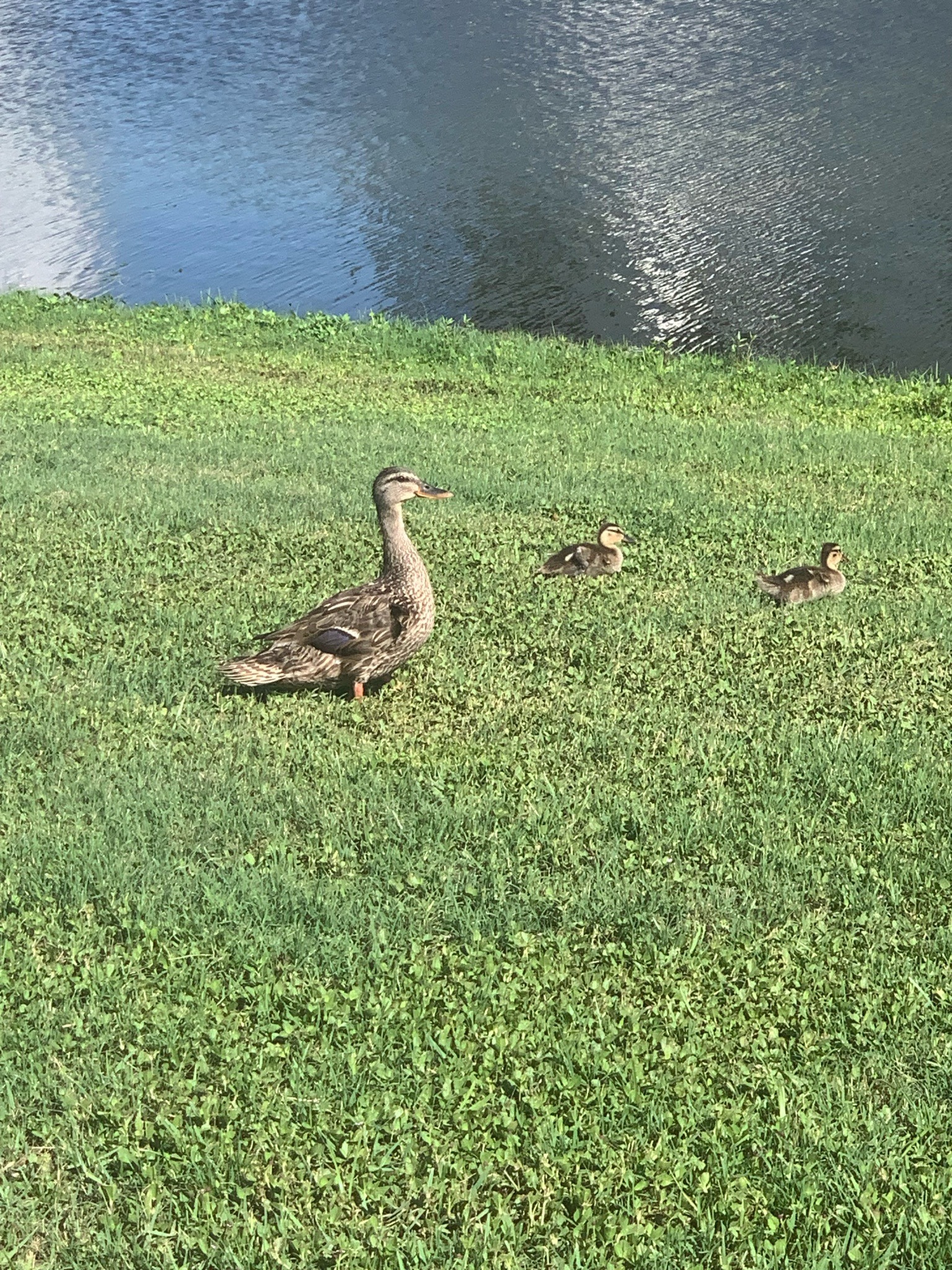
A medium-sized dabbling duck, specifically an adult female (hen) with two ducklings on a grassy bank.
Characteristics
Females have mottled brown and tan plumage for camouflage, a dark line through the eye, and an orange bill with dark spots. A blue-violet iridescent 'speculum' patch is often visible on the wing. Ducklings are covered in downy yellow and dark brown patches.
Habitat
Found in almost any wetland habitat including ponds, lakes, rivers, marshes, and suburban parks. They are highly adaptable to human-influenced environments.
When to Find It
Visible year-round in many temperate areas; ducklings are typically seen in spring and early summer.
Conservation Status
Least Concern
Ecological Role
Mallards are a foundational species in wetland ecosystems, acting as both prey for larger predators and consumers of aquatic plants and invertebrates.
Easily Confused With
American Black Ducks (darker overall with less contrast) and Mottled Ducks (tan face with no dark eyeline). Females can be distinguished from male Mallards, which have bright green heads and yellow bills.
Observation Tips
Maintain a respectful distance from mother ducks with ducklings to avoid causing stress. Observation is best near water edges during daylight hours. Do not feed them bread, as it is nutritionally poor and can pollute water.
Interesting Facts
Mallards are the ancestors of almost all domestic duck breeds. They are capable of hybridizing with many other duck species, which is relatively rare in the bird world.